

The Vertical Farm Architecture Competition, organized by Young Architects Competitions (YAC) in partnership with the Manni Group, challenges architects and designers to reimagine the next generation of urban agriculture through modular, energy‑efficient "vertical farm" towers.
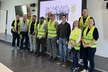
The four designers won second place in the competition with VerticLA: The Green Ascent, a community-focused stepped garden, composed of multiple levels connected top to bottom by a sinuous ramp. The concept invites local residents to participate in farming, as well as offering a public park, a viewing deck, a restaurant, and a children's play area.
 © Pei-Chi Tsai, Chao-Chun Kung, Nel Alexander Dau, Margarita Idt
"We're honored that VerticLA's vision for resilient, community-driven urban agriculture has been celebrated. As an international team made up of architectural designers based in the UK and Germany, this award highlights the power of cross-border collaboration in shaping sustainable futures," said Pei-Chi (Peggy) Tsai.
VerticLA: The Green Ascent
This project envisages a vertical farm that serves not only as a center for sustainable food production but also as a vibrant hub for the local community. The development brings together urban agriculture, social engagement and architectural innovation.
 © Pei-Chi Tsai, Chao-Chun Kung, Nel Alexander Dau, Margarita Idt
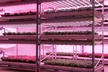
The farm is characterized by a diverse mix of crops, with a special focus on microgreens due to their high nutrient value and fast growth cycles. Basil cultivation is prioritized due to its popularity in California. The farm includes an innovative system for collecting and recycling internal moisture for irrigation, further reducing water consumption.
 © Pei-Chi Tsai, Chao-Chun Kung, Nel Alexander Dau, Margarita Idt
The architectural concept is defined by a shared superstructure that spans the three buildings, composed of exposed steel beams and pillars. This framework not only provides a cohesive visual identity but also supports functional elements such as rainwater collection systems. A layered façade system enhances the building's performance: a green facade helps cool the urban microclimate, while a traditional façade lies beneath for structural and thermal support.
 © Pei-Chi Tsai, Chao-Chun Kung, Nel Alexander Dau, Margarita Idt
At its core, the project is designed to foster community connection. Residents – that is, those from the neighboring old-age home, elementary and preschools – can participate in co-farming activities, encouraging intergenerational exchange and wellbeing. On the other hand, the green roof doubles as a public park, offering much-needed green space for the neighborhood and a peaceful escape within the urban environment.
Source: UCL