
Indoor horticulture requires a substantial quantity of electricity to meet crops extended photoperiodic requirements for optimal photosynthetic rate.
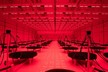
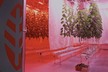
Simultaneously, global electricity costs have grown dramatically in recent years, endangering the sustainability and profitability of indoor vertical farms and/or modern greenhouses that use artificial lighting systems to accelerate crop development and growth. This study investigates the growth rate and physiological development of cherry tomato plants cultivated in a pilot indoor vertical farm at the Agricultural University of Athens' Laboratory of Farm Structures (AUA) under continuous and disruptive lighting. The leaf physiological traits from multiple photoperiodic stress treatments were analyzed and utilized to estimate the plant's tolerance rate under varied illumination conditions. Four different photoperiodic treatments were examined and compared, firstly plants grew under 14 h of continuous light (C-14L10D/control), secondly plants grew under a normalized photoperiod of 14 h with intermittent light intervals of 10 min of light followed by 50 min of dark (NI-14L10D/stress), the third treatment where plants grew under 14 h of a load-shifted energy demand response intermittent lighting schedule (LSI-14L10D/stress) and finally plants grew under 13 h photoperiod following of a load-shifted energy demand response intermittent lighting schedule (LSI-13L11D/stress). Plants were subjected also under two different light spectra for all the treatments, specifically WHITE and Blue/Red/Far-red light composition. The aim was to develop flexible, energy-efficient lighting protocols that maintain crop productivity while reducing electricity consumption in indoor settings. Results indicated that short periods of disruptive light did not negatively impact physiological responses, and plants exhibited tolerance to abiotic stress induced by intermittent lighting. Post-harvest data indicated that intermittent lighting regimes maintained or enhanced growth compared to continuous lighting, with spectral composition further influencing productivity.
Plants under LSI-14L10D and B/R/FR spectra produced up to 93 g fresh fruit per plant and 30.4 g dry mass, while consuming up to 16 kWh less energy than continuous lighting—highlighting the potential of flexible lighting strategies for improved energy-use efficiency.
Avgoustaki, Dafni & Vevelakis, Vasilis & Akrivopoulou, Katerina & Kalogeropoulos, Stavros & Bartzanas, Thomas. (2025). Examination of Interrupted Lighting Schedule in Indoor Vertical Farms. AgriEngineering. 7. 242. 10.3390/agriengineering7080242.
Source: Research Gate