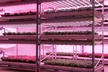


Prominent scientist and former Federal Minister for Science and Technology, Prof Dr Atta-ur-Rahman, has called for urgent reforms in Pakistan's agricultural strategies to combat worsening food insecurity. Speaking at a mini-symposium on "Sustainable Agriculture for Food and Nutritional Security under the Climate Change Scenario" at the University of Karachi (UoK), he underscored the need to adopt drought-resistant, climate-resilient crops and embrace urban food production methods such as vertical farming and controlled environment agriculture (CEA).
Highlighting Karachi's challenges of water scarcity, heatwaves, and unpredictable weather, Dr Atta said rooftop and vertical farming could provide fresh produce in densely populated areas, reducing dependency on rural supply chains vulnerable to climate shocks. He noted that the global market for climate-resilient crops is projected to hit $52 billion by 2032, stressing that these crops — often genetically engineered — are crucial for ensuring consistent yields despite environmental stress.
The event, organized by the International Center for Chemical and Biological Sciences (ICCBS) in collaboration with the Sindh Innovation, Research, and Education Network (SIREN), brought together prominent national and international experts. ICCBS Director Prof Dr Muhammad Raza Shah, COMSTECH Coordinator General Prof Dr M Iqbal Choudhary, and visiting scholar Prof Salim Al-Babili were among those who presented alarming statistics and innovative solutions.
Read more at Academia Mag