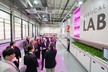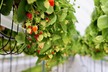


As the demand for fresh year-round local produce continues to rise in Canada, companies are realizing the growth potential and increasing profitability of investing into indoor farming. Also known as precision agriculture or vertical farming, this innovative indoor growing approach to agriculture not only addresses food supply challenges but also promotes sustainability and self-reliance in our local and regional food systems.
Recent news articles have highlighted the potential of indoor farming, which allows producers to reliably grow vegetables and herbs in any climate throughout the year. In particular, growing indoors would allow Canadian organic farmers to keep pace with producing enough product to meet growing demand. And indoor farming is being viewed as an intelligent solution to improve food supply to Northern Canadian communities where access to fresh fruits and vegetables is a major health concern.
Canadian food entrepreneurs are adopting indoor agriculture
Success stories abound, showcasing the transformative power of vertical farming. For instance, Avery Farms uses a 50,000 square foot purpose-built facility in Okanagan Falls, BC to produce over 10,000 heads of fresh lettuce daily – 365 days a year. The operation has become a beacon of self-reliant food production in Canada, demonstrating how vertical farming can create sustainable food systems. Their innovative use of space and resources highlights the potential of this farming method to meet local needs effectively.
Similarly, Haven Greens relies on their state-of-the-art, fully automated greenhouse facility in King City, Ontario to revolutionize lettuce production through automation and efficient growing techniques. These two examples are proving that vertical farming can significantly enhance productivity while minimizing environmental impact.
Vertical farming operations using Summit Steel Buildings systems benefit from energy efficiency and the ability to grow food in various environments and conditions, creating much more food resilience and dependability regardless of whatever agricultural challenges face traditional outdoor operations.
Building better communities with reliable access to healthy food
As Canada's agricultural landscape evolves, the integration of vertical farming with robust pre-engineered metal structures presents a promising path forward. Most farms and food production businesses can supplement their existing capabilities with indoor production to lower costs and provide reliable access to ingredients. Buildings designed specifically for food enterprises offer secure, easy-to-clean and sanitary conditions with all the necessary water, drainage and energy systems needed. The perfectly controlled temperatures and hygienic conditions require little to no structural maintenance and offer the ability to expand in any direction as food production grows.
For more information:
Summit Steel Buildings
[email protected]
summitsteelbuildings.com/