

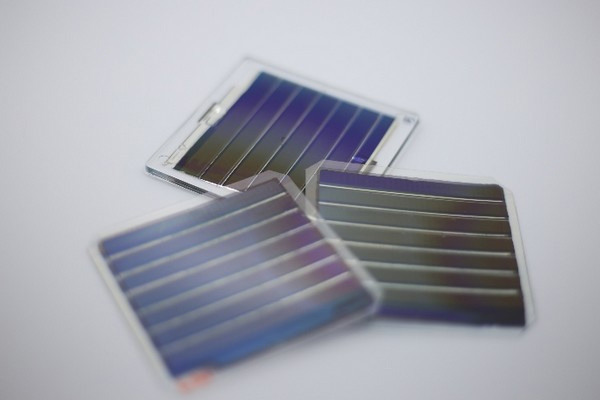
Technology center Eurecat and Lenium, a company specializing in turnkey industrial projects, renewable energy, and R&D initiatives, are joining forces to develop energy self-sufficient greenhouses using organic photovoltaic (OPV) panels that enable simultaneous energy generation and plant growth.
 © Eurecat
The project will integrate semi-transparent printed organic cells that "use light synergistically, meaning the panels capture and generate photovoltaic energy while allowing enough light to pass through for plant growth," explains Martí Gibert Roca, researcher at Eurecat's Functional Printing and Integrated Systems Unit.
According to Lenium co-founder Esteve Lafita Ferré, the initiative marks "a step closer to creating a greenhouse model that is self-sufficient in both energy and water, designed for sustainable cultivation in resource-limited environments." Lafita adds that the project aims to "generate a positive impact wherever it is implemented, both environmentally and socially."
The ultimate goal is to power a humidity-harvesting irrigation system with photovoltaic energy, achieving a fully autonomous greenhouse, says Eurecat researcher Katerina Nikolaidou.
The work will be carried out in two phases: first, analyzing installation requirements and designing the work plan; second, conducting a proof-of-concept trial in a relevant environment.
Tests will be run under real-world conditions, as well as simulated solar scenarios with controlled radiation, temperature, and humidity, to "find the right balance between transparency and the performance of organic cells, and to demonstrate that it is possible to power a humidity-harvesting irrigation system in an autonomous setup," concludes Eurecat researcher Paula Pinyol Castillo.
 © EurecatFor more information:
Eurecat
[email protected]
www.eurecat.org