

Rapid urbanization has placed significant pressure on urban food systems and deepened food insecurity in urban informal settlements.
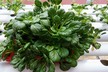
In Nairobi's Kibera informal settlements, where an estimated 85% of residents are food insecure, vertical gardening has emerged as a local-level response to household food insecurity. This paper explores the contribution of vertical gardening to food security to households in Nairobi's informal settlements and the gender dynamics therein. The study used multi-method qualitative approaches, in-depth interviews, focus group discussions, unstructured observations and key informant interviews to unpack labor regimes and the value of vertical gardening to food availability, access, stability and utilization in Kibera Slums in Nairobi. The findings show that vertical gardening enhances food availability via diversification of crops, accessibility via own production, affordability of market-sourced foods through income from surplus sales, and stability through a continual cycle of production. Households with vertical gardens reported being food secure and able to respond to the shocks, and even better, use income from surplus sales for household dietary diversification. Livelihood studies, hence, need to re-examine the central role of vertical gardens in enhancing food security and as part of building food insecurity coping mechanisms to rapidly growing populations within the urban slums.
More attention should be given to technical training in low-cost cultivation methods and microfinance schemes tailored to informal settlements to enhance yields in vertical gardening and create self-reliant household food systems.
Otieno, J. A., Omia, D. O., & Amwata, D. A. (2025). Vertical gardening undergirds household food security: Evidence from Nairobi's Kibera informal settlements. Frontiers in Sustainable Food Systems, 9. https://doi.org/10.3389/fsufs.2025.1654777
Source: Frontiers In