
As Finland's 2025 strawberry season comes to a close, growers are reflecting on a challenging yet surprisingly productive summer. Marked by unusual weather patterns, the season put cultivation practices, plant physiology, and grower adaptability to the test.
Despite early concerns, many reported more consistent yields than in previous years, a result that, according to Eija Lankinen, Lecturer in Greenhouse and Vertical Farming Cultivation at Häme University of Applied Sciences, can be attributed to both natural and strategic factors.
The rhythm of everbearing varieties
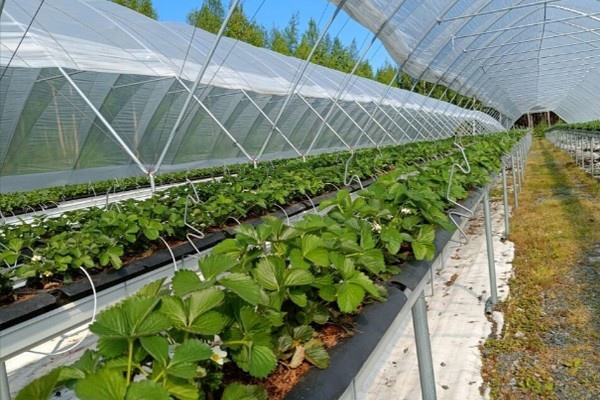
Unlike June-bearing types, everbearing (or day-neutral) strawberries produce fruit independently of daylength, a clear advantage in high-latitude regions. However, their harvests still tend to occur in distinct flushes, often separated by unpredictable gaps.
"Day-neutral varieties can produce berries continuously during the season, even in Finland, where the daylength varies a lot," Eija says. "But if the temperature gets too high, the flower formation ends, at least temporarily."
Temperature isn't the only culprit. "When the fruit load is very high, the plant simply lacks the energy to produce more flowers. After a heavy flush, there seems to be a physiological compulsion for a break. This is something I've seen again and again in the field."
 © HAMK
Plant types and yield timing
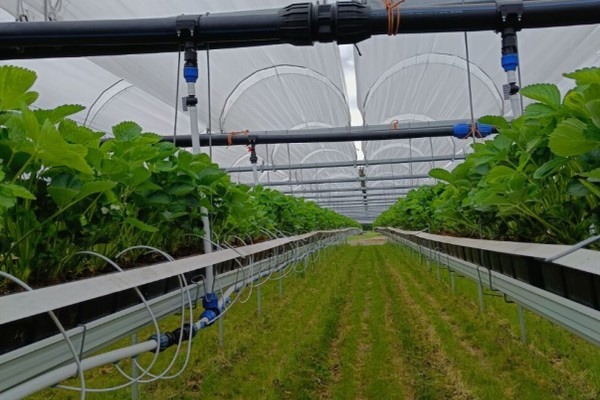
The selection of planting material, whether mini-tray, tray, or waiting-bed plants, has a major influence on how harvests unfold.
"Mini-tray plants usually produce fewer flowers at the beginning, which often leads to a shorter gap between flushes and a more uniform harvest," she explains.
But there's a trade-off. These more gradual yields can mean missing out on premium early-season prices. "Growers must consider this carefully. If the goal is to hit the early market with a big harvest, mini-trays may not be the best choice. That's why many opt for normal or heavy tray plants."
Waiting-bed plants, which often deliver a large initial yield, are rarely used in tunnel cultivation with everbearing types.
"WB plants aren't commonly used in high tunnels, mostly because planting them is more difficult and time-consuming. But for some growers aiming for a strong early start, they still have their place."
 © HAMK
How a cold start helped stabilize yield
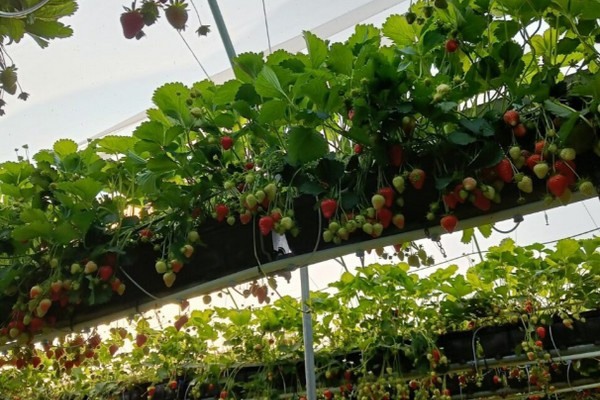
A cool and rainy early summer slowed plant development, which ultimately proved beneficial.
"The beginning of the season was extremely cold and quite rainy. This delayed the harvest so much that the plants never experienced a heavy load all at once."
These cooler conditions also supported better root development. "Plants had time to establish themselves properly because they weren't forced to deal with excessive heat early on. That makes a big difference," she adds. "In my nursery work with woody plants, I've seen how cooler summers often produce better-quality seedlings. I think the same applies here, especially in Finland's long-day light conditions."
 © HAMK
Polytunnels: Helpful, but not a complete shield
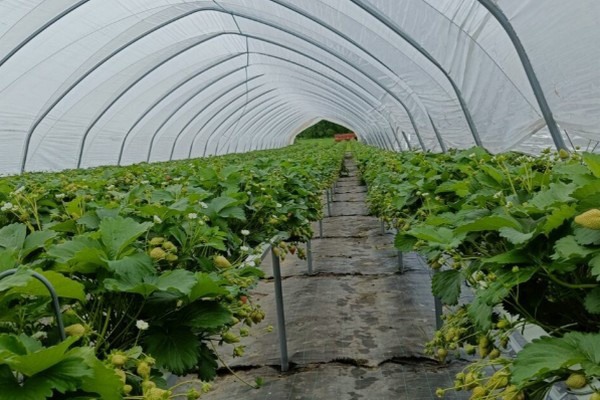
Although strawberries are often grown under polytunnels, the weather still plays a significant role in crop performance. Tunnels offer limited environmental control compared to greenhouses.
"Tunnels are great for protecting against rain and hail, and they reduce temperature fluctuations to a point. But growers don't have the same control as in a greenhouse. When the season started cold, many kept their tunnels tightly closed, and that created too high humidity."
The consequences included fungal outbreaks. "Botrytis cinerea was a problem early in the season, especially under humid conditions. Then later in July, the hot weather hit, and that started to affect fruit flavor, particularly in varieties like Favori and Murano."
 © HAMK
Variety behavior and responses to the season
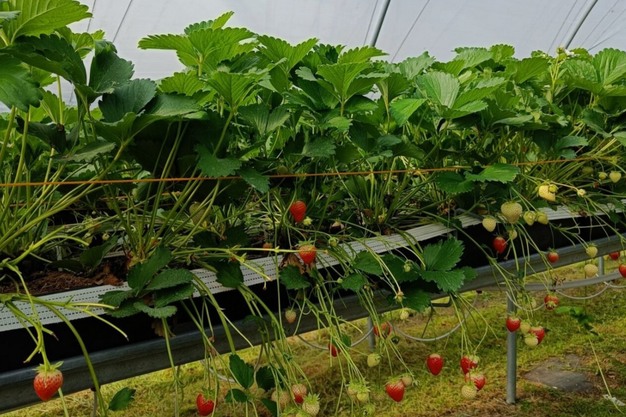
This year's weather highlighted some interesting differences between popular everbearing varieties. "Florice seemed to tolerate temperature fluctuations better than Favori," Eija notes. "But Florice is still a relatively new variety, so it may be too early to draw firm conclusions."
Taste was a common concern in the later part of the season. "Both Favori and Murano tend to lose their flavor when night and day temperatures are high. That's something we've consistently observed."
On the disease front, the news was better. "The cool spring didn't cause major fungal issues for Favori and Florice, certainly not as much as we saw in many June-bearing varieties."
 © HAMK
Planning and flexibility
"You must aim for the best possible outcome based on past results, but you also need to be prepared for plans not to hold, and that's not the grower's fault."
One key strategy is staggering plantings. "On larger farms, doing several plantings at slightly different times helps spread risk and gives more flexibility in targeting market windows."
She also recommends being cautious with varietal diversity. "It's tempting to try many varieties to stretch the season, but that complicates fertilization, irrigation, and management. It's often better to focus on a few and do them well."
Tunnel technology: Underused potential
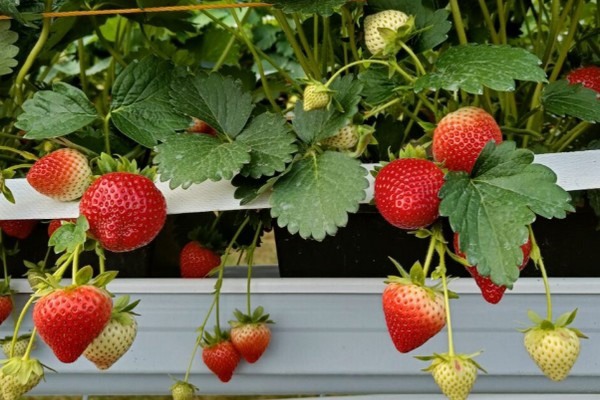
"Ventilation is crucial in both hot and humid weather, but most farms still operate tunnel doors and sidewalls manually. Automatic systems would save a lot of labor and lead to better outcomes."
Even farms that have invested in climate control systems, such as Priva, often fail to take full advantage of the technology.
"Many growers have Priva computers, but they're not using features like radiation sensors to adjust fertilization automatically in hot weather. It's a missed opportunity, but thankfully, more training is coming."
 © HAMK
Breeding and precision will shape the future
The challenges of this season also highlight where breeding and technology should focus next.
"If weather becomes even more unpredictable, plants need to be more resilient to extreme conditions. That's not just the breeder's responsibility, we also have to be more precise in how we grow."
She sees promise in AI-driven systems that help growers make smarter decisions earlier. "If we could make better choices at the right time, like adjusting irrigation or fertilization based on weather forecasts, we could improve yields even with existing varieties."
Traits like flavor, yield, disease resistance, and shelf life remain essential breeding targets. But Eija also stresses the importance of better quality water, biostimulants, and data-driven practices in achieving those goals.
Observe, record, learn
Above all, she encourages growers to engage in ongoing observation and learning.
"We need to be more efficient, and one key factor is constant learning. Monitoring the crop, the irrigation, the climate (both inside and outside the tunnels) is essential."
"By making accurate observations and recording them, we can compare results across years and start to draw real conclusions. Personally, I believe strongly in digital record-keeping systems and the value they bring to modern cultivation."
For more information:
Eija Lankinen, Lecturer in Greenhouse and Vertical Farming cultivation
Häme University of Applied Sciences
[email protected]
+358 50 5944114
Lepaantie 129,
14610 Lepaa
www.hamk.fi