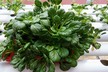


In Medellín, Colombia, a neighborhood marked by violence is flourishing from its rooftops thanks to hydroponic crops. Projects like Green Terraces reveal how vertical farming is making its way as a sustainable solution in urban environments, using stacked structures and soilless systems such as hydroponics and aeroponics. From Latin America to Europe, companies like Néboda and Verde Compacto are driving this new agricultural paradigm. In a world where cities consume 75% of global resources, growing within them can make a difference.
The image of agriculture is changing radically: it is no longer only associated with open fields, but also with vertical structures, urban interiors, and rooftops Medellín's Commune 13, hydroponic lettuce and basil grow on terraces where there was once fear. These plants are not in the ground, but suspended in aqueous solutions full of nutrients, a technique that reduces the need for fertile soil and pesticides.
The initiative, known as Green Terraces, not only generates food but decent employment and community. The crops reach local supermarkets, shortening the distribution chain. This is a living example of how urban agriculture can be both a social and climate tool.
In Vigo, the company Néboda demonstrates that vertical farming is also a matter of engineering. Its crops are grown indoors with LED light specific for photosynthesis and a hydroponic system that recirculates unabsorbed water, achieving a water footprint up to 90% lower than in conventional agriculture.
Read more at Driving Eco