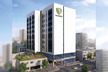


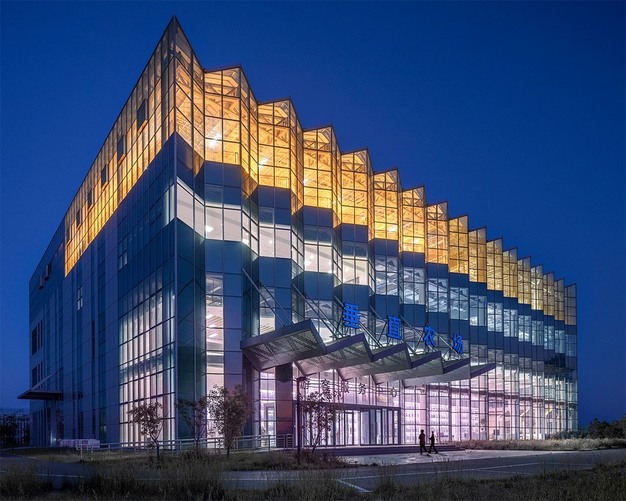
Vertical Farm Hengshui, designed by van Bergen Kolpa Architects, is an innovation center for metropolitan food production in Hengshui, China. Its faceted glass façade, monumental entrance hall, and layered functions present a bold new image for urban horticulture. Using water recycling, passive heat recovery, and natural cooling, the building shows how cities can produce food sustainably.
 © Weiqi Jin
Practical information
Client: AgriGarden
Location: Hengshui International Horticultural park, China
Surface: 12,800 m²
Architecture: van Bergen Kolpa Architecten
Interior design: AgriGarden
Cultivation techniques: AgriGarden, Logiqs, Viscon
Planning: design 2019-20, execution 2021-2024
Photography: Weiqi Jin, Beijing
 © Weiqi JinMonumental entrance hall with vertical farm
The Vertical Farm is built at the International Horticultural Park in Hengshui, which serves as the innovation center for fruit and vegetable cultivation in Hebei Province and China. The transparent, four-story building is the main entrance to the production and educational facilities and offers views of the greenhouse horticultural park for food production.
Building for innovation and education
The 12,800 m² building, spread over four floors, features various innovative vertical farming methods stacked above a transparent entrance hall. An educational route through the building guides visitors through the automated vertical cultivation of leafy vegetables and fruits under LED lighting, as well as a rooftop greenhouse where fruity vegetables and fruit trees are grown under daylight.
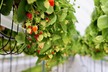
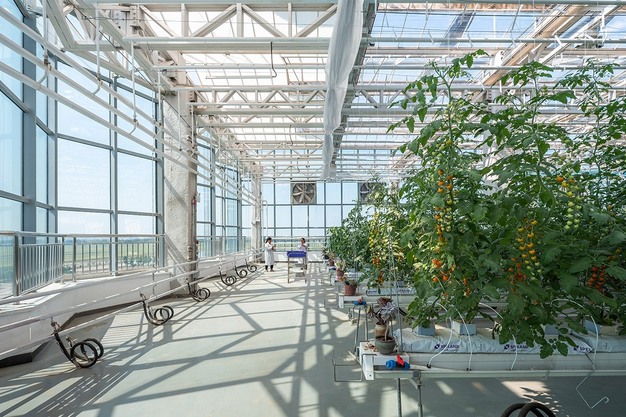 © Weiqi JinFourth floor rooftop farming of fruity vegetables
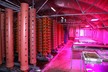
At the heart of the building, on the lower two floors, are the automated vertical cultivation areas without daylight, under LED lighting, with laboratories and processing rooms. Some of these facilities have glass walls and are visible from the entrance hall on the ground floor. The third floor houses the demonstration center for healthy food and horticultural suppliers. The fourth floor is home to the rooftop greenhouse, which offers spaces for educational activities and compartments for the horizontal cultivation of fruit vegetables and fruit trees under daylight.
"One of the challenges was to combine and stack the light conditions for the various types of cultivation and the work and educational spaces in a single four-story building," said Jago van Bergen, van Bergen Kolpa Architects.
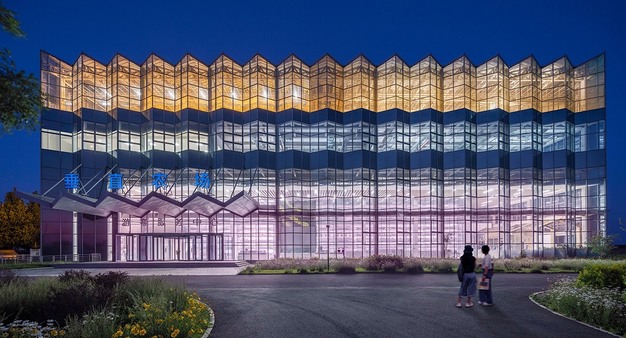 © Weiqi JinStacked crops and educational spaces in one four-story building
Metropolitan horticulture and rural revitalization
In order to provide millions of people in China's growing metropolises with green and healthy food, it is necessary to make production as sustainable as possible and to integrate it into and around the metropolis. The province of Hebei, located around Beijing, Tianjin, and Hengshui, was originally the fruit and vegetable basket of these metropolises, but it is also facing aging, climate change, and water shortages. Promoting increased Sustainability through greenhouse horticulture, shortening food chains, attracting a younger generation of horticulturalists, and promoting a healthy lifestyle are the foundations for rural revitalization.
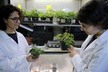
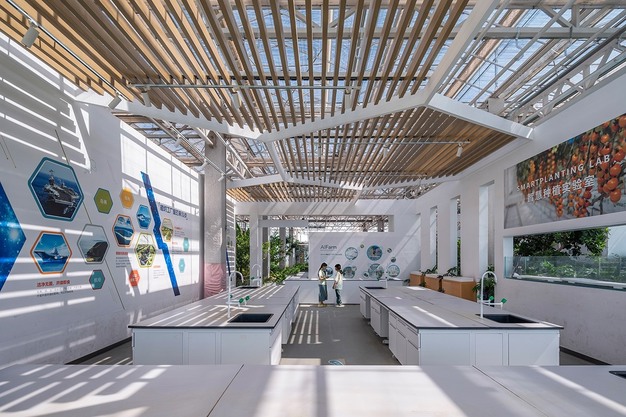 © Weiqi JinWorkshop classroom in the rooftop greenhouse
"Vertical horticulture offers a solution to the question of how metropolises can both produce and consume food. This saves on logistics costs and allows residents to actually receive fresh vegetables."
"This horticultural complex is an important step in the development of the high-tech horticultural sector, together with international knowledge partners and suppliers from the Netherlands in China."
Sustainable use of water and energy
Not a single drop of water is wasted in the building. When irrigating the plants, excess water is collected and reused. Natural ventilation and evaporation-based cooling are used to manage the climate in the building. Passive heat from the sun and residual heat from the LED lighting are used for heating.
"Vertical Farm Hengshui offers the possibility to grow plants in a sustainable way in nutrient-rich water, with artificial sources supplementing the daylight they need. Certain resources that are considered unusable in the metropolis can be reused in vertical horticulture, such as nutrients from sewage water and carbon dioxide in the air."
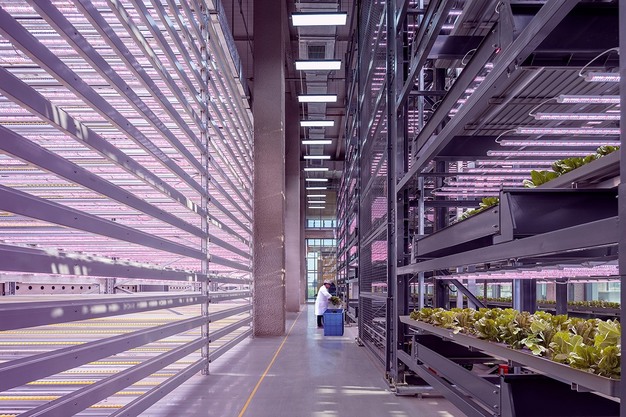 © Weiqi JinSustainable vertical horticulture for propagation and production
Source: van Bergen Kolpa Architects
For more information:
AgriGarden
Laurie Liu
National Agricultural Science and Technology Innovation Park
South of Lianxiang Bridge, Haidian District, Beijing, China
0049(0)1791229249 / 008613611940062
[email protected]
www.agri-garden.com