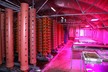

It might not look like much—a tiny, 10-centimeter rice plant quietly sprouting in a Milan lab—but this super-compact shoot could address two stubborn challenges: fresh food for long-duration spaceflight and reliable crops for extreme environments on Earth. The Moon-Rice project targets an ultra-small, nutrient-dense rice tailored for confined modules and controlled environments.¹ The effort is led by the Italian Space Agency (ASI) with three partner universities—University of Milan, Sapienza University of Rome, and University of Naples Federico II—linking genetics, physiology, and space-crop know-how.²
Space agriculture isn't just about soil, water loops, or LEDs—it's about real estate. Even dwarf rice can be too tall for pressurized modules. Astronauts won't thrive on shelf-stable mush forever; they need fresh fiber, vitamins, and protein on missions lasting months. So Italian scientists set out to craft a plant that is not only short but also productive and nutrient-forward, using mutant lines and CRISPR-Cas edits to reshape architecture while preserving vigor.
To keep height down without torpedoing performance, researchers tweak growth pathways (notably gibberellins) and screen compact lines that still germinate well and set grain. The team also tests simulated microgravity by continuously rotating seedlings so they lose any sense of "up" or "down"—a standard Earth-based proxy for space conditions.³ Beyond size, they are boosting protein payoff by increasing the embryo-to-starch ratio, aiming for denser nutrition per cubic centimeter of grow space.⁴
Read more at Glass Almanac