
"Vertical farming is rising to a new level and understanding of what is really needed, and asks the crucial question of size, customers, technology, selection of crops, and which new crops to add to the plate," says Christine Zimmermann-Loessl, Chairwoman of the Association for Vertical Farming (AVF). "Emphasizing cooperation has never been more important or widely understood within the industry and research. The Association for Vertical Farming (AVF) is and will be the organization leading these developments."
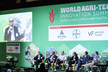
From 3 to 4 September, experts, policymakers, and growers gathered under the theme "Global Food Challenges: Vertical Farming as a Catalyst for Innovation & Climate Action." The AVF emphasized that the sector thrives on cooperation, knowledge exchange, and new alliances. "The challenges have shown us that progress can only be achieved by moving forward together." © AVF
© AVF
Climate action on the global stage
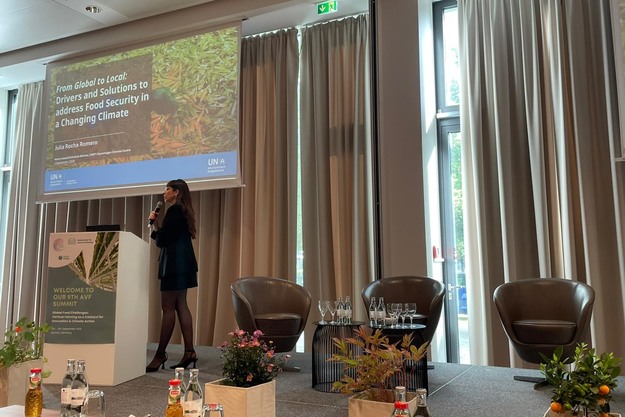
Julia Rocha Romero of the United Nations Environment Programme's Copenhagen Climate Centre delivered a keynote that highlighted the pressing challenges and opportunities of the global food system, from the one-third of global greenhouse gas emissions it causes today to the 70% of food already consumed in cities, which will be home to two-thirds of humanity by 2050.
"What was particularly compelling was the perspective that vertical farming and CEA technologies can play a central role in city strategies for climate action and food security, opening access to international projects, funding, and alignment with the UN's Sustainable Development Goals."
 © AVF
© AVF
Diversity takes center stage
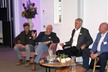
One of the most widely discussed sessions was the Women in AgTech panel, with contributions from Tusya Garibashvili of SpaceFarms, Marie Ammann of BayWa, Besan Dahboor Engel of ReVora, and Laura Nelson of Innovation AgriTech Group.
"There are still voices that do not fully recognize how central this topic is, which makes it all the more important to see the audience's clear response," the organization says. "Gender equality and visibility of women in our sector are indispensable, and the strong support in the room underlined that diversity and inclusion are essential drivers of innovation."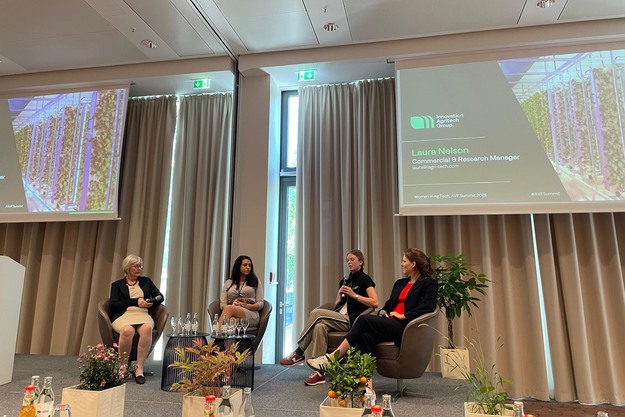 © AVF
© AVF
Science meets practice
Discussions between researchers and practitioners showed how closely technology and operations are tied. According to the AVF, "research findings were directly discussed with practitioners, and during networking sessions, it was evident how strong the need is to share ideas, seek feedback, and learn from one another."
"From this, approaches emerged that can truly move the industry forward, such as the idea of forming energy alliances between farms to negotiate stable prices with energy providers and strengthen resilience against price fluctuations."
The Science & Technology track featured Michal Slota of Content Farmers on microbiomes, Prof. Joel Cuello of the University of Arizona on AI, Reinhard Bott of Vertical Farm Tech on root health, Alexander Jaworski of Greenhub on retrofits, and Prof. Stefan Streif of TU Chemnitz on digital twins. Workshops were led by Eleonora Itri and Sabine Wittmann of HSWT, and Enrico Erhardt of GmBU introduced the GROWvertical network. © AVF
© AVF
A political signal from Bavaria
The Bavarian government used the Summit to send a clear signal of support. Hubert Aiwanger, Bavarian Minister of Economic Affairs, pledged backing for the sector. The AVF says, "He emphasized the importance of building bridges between innovative concepts and existing agricultural infrastructures. He opened the door to political support."
Broadening the crop portfolio
Beyond leafy greens, alternative production models were showcased. Alessandro Oliveri of Igrox spoke about microalgae, Andreas Koeck of entoSOLUTIONS highlighted industrial insect farming, and Hannah Marie Hoven of Kelpinor presented kelp-based biostimulants. "Beyond leafy greens and microgreens, successful business models for insect farming and microalgae production took the stage."
"The commercial success of Black Soldier Fly farming in Germany was as convincing as the application of CEA technologies for microalgae cultivation. Workshops on high-value crops such as medicinal plants also highlighted the potential to develop new markets." The investment panel brought together Marie Ammann of BayWa, Johann Waldherr of Würth, and Michael Schmidt of UNIDO to discuss scaling strategies and capital flows into the sector.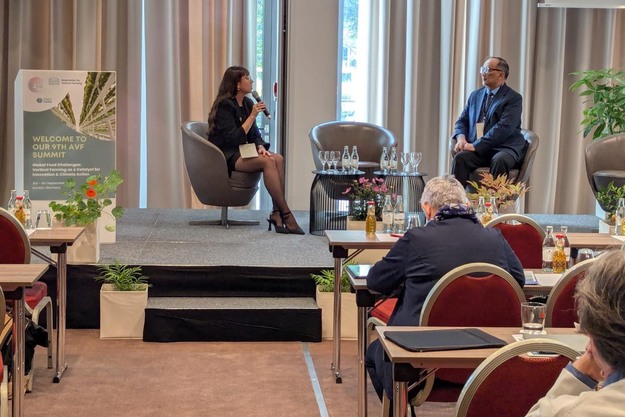 © AVF
© AVF
Cities as innovation hubs
"As highlighted throughout the summit, cities are decisive actors in the successful implementation of vertical farming. Through a series of diverse use cases, we were able to better understand the different approaches that cities are taking and the challenges they face. The panel made one point especially clear: if we want to bring vertical farming to the next level, we need to move beyond isolated projects and co-create a white paper with diverse stakeholders."
Finalist startups impress judges
"The Startup Challenge impressively demonstrated the vibrancy and creativity of our sector. From new business models to technological innovations and disruptive ideas, the variety of approaches showed how strongly the next generation of AgTech companies is shaping the future."
Direct Carbon emerged as this year's winner, for its Wunderpumpe-2 (WP-2), which it describes as a small-scale, cost-efficient carbon capture system built specifically for indoor growers. © Direct Carbon AB
Until next year
In closing, the AVF says that it believes that the future of vertical farming lies in cooperation, openness, and the courage to innovate, expressing gratitude to all who made the event possible. "Thank you to all the speakers, participants, and partners for making the two days in Munich an inspiring milestone for the sector."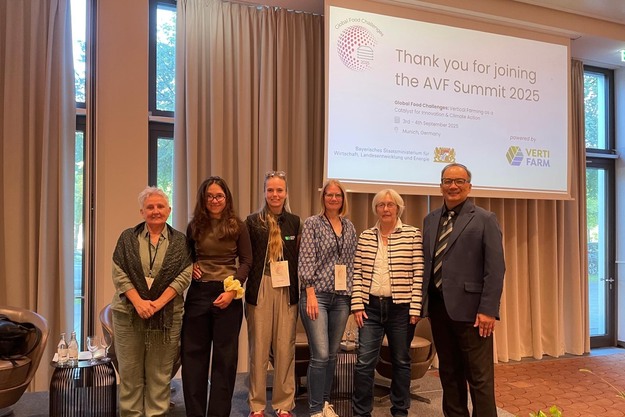 © AVF
© AVF
For more information:
VertiFarm AVF Summit
Nina Kupferschmidt
+49 231 120 4556
[email protected]
www.vertifarm.de/en-gb