

"At Haifa Group, we don't just manufacture fertilisers, we build partnerships with growers," says Michael Koch, CRF Market Development Manager at Haifa Group, addressing a room full of industry professionals during the recent Israeli tech trade mission visit to South Africa.
With nearly six decades of experience, Haifa Group has grown from a single potassium nitrate facility to a global powerhouse with 17 subsidiaries and logistics facilities around the world.
The need for sustainable, efficient crop nutrition is more urgent than ever. Climate challenges, regulatory hurdles, and environmental concerns are all pressuring growers to do more with less. Haifa's strategy is to address these complexities through a combination of advanced fertilisers, digital tools, and on-the-ground support.
"One of our core values is better NUE - nutrient use efficiency. In the last 25 years, nutrient use has gone up 45%, but yields have only improved 37%. That's a negative trend, as we're using more but not getting more. We need to reverse that."
To tackle this, Haifa Group offers a broad portfolio that includes water-soluble fertilisers, controlled-release fertilisers (CRFs), foliar nutrition, biostimulants, and precision fertigation solutions all backed by robust R&D and sustainability goals. The company also ensures delivery via a network of 120 front warehouses and five global logistics terminals, shipping over 21,000 containers annually.
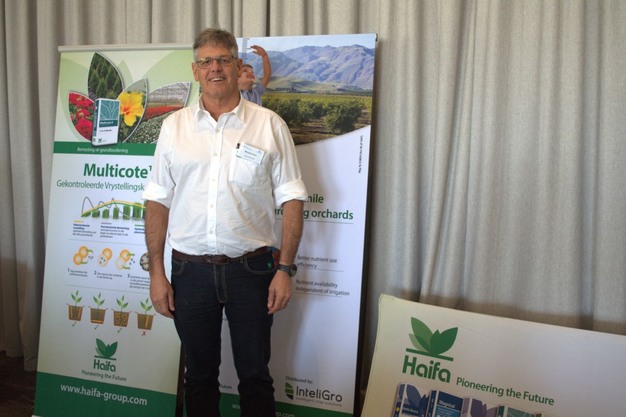 © Tinneke Hattingh | VerticalFarmDaily.com
Michael Koch as a spokesperson during the recent Israeli tech trade mission visit to South Africa
Control and convenience: feeding plants smarter
Among Haifa's standout innovations is its Multicote™ line of Controlled Release Fertilisers (CRFs) - fertilisers with polymer coatings that release nutrients in a predictable, temperature-driven manner over 2 to 16 months. "It's a single application with long-term control," Michael explains. "That's good for the grower, good for the plant, and great for the environment."
Unfortunately, there is still confusion in the market around terms like controlled release and slow release, which are often mistakenly used interchangeably.
This kind of confusion can be harmful, as the difference between the two is significant: "Controlled release and slow release are not the same, and treating them as if they are can lead to poor results or even damage to crops," he says.
Slow-release fertilisers tend to break down unpredictably. Factors like microbial activity, coating rupture, soil chemistry, humidity, and temperature all influence the release rate, and most of these factors are beyond the grower's control. This often leads to erratic nutrient availability, which can be too fast or too slow for optimal plant development.
In contrast, controlled release fertilisers like Multicote™ rely on a diffusion mechanism through a polymer coating, where only temperature affects the release rate. "This allows us to plan nutrient availability with confidence," he adds. "It's predictable, scalable, and safe, particularly important in high-value or sensitive growing environments."
From orchards to vertical farms: real-world examples
In one particularly memorable example, Haifa's Multicote™ Agri Juvenile product, originally developed for establishing vineyards and fruit trees in South Africa, proved so effective it was adapted for global use, under the name "Multicote™ Agri Junior" due to branding challenges. "It was developed locally with Haifa's distribution partners, and it worked so well that we scaled it to other regions."
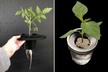
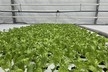
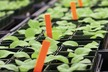
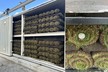
Controlled release technology is already making a difference in new farming frontiers. One example is Kalliergo, a cutting-edge vertical farming company that recently unveiled its next-generation GeoTowers and Hydra System. Haifa supplies Multicote Agri Hydro (MCA) to these systems, enabling a consistent daily release of nutrients aligned with the plant's growth cycle. The result is a low-maintenance system requiring only daily watering with no complex fertigation systems, no guesswork, and no need for grower expertise in fertiliser dosing.
Another standout example is the African Grower project, a socially driven initiative that helps people grow fresh produce at home using vertical growing kits. African Grower's system also uses Multicote Agri Hydro, making it possible for users to grow high-quality crops with zero fertigation equipment or agronomic expertise. A single pre-measured dose applied at planting provides all the nutrients the plant needs throughout its lifecycle.
"For both Kalliergo and African Grower, Multicote Agri Hydro enables simple, scalable, low-cost plant nutrition. It's making home and micro-farming more accessible, efficient, and productive."
Digital tools for modern growers
Beyond fertilisers, Haifa Group is also developing digital tools that help growers work smarter. Croptune, for instance, is a mobile app that uses smartphone cameras to analyse leaf colour and infer plant nutrient status, detecting subtle differences invisible to the human eye.
Meanwhile, NutriNet is a free web platform that integrates soil data, water quality, and crop requirements to recommend personalised fertiliser plans. "This isn't just data for the sake of data. It's decision support. And it's accessible to growers anywhere."
The grower's mindset, always in focus
"We listen to the challenges growers face. With global warming, input costs, and water scarcity, it's not getting easier," he says. "That's why we start every solution by asking: What does the grower really need?"
The company also acknowledges the regulatory roadblocks that slow innovation. "We often develop a fantastic product, but getting it registered can take two years and cost a fortune," he adds. "That's why we invest in local partnerships and blending facilities to make sure our innovations are accessible in the real world."
Sustainability and the path ahead
Haifa Group complies with UN Sustainable Development Goals and integrates carbon footprint tracking into its nutrient planning tools like MultiMatch, which calculates both fertiliser blends and environmental impact.
"We have a 360-degree approach. From product innovation to grower training, from digital decision support to logistics, and from sustainability to partnerships, it all connects."
With 30% of the global greenhouse crop nutrition market under its belt, Haifa Group continues to grow with purpose. "We're not interested in growing blindly," he concludes. "We want to grow by staying relevant and by helping growers produce more with fewer resources, responsibly and profitably. We pioneered potassium nitrate 59 years ago, and we're still pioneering today."
For more information:
Haifa South Africa
Michael Koch, CRF Market Development Manager
[email protected]
www.haifa-group.com