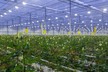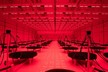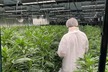

Indoor farming presents a sustainable response to urbanization and climate change, yet optimizing light use efficiency (LUE) remains vital for maximizing crop yield and minimizing energy use.
This study introduces an IoT-based framework for adaptive light management in controlled environments, using lettuce (Lactuca sativa L.) as a model crop due to its rapid growth and sensitivity to light spectra. The system integrates advanced LED lighting, real-time sensors, and cloud-based analytics to enhance light distribution and automate adjustments based on growth stages. The key findings indicate a 20% increase in energy efficiency and a 15% improvement in lettuce growth compared to traditional static models. Novel metrics—Light Use Efficiency at Growth stage Canopy Level (LUEP) and Lamp Level (LUEL)—were developed to assess system performance comprehensively. Simulations identified optimal growth conditions, including a light intensity of 350–400 µmol/m2/s and photoperiods of 16–17 h/day. Spectral optimization showed that a balanced blue-red light mix benefits vegetative growth, while higher red content supports flowering. The framework's feedback control ensures rapid (<2 s) and accurate (>97%) adjustments to environmental deviations, maintaining ideal conditions throughout growth stages. Comparative analysis confirms the adaptive system's superiority over static models in responding to dynamic environmental conditions and improving performance metrics like LUEP and LUEL. Practical recommendations include stage-specific guidelines for light spectrum, intensity, and duration to enhance both energy efficiency and crop productivity. While tailored to lettuce, the modular system design allows for adaptation to a variety of leafy greens and other crops with species-specific calibration.
This research demonstrates the potential of IoT-driven adaptive lighting systems to advance precision agriculture in indoor environments, offering scalable, energy-efficient solutions for sustainable food production.
Kharraz, N.; Revoly, A.; Szabó, I. IoT-Based Adaptive Lighting Framework for Optimizing Energy Efficiency and Crop Yield in Indoor Farming. J. Sens. Actuator Netw. 2025, 14, 59. https://doi.org/10.3390/jsan14030059
Source: MDPI