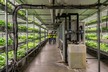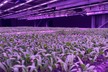


Cultivating crops in mechanized greenhouses and windowless plant factories – a practice known as controlled environment agriculture (CEA) – is widely advocated as a way to enhance sustainability.
Yet CEA provides less than 1% of the US food crops while consuming more energy than all open-field cultivation, potentially expanding tenfold to ~7% of national energy use. This meta-analysis of 116 studies spans 40 countries and Antarctica, and 23 crop types. Energy per harvest weight varies by five orders of magnitude, depending on facility type, crop, geography, and other factors. Improvements in energy efficiency are constrained and transitioning to solar energy would require three-times more land area than open-field cultivation, negating one of CEA's prime intended benefits. Due primarily to energy using systems, CEA has significantly higher capital and operating costs than open-field cultivation, translating to higher commodity prices and substantial business risk. Particularly high energy intensities have rendered grains, root crops, and other important staple crops nonviable.
Sustainable outcomes require increased scrutiny by planners and policymakers, informed by improved assessment rigor and more objective comparisons of open-field and CEA practices.
Mills, E. The emergence of indoor agriculture as a driver of global energy demand. npj Sustain. Agric. 3, 52 (2025). https://doi.org/10.1038/s44264-025-00091-z
Source: Nature Magazine