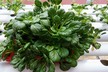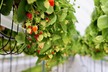


It is a fully biodegradable and eco-friendly system for hydroponic agriculture, made of hydrogel and capable of supporting plant growth with minimal water; in the future, it will be able to monitor plant health in real time. This innovation is the result of joint research between the Faculty of Engineering at the Free University of Bozen-Bolzano (UniBz) and the Istituto Italiano di Tecnologia (IIT-Italian Insititute of Technology) in Genoa.
The invention offers a zero-waste, low-environmental-impact solution for agriculture, a sector increasingly threatened by climate change, drought, pollution, biodiversity loss, and soil degradation.
Hydrogels are materials whose internal structure is composed of a polymer network, designed to be porous and therefore very advantageous in applications where it is important to retain water or nutrients. In horticulture, they are emerging as sustainable alternatives to petroleum-based foams and pots.
At IIT's laboratories in Genoa, researchers produced hydrogels from biopolymers, specifically carrageenan, a polysaccharide extracted from red algae and widely used for its gelling, thickening, and stabilizing properties. The resulting hydrogel is biodegradable and can be safely applied to soil without causing pollution. The team enriched the porous material with whole-algae extracts, which serve as biostimulants: substances that stimulate natural plant processes to improve nutrient efficiency, stress tolerance, and crop quality, regardless of nutrient content.
Read more at Technology Networks