

There's certainly no shortage of fruits and vegetables in Suriname. That abundance isn't just thanks to the country's tropical climate, which allows for a wide range of crops, but also to its rich and complex history—especially the events that took place in the second half of the nineteenth century. Alongside the culinary traditions of the Indigenous Surinamese people, African slaves (whose influence lives on in the Creole cuisine), and Dutch colonists, Asian vegetables were also introduced during this period, finding their way into the heart of Surinamese cooking.
In this second installment, we take a closer look at some of the most typical Surinamese fruits and vegetables—the flavorful ingredients that give dishes like pom, roti, moksi alesi, and saoto soep their distinctive character.
Click here to view the fresh produce department of Tulip and Choi's supermarkets (link in Dutch)
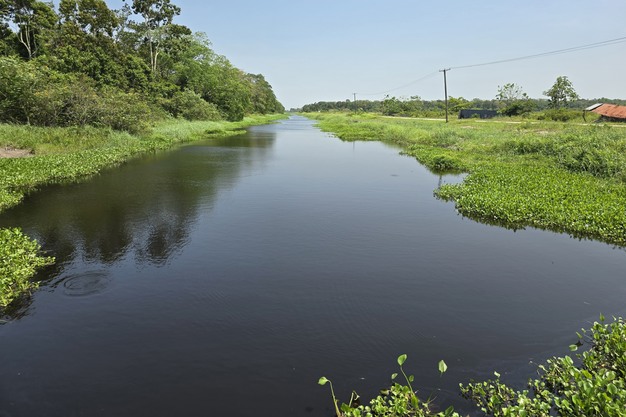 © Pieter Boekhout | VerticalFarmDaily.comIn many countries, water is a problem. In Suriname, that's not an issue at all.
But first, a little history lesson. How did dishes like nasi goreng and bami goreng—originally from Java—come to have their own Surinamese versions? When slavery was abolished in 1863, formerly enslaved people were required to continue working on plantations for another ten years. When this obligation finally ended in 1873, many left the plantations in search of a better life. Since plantation labor was still needed, new workers were brought in: first Chinese laborers, then, from 1873 onward, Hindustani workers from British India, and from 1890, Javanese from the Dutch East Indies. After five years, they were allowed to return home, but many chose to stay. The government granted them farmland, and over time, Chinese, Hindustani, and Javanese communities settled permanently in Suriname. With them came a rich variety of Asian crops—most notably rice—which became staples in local agriculture and cuisine.
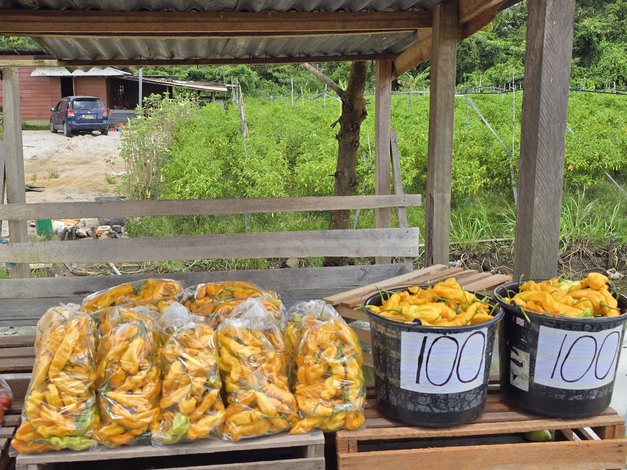 © Pieter Boekhout | VerticalFarmDaily.comA bucket of Madame Jeanette peppers offered for €2.20 at a roadside stand
Among the Solanaceae, or the nightshade family, Suriname grows the familiar tomatoes, bell peppers, chili peppers (including the famous Madame Jeanette), and potatoes, but also a local favorite known as boulanger. This is simply another name for what most people know as eggplant. Closely related is antroewa, a vegetable that originally comes from East Africa and has a slightly bitter taste, adding depth to many Surinamese stews.
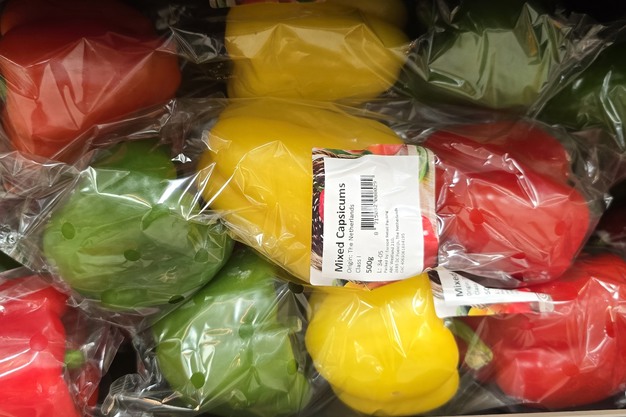 © Pieter Boekhout | VerticalFarmDaily.comDutch bell peppers at Choi's
The cucumber family, or cucurbits, in Suriname includes more than just cucumbers and gherkins. It also features sopropo, or bitter melon—a bumpy, green fruit native to Asia and Africa. It's typically harvested while still green and cooked to bring out its distinctive, pleasantly bitter flavor. Another popular fruiting vegetable is okra, a spicy, green, pod-shaped plant of African origin. Though it might look a bit like a green chili, it actually belongs to an entirely different plant family and is loved for the silky texture it brings to soups and stews.
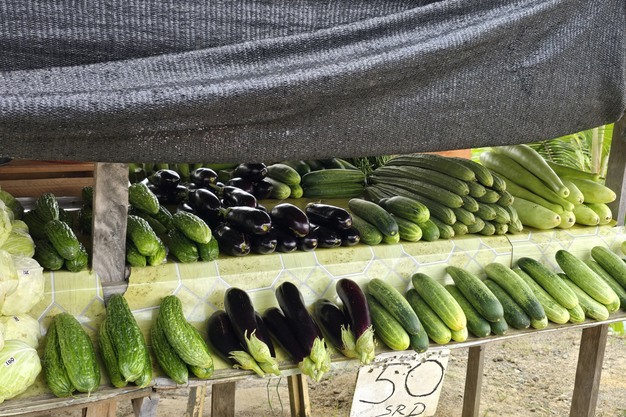 © Pieter Boekhout | VerticalFarmDaily.com
Boulanger (Surinamese eggplant), African eggplant, cucumber, and sopropo
Cabbage varieties in Suriname include not only the familiar head cabbage and cauliflower, but also several Chinese types such as amsoi, kailan, kaisoi, and paksoi. Alongside green beans, farmers also grow a remarkable legume that can reach up to a meter in length: kousenband, also known as yardlong bean. Originally from East Asia, this vegetable has a slightly sweeter and spicier flavor than regular green beans and is a staple in many Surinamese dishes.
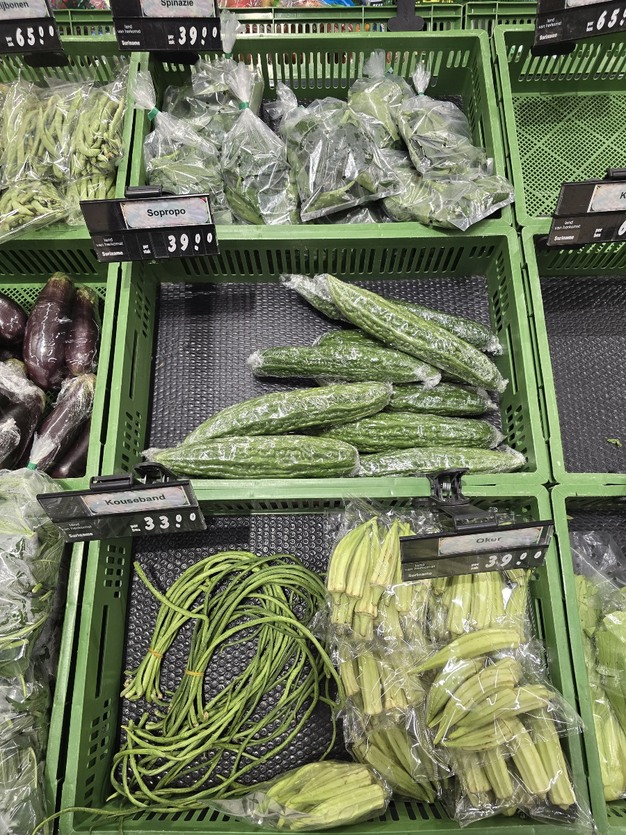 © Pieter Boekhout | VerticalFarmDaily.comBeans at Tulip supermarket for 33 Srd (€0.75)
For the Indigenous peoples of Suriname, the most important crop by far was cassava, a root vegetable that remains central to local food culture. The flour made from cassava is still used today to bake flatbreads with a distinct, rustic flavor. Another key root crop is pomtayer, a hardy herbaceous plant whose roots and leaves are both edible. The tuber is the main ingredient in pom, a beloved Surinamese oven dish that's often prepared for festive occasions.
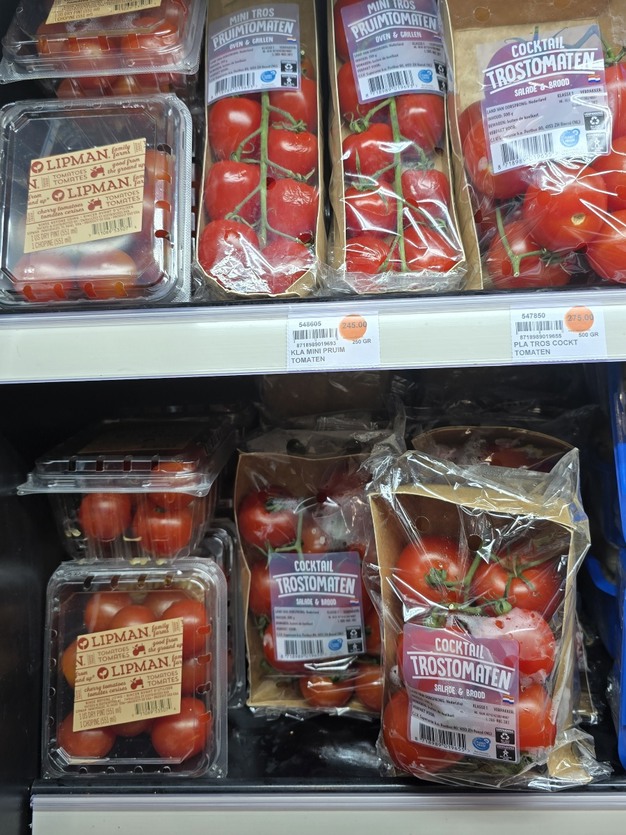 © Pieter Boekhout | VerticalFarmDaily.comDutch and American tomatoes at Tulip
Among leafy vegetables, both fine and coarse types of klaroen deserve a special mention. Their dark green leaves have a subtle, nutty flavor that adds depth to soups and stews. Another well-loved green is bitawiri, or bitterleaf, which brings a pleasant touch of bitterness to dishes and is one of the possible ingredients in moksi alesi, the famous Surinamese mixed rice dish.
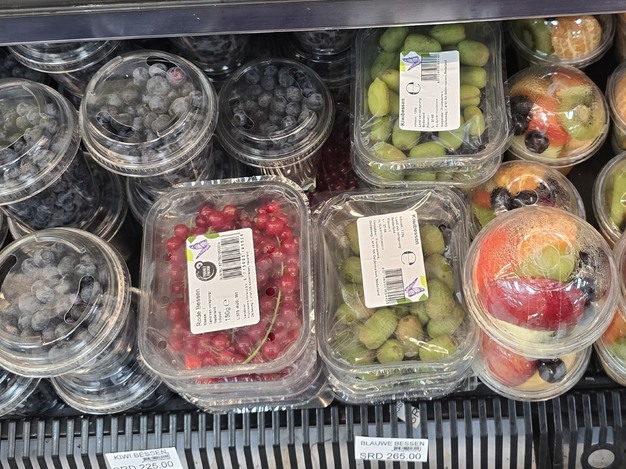 © Pieter Boekhout | VerticalFarmDaily.comSmall fruit from Fruitmasters at Choi's
When it comes to fruit, Suriname's selection is just as impressive. Locals enjoy bacoven (bananas) and lemmetjes (limes), as well as manja's (mangoes), markoesa's (passion fruit, from the Spanish maracuyá), acerola's (known locally as Surinamese cherries), papayas, and guavas. Each of these fruits thrives in the (sub)tropical climate and plays a flavorful role in Suriname's vibrant food culture.
Click here to view the fresh produce department of Tulip and Choi's supermarkets (link in Dutch)
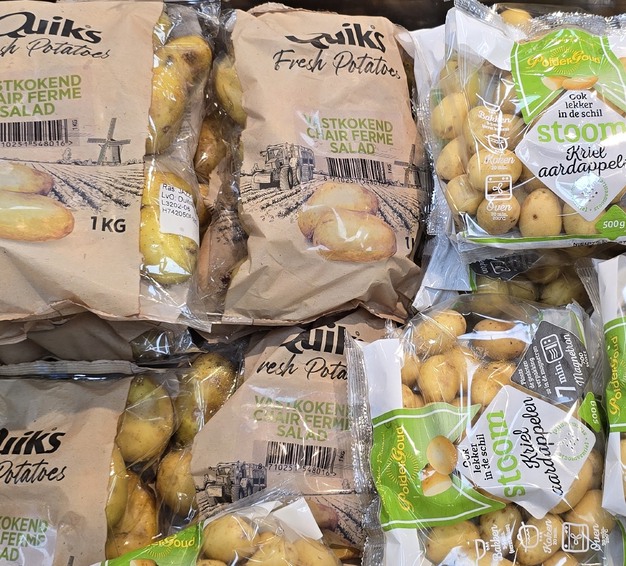 © Pieter Boekhout | VerticalFarmDaily.comPotatoes from Quik and Schaap Holland...
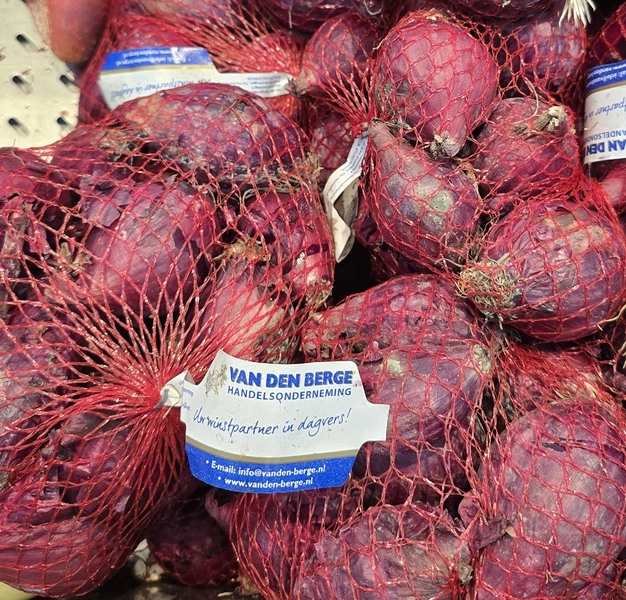 © Pieter Boekhout | VerticalFarmDaily.com...and onions from Van den Berge