

Across the Middle East and Africa, what began as a response to scarcity has evolved into a model for farming in a changing climate. From AI-guided greenhouses in the Gulf to solar-powered irrigation networks across North Africa, the region is proving that agriculture can thrive where conditions are toughest.
"The Middle East and Africa are strong testbeds for agri-tech innovation due to pressing challenges and diverse conditions," says Adnane Alaoui Soulimani, Head of the Innovation and Entrepreneurship Lab at Mohammed VI Polytechnic University (UM6P) in Morocco. For Alaoui Soulimani, adversity has accelerated creativity. Rather than importing solutions, innovators are designing technologies built for local extremes.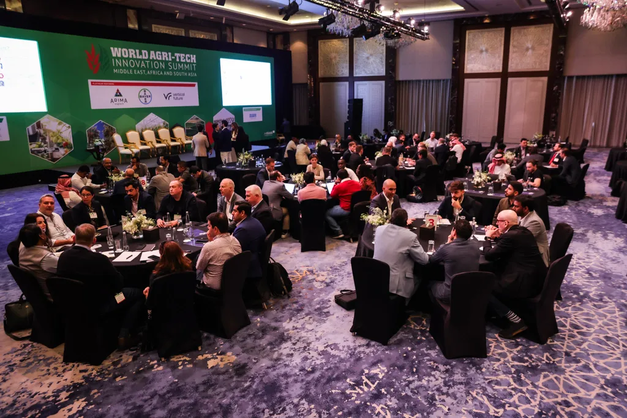 © World Agri-Tech Innovation Summit
Innovation shaped by constraint
From high-tech vertical farms to mobile platforms linking smallholders to buyers, every layer of the region's food system has become part of what Alaoui Soulimani calls a "living laboratory for innovation." He explains, "The coexistence of high-tech commercial farms and millions of smallholders creates a unique living laboratory for innovation. Scarcity, diversity, and rapid adoption make the region fertile ground for agri-tech development."
This mix of scale and adaptability allows ideas to move quickly from pilot to practice. Data collected in controlled-environment farms feeds directly into tools later adapted for smallholders, bridging gaps between research and real-world application.
Integrating water, energy, and food 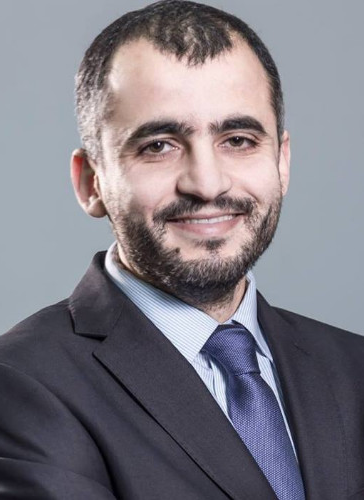 © World Agri-Tech Innovation Summit
The next phase of transformation lies in integration. "In Morocco, solar-powered drip irrigation systems are helping farmers reduce fossil fuel use and optimize scarce water resources," Alaoui Soulimani says. "In Egypt, aquaponics projects combine fish farming and vegetable production, creating closed-loop systems where water and nutrients are continuously recycled."
In Qatar, solar-powered greenhouses are maintaining production through peak summer temperatures. By connecting energy, irrigation, and nutrient cycles, these projects reduce vulnerability to climate stress and make agriculture more self-sustaining. "By aligning innovations across the three sectors, the region reduces vulnerability to climate stress and builds resilience."
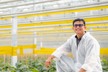
Adnane Alaoui Soulimani (right)
Collaboration as catalyst
Alaoui Soulimani believes the region's strength lies as much in its partnerships as in its technology. "Collaborations are central to scaling climate-smart agriculture," he says. "When science, policy, and investment align, transformation becomes possible."
In Saudi Arabia, the Public Investment Fund has joined forces with AeroFarms to build one of the world's largest vertical farms in Riyadh. In Morocco, the International Finance Corporation, Banque Centrale Populaire, and CMGP are financing solar micro-irrigation systems projected to reach 30,000 farmers by 2027.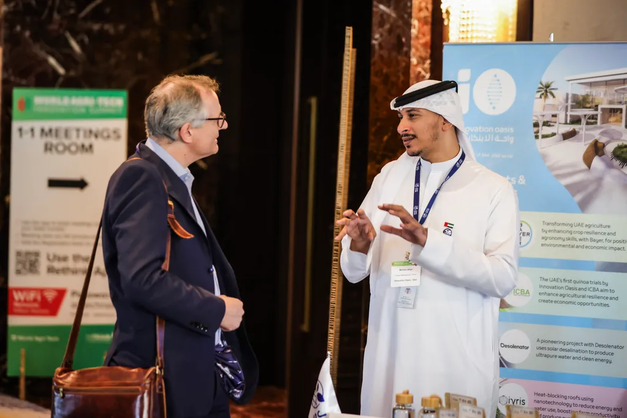 © World Agri-Tech Innovation Summit
From regional challenge to global model
"Technologies developed here under the harshest conditions, from controlled-environment farming to solar-powered desalination, are now being exported," says Alaoui Soulimani. The region's challenges have led to a mindset of designing for uncertainty. Growers are proving that sustainability and productivity can coexist, even in extreme environments.
Join the conversation at the World Agri-Tech Innovation Summit in Dubai from 8 to 9 December. Use discount code Farm10 when booking your ticket at www.worldagritechdubai.com/book-tickets.
For more information: 
World Agri-Tech Innovation Summit
Andrea Diaz Soria, Marketing Manager
[email protected]
www.worldagritechdubai.com