

Two innovative agricultural initiatives aimed at helping Barbadian households to cut grocery bills and small farmers to reduce production costs were launched by University of the West Indies researchers on Thursday October 16, in a fresh, high-tech push towards sustainable food security.
The UWI Centre for Agricultural Research and Innovation (CAGRI) unveiled the IES HydroGen System and the FAO Black Soldier Fly (BSF) Larvae Project, branded Future Protein, as part of the university's activities to mark World Food Day. The initiatives are part of a deliberate effort to make agriculture more profitable, attractive and modern, said CAGRI's director, Dr Michele Singh, during the launch at the Owen Arthur CARICOM Research Complex at Cave Hill.
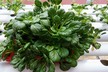
The IES HydroGen System, developed through hands-on workshops and supported by a donation from Infinity Energy Solutions, represents a breakthrough in democratising food production by making high-yield, water-efficient farming accessible to households and communities.
While hydroponics empowers households to grow more of what they eat, the Black Soldier Fly (BSF) Larvae Project — branded Future Protein — tackles the region's dependency on imported animal feed and its mounting organic waste problem. The common fly's larvae are turned into feed and fertiliser.
Read more at Barbados Today