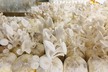


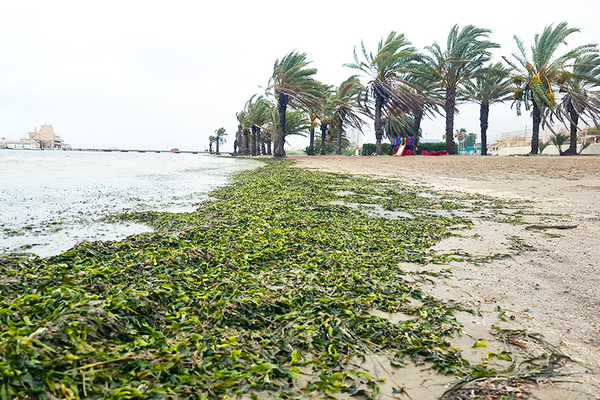
For years, the shores of the Mar Menor in Spain have been a symbol of environmental degradation. But a research group at the Autonomous University of Madrid, led by Cristina Soler, professor of Food Technology, has turned that crisis into an opportunity. The project, called Algarikon and funded by the Ministry of Science and the European Union, proposes a circular model to transform algae that accumulates in the lagoon into valuable products. The focus is on Caulerpa prolifera, a native Mediterranean green algae that grows uncontrollably in shallow waters overloaded with nutrients.
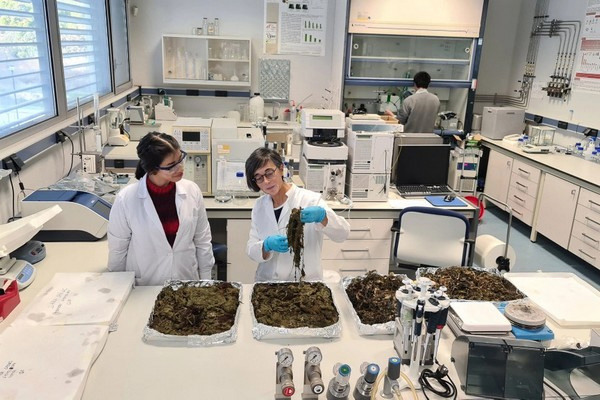
"The project literally started on the terrace of my house," Soler says, laughing. "I am from Murcia and I have a house at the Mar Menor. One day, looking at the mess of algae and the smell with my uncle, he said: you are a scientist, can you not do something about this"
That comment became the spark. "I took a sample, brought it to the lab and tried using it as a medium to grow fungi in Petri dishes. The fungi not only grew, they produced fruiting bodies. After that, I wrote a research project and brought together an interdisciplinary team. That was the beginning of Algarikon."
 © Algarikon
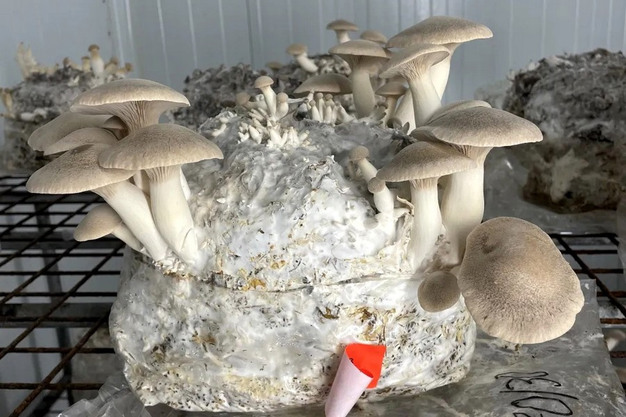
Mushrooms on algae: more production and more value
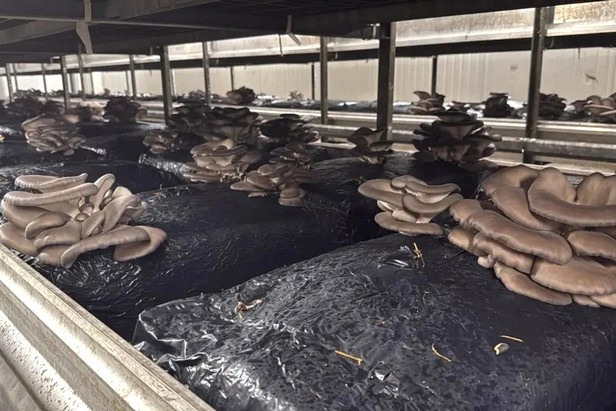
The first step was to test whether the algae could work as a substrate. "We cultivated mushrooms, the product that could have the best commercial fit, and we discovered that they produced more than with a conventional substrate. In La Rioja we carried out a semi industrial trial with five hundred bags of eighteen kilos, and the yield was ten percent higher than usual."
 © Algarikon
Once the substrate was exhausted, the team explored further uses. "From that material we could extract compounds for the food industry, such as polysaccharides, enzymes, or food grade additives, along with agricultural biostimulants. A technology center in Murcia tested the extracts on hydroponic lettuce, and the results were spectacular. The plants doubled in size and improved their sensory qualities."
But the process did not stop there. "We introduced the remaining material into a biodigester to produce methane," Soler explains. "The project worked so well that we received the Mares Circulares Award twenty twenty four. That support allowed us to go further. We took sludge from the Mar Menor and proved that anaerobic digestion in saltwater was possible using microorganisms naturally present in the marine sediment."
One of the most surprising findings involved Caulerpa prolifera, which behaves like an invasive species in the lagoon. "Its anaerobic digestion in saltwater produced even more methane. A problematic species became a source of energy."
The team also closed the loop. "The digestate from the biodigester, rich in nitrogen, can be reused as biofertilizer and as an ingredient for mushroom substrate. Nothing is wasted."
 © Algarikon
From research to business
The success of the model led to the creation of the tech based company Algarikon Mar Menor SL, founded within the university with the goal of scaling the process to industrial level. "The economic study shows that the process is commercially viable," Soler confirms. "That is why we created the company and applied for a European LIFE project to move toward large scale production. The mushroom cultivation stage is already ready to commercialize the substrate. The other phases require larger investments."
The project has already generated three registered patents, including one for the marine substrate for edible mushrooms. "It is frustrating to think that something so promising could stall because of lack of financing. But we keep working, looking for partners and proving that value can be created from waste," Soler says.
"The Mar Menor can stop being a symbol of environmental crisis and become a European reference in circular innovation. With Algarikon we are showing that science can transform ecological problems into economic opportunities, creating real solutions for the environment and the agri food sector."
 © Algarikon
 © AlgarikonFor more information:
Algarikon
www.algarikon.com