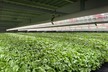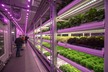


After confirming the liquidation of its Singapore operation, Growy has shared new details about the factors behind its decision and the lessons that will shape its next phase. Speaking with Vertical Farm Daily, co-founders Ard and Laura van de Kreeke acknowledged that the closure stemmed primarily from operational limitations of the inherited system rather than weak market demand. © Vertical Farm Daily
Retrofit limits and high operating costs
"The main pressures that made the Singapore farm unsustainable were high operational expenditure and limitations of the systems," they explained. "We had some retrofit constraints that limited how far we could push energy efficiency and throughput without a full rebuild. Although distribution grew and operational KPIs improved, the unit economics did not reach sustainable break-even."
The Singapore site, acquired from Kalera International in 2023, had been equipped almost entirely with hardware from the previous owner. "The difference between the Singapore and Amsterdam facilities became clear after some months of operations," they said. "The energy efficiency, flexibility, and automation we were used to in Amsterdam did not match expectations in Singapore. We upgraded the control systems and minor parts in the farm, but it was not sufficient to get the operating costs down enough for our concept."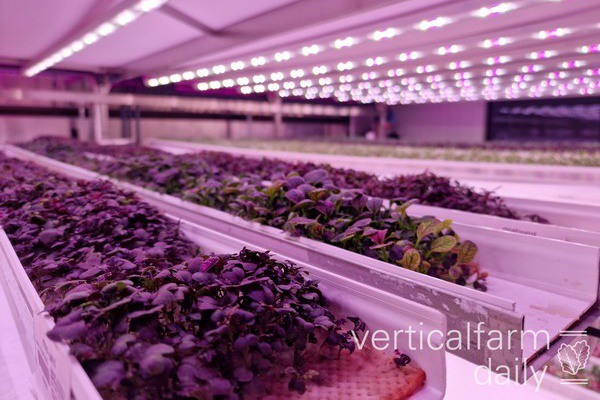 © Vertical Farm Daily
Market demand not the issue
Contrary to speculation, the company said consumer demand was not a major obstacle. "Singapore might be a difficult market, but this was not the reason for closing the farm," they noted. "The challenges were operational, not commercial." At its peak, Growy's products were available in more than 60 NTUC FairPrice formats and in restaurants across the city-state.
Reflecting on what the closure reveals about the broader market, the founders said it highlights the limits of earlier system designs. "It underscores that, like anywhere else, many early-generation systems with high labour and energy intensity struggle in high-cost environments unless paired with high automation and efficiency," they said. "Modern, right-sized, automated farms with strong energy performance and the right product mix can be competitive. Our focus now is scaling the latter."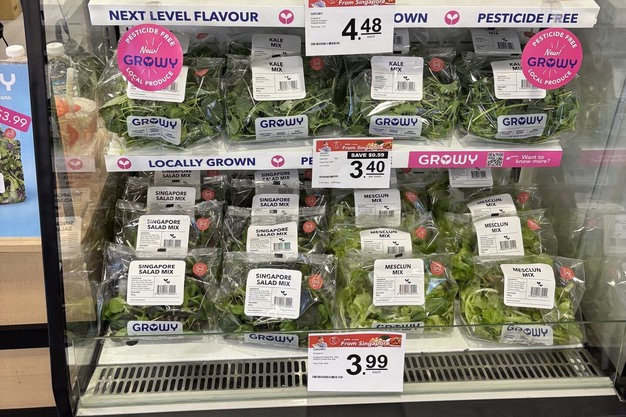 © Growy
Legal process and next steps
The founders clarified that its internal plan targeted the last week of October for a voluntary winding-up. The Government Gazette records the appointment of provisional liquidators on November 4, which is the operative public date under Singapore's Insolvency, Restructuring and Dissolution Act 2018.
While the founders declined to share consolidated group financial data, they described the closure as a necessary step toward achieving profitability at group level. "Singapore was a significant cost every month, which was not decreasing fast enough after many different attempts at achieving profitability."
The company is cooperating with local agencies to support affected staff and facilitate supplier and customer transitions, and continues to operate its flagship Amsterdam facility, which it describes as a benchmark for its proprietary, high-automation farming technology.
For more information:
Growy
Ard and Laura van de Kreeke
[email protected]
www.growy.nl