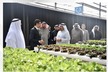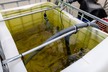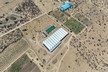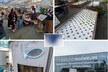


The aim is ambitious: to produce vegetables, fruit, and fish with a low environmental impact in urban environments—such as large disused buildings and school canteens—through aquaponics, a technology that integrates aquaculture and above-ground agriculture (hydroponics).
This is the Demetra project, financed by the Ministry of Enterprise and Made in Italy with over 5 million euros. The initiative involves ENEA, in collaboration with the University Federico II of Naples, the CAISIAL consortium, and the FOS companies (the lead partner), as well as IRCI and Grafica Metelliana.
The programme envisions the creation of two low-cost, modular, and scalable prototypes: an industrial platform for large-scale production of fresh food in so-called urban farms, and a more compact home-use platform intended for canteens, restaurants, apartment blocks, or RSAs.
"This community mini-plant is designed to supply fresh, high-quality animal and vegetable protein directly to users and can also be used by restaurateurs or agritourism businesses to promote zero-kilometre production," ENEA emphasises. Both systems will be developed as prototypes and demonstration models and will be tested at the facilities of IRCI Spa, an industrial partner specialising in hydroponic and aquaponic systems. The domestic version will be a scaled-down model.
Read more at 24 Ore