

Wageningen University and Research (WUR) has announced a new intensive course focused on the use of LED lighting in greenhouse production and vertical farming. The program, set to take place from February 9 to 11, 2026, aims to help professionals and researchers improve energy efficiency, boost crop productivity, and enhance product quality through advanced lighting strategies.
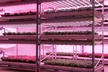
As global agriculture continues to move toward sustainable and high-efficiency production systems, understanding how light influences plant growth has become essential. The course will explore how different light characteristics affect plant physiology and how LED technology can be applied to optimize growth, yield, and quality while reducing energy consumption and carbon footprint.
 © Wageningen University & Research
"This course is designed for those who want to combine science and practice," said Professor Leo Marcelis, Chair of Horticulture and Product Physiology at WUR. "Participants will learn not only the fundamental principles of how plants respond to light, but also how to apply that knowledge to real-world production systems."
The program targets a broad international audience, including professionals in lighting technology, greenhouse production, and vertical farming, as well as MSc and PhD students, postdoctoral researchers, and junior scientists. Wageningen's experts will guide participants through a mix of interactive lectures, group discussions, demonstrations, and an excursion day, providing both theoretical understanding and hands-on experience.
By the end of the course, participants will have a comprehensive understanding of how plants perceive light, which physiological processes are influenced by different wavelengths, and how lighting systems can be optimized for efficiency and quality. The training will also cover techniques for measuring and analyzing light in greenhouse and vertical farming environments.
Registration is available at the link here.
For more information:
Wageningen University & Research
www.wur.nl