In June, trials began on a new growing system for leafy vegetables such as lettuce and herbs. After each cultivation cycle, the results have continued to exceed expectations. The system is the result of a collaboration between Meteor Systems and ErfGoed, who joined forces to create a more efficient and sustainable way to grow these crops.
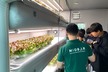
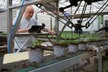
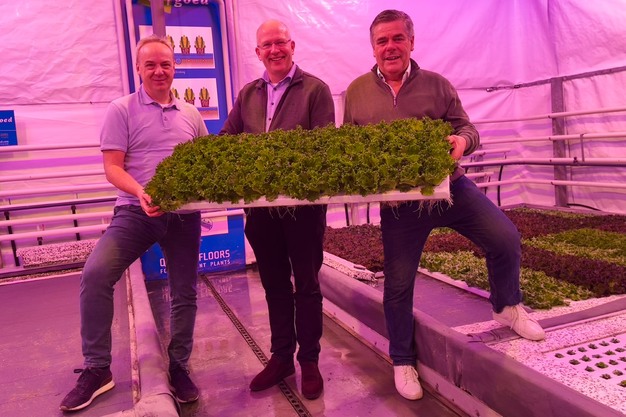 © Erfgoed B.VBas Dirven (Meteor Systems) and Hugo Paans and Cock van Bommel (ErfGoed)
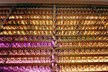
The idea behind the system is simple but smart. Floating rafts hold the plants, while beneath them lies a patented cultivation floor that provides both water and air. Several times a day, the floor irrigates the crops. When watering stops, the same system gently blows air upward through the plants, helping to maintain an active and balanced microclimate. The same network of pipes can also deliver CO₂ directly to the crops when needed.
To complement this setup, Meteor Systems developed a special floating tray with an X-shaped planting hole and small supporting legs that keep the tray and plants above the water surface. The X-shape ensures that air and CO₂ flow efficiently along the plant plug, reaching the roots and the underside of the leaves. This design keeps the growing environment consistent and healthy.
According to Peter Lexmond from Meteor Systems, "The air is now distributed evenly across the system. The result is uniform, high-quality produce with a longer shelf life and improved yields."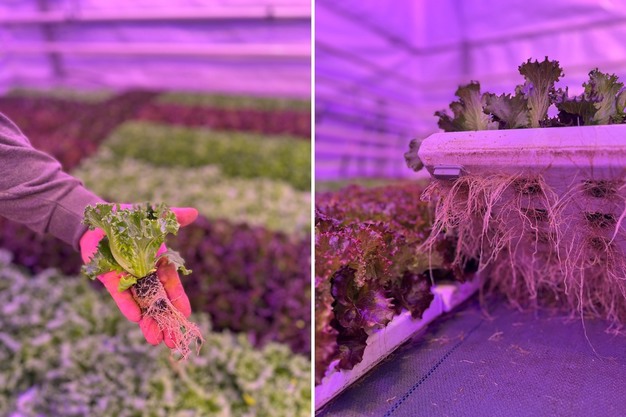 © Erfgoed B.V
Bas Dirven from Meteor Systems explains that the system's active aeration promotes healthy, balanced plant growth. "The controlled airflow stimulates transpiration, which produces strong, vigorous crops," he says. "Roots develop properly without becoming excessive. Because the airflow is gentle, the plant directs more energy to leaf growth instead of unnecessary root formation. The plug is briefly but thoroughly moistened from below, and then the airflow dries the outer roots. This prevents fungal growth. At the same time, the airflow activates the leaf surface, leading to stronger plants with greater transpiration capacity."
Energy saving
The system also offers energy savings. In practice, the greenhouse temperature can be lowered by about 1.5 to 2 degrees Celsius. Warm air is supplied from below, moving upward through the root zone and past the crop. As Hugo Paans from ErfGoed explains, "What matters is the temperature around the plant itself. There's no need to heat the entire greenhouse when the warmth is needed at crop level. This system solves that problem efficiently."
Clean and strong
Cleanliness and resilience are also key benefits. The floating rafts need only a small amount of water to function effectively. The rock substrate in the cultivation floor, combined with the continuous air and water flow, maintains a stable microbial balance, making disinfection rarely necessary.
"The mix of air, water, and rock is naturally self-cleaning," says Cock van Bommel from ErfGoed. "Because the water is constantly moving, there are no stagnant areas. The steady aeration keeps oxygen levels high around the roots, which preserves water quality."
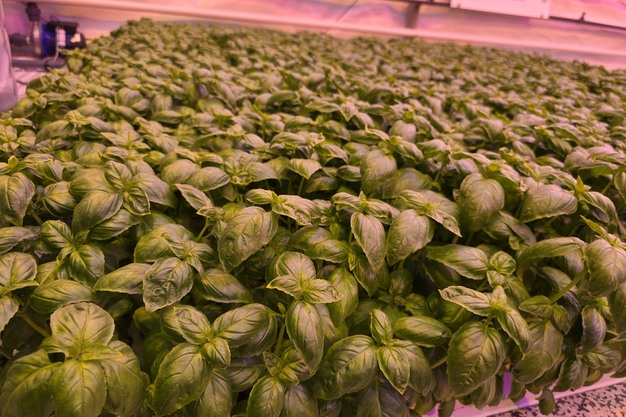
Trial results have been impressive. Fungal diseases have barely appeared, and since the tests began in June 2025, no crop protection products have been required. This aligns perfectly with current retail expectations for sustainably grown produce with minimal environmental impact.
 © Erfgoed B.V
Evaporation energy
Peter Klapwijk, who has been observing the trials, notes that the benefits of the system extend well beyond disease prevention. "Air movement doesn't just stop fungal problems," he explains. "It also creates a more even distribution of temperature and humidity throughout the greenhouse. This allows growers to maintain slightly lower air temperatures without slowing plant growth." He adds that this effect also improves "crop activation", in other words, how efficiently plants convert energy into growth.
This improvement can be understood through the concepts of PET (Potential Evapotranspiration Temperature) and VEN (Vapor Energy Need). A plant doesn't require a specific air temperature; it needs enough energy to sustain transpiration. By moving air from below the crop, the system supports that process directly at the root and leaf level. As a result, plants can transpire efficiently even at lower air temperatures, maintaining growth rates while reducing heat demand.
In practice, this leads to lower energy consumption and a more stable growing environment. The even airflow minimizes temperature variations between different crop layers or rows, which helps growers manage the greenhouse climate more easily, even at very high planting densities of nearly 400 plants per square meter.
Production results
The production results have been remarkable. In the trial greenhouse, yields currently reach around 3.5 kilograms of market-ready lettuce per square meter. Each cultivation cycle lasts 28 days, 14 days for germination and early growth, followed by 14 days in the active aeration system. This corresponds to an impressive annual production potential of about 85 kilograms per square meter.
For more information:
ErfGoed
T +31 79 593 38 00
www.erfgoed.com
Cock van Bommel
[email protected]
Hugo Paans
[email protected]
Meteor Systems
T +3176 504 2842
www.meteorsystems.nl
Peter Lexmond
[email protected]
Bas Dirven
[email protected]