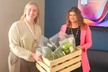
Dutch Greenhouse Delta has launched The Fresh FoodCast, a new podcast series developed with the Embassy and Consulate General of the Kingdom of the Netherlands in the UAE and the Netherlands Agricultural Network in the GCC. The series, hosted by Giovanni Angiolini, explores how controlled environment agriculture and vertical farming can support food security across the Gulf region. The conversations address the practical and systemic challenges of producing food in a climate defined by extreme heat, water scarcity, poor soils, and heavy dependence on imports.
"The Gulf region is transforming its food systems at an unprecedented pace," says Nienke Gelderloos, Agricultural Advisor for the UAE at the Embassy and Consulate General of the Kingdom of the Netherlands in the UAE. "Countries are making food security not only a sustainability goal but a matter of national resilience. The Netherlands is proud to share its knowledge and expertise to collaborate on these efforts." The podcast brings together growers, researchers, policymakers, and technology specialists who work with vertical farms, advanced greenhouses, and other controlled environment systems across the Gulf.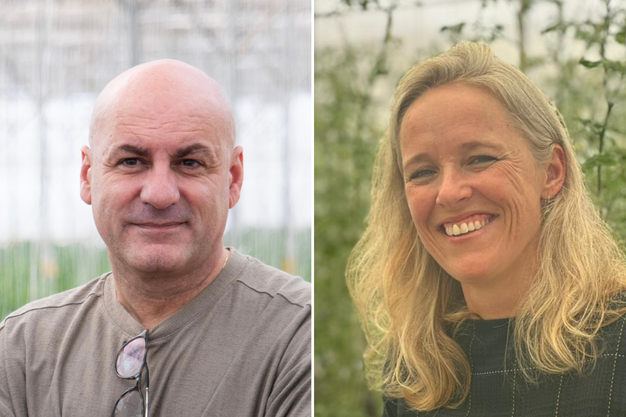 © Dutch Greenhouse Delta
Explaining vertical farming and CEA through experience
The Fresh FoodCast opens with two episodes titled "Why Controlled Environment Agriculture Matters in the Gulf." These episodes examine the strategic importance of CEA and highlight how climate control, water management, and operational planning shape production outcomes. Future episodes will cover water management, education, knowledge transfer, policy, investment, and cold chain development. The aim is to show how the Dutch horticultural ecosystem and the Gulf's growing agri tech sector can learn from each other.
For Angiolini, the success of the series depends on making complex systems understandable. "Storytelling helps people understand new technology in a way that facts alone cannot," Angiolini says. "In the Gulf, there is a strong interest in anything that improves food security, but people often want to know how these systems actually work, what problems they solve, and what results they can really expect."
"We let growers, experts, and policymakers talk about their real experiences, the decisions they made, the challenges they faced, and the outcomes they achieved. When people hear these stories, the technology becomes less abstract and more relatable. It helps them picture how it could work in their own context."
Addressing common misconceptions about vertical farming
"One misconception is the belief that vertical farming will replace all other forms of farming. It will not. It is great for certain crops, while greenhouses and open-field farming are still essential for many others," Angiolini says.
"Another is that high-tech systems run themselves once you install them. In reality, you need skilled people, good crop planning, and strong operational knowledge to get the best results. Thirdly, the return on investment takes time. Not everyone realises it will take at least 6 years to earn a buck. Lastly, people assume these systems always use a lot of energy. They can, but when designed properly and linked with local energy strategies, they can be very efficient."
Dutch collaboration as a model for regional capacity building
The Dutch horticultural sector is known for its ecosystem of growers, engineers, universities, and government institutions that work together to develop production strategies. "The Netherlands succeeds in horticulture because everyone works together. On the podcast, we try to reflect this same approach," says Angiolini. "This is relevant in the Gulf because the region is building its own agri-food ecosystem. By sharing how the Dutch work together and by including Gulf experts in the conversation, we show what an integrated approach looks like and how it can be adapted to local conditions."
"The Netherlands is known for its innovation and top-quality solutions in horticulture, but our approach in the Gulf goes well beyond exporting solutions," Gelderloos says. "The goal is always to build capacity locally so that partners can operate and innovate independently in the long term. This means making sure the solutions are actually adapted to the local circumstances, and helping build the human capital needed to run advanced systems."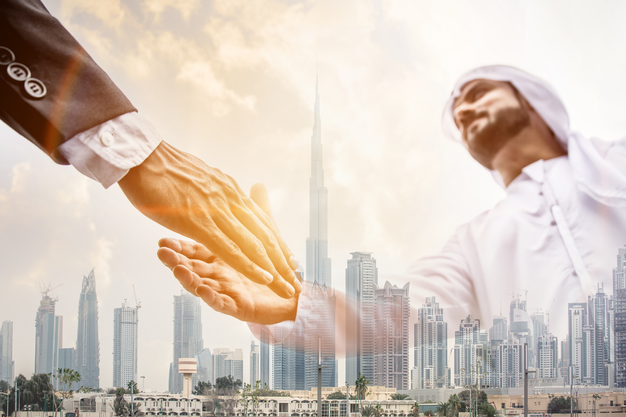 © Dutch Greenhouse Delta
Sustainability challenges shape every decision
"Energy and water are at the heart of every conversation I have with Gulf stakeholders," says Gelderloos. "There is a perception that controlled environment agriculture is inherently energy intensive, and in some cases that is true, but it is only part of the story."
There is also an increasing exploration of integrated systems. "Many stakeholders are interested in pairing CEA with renewable energy, using technologies that reduce the need for cooling, or combining smart water recycling technologies with desalination strategies," she says.
"The conversation is multi-faceted and also entails questions about the trade-offs between finite resources and their sustainable use, the need for self-sufficiency as part of food security, as well as food miles and possible geopolitical impact on supply chains. Sustainability in this region is not a single metric. It is about system-level optimisation and long-term resilience."
International lessons and local adaptation
"One important lesson is the value of building strong public-private partnerships," Gelderloos says. "In many countries, large leaps in horticultural innovation happened when government policy, private investment, and research institutions aligned around shared goals."
"No matter where you are in the world, the regions that scaled horticulture successfully invested heavily in education and continuous training," she says. "We have learned not to simply copy and paste models. Technology must be adapted to the local climate, infrastructure, and market dynamics. This flexibility is what the Gulf needs, as it builds its own version of high-tech agriculture."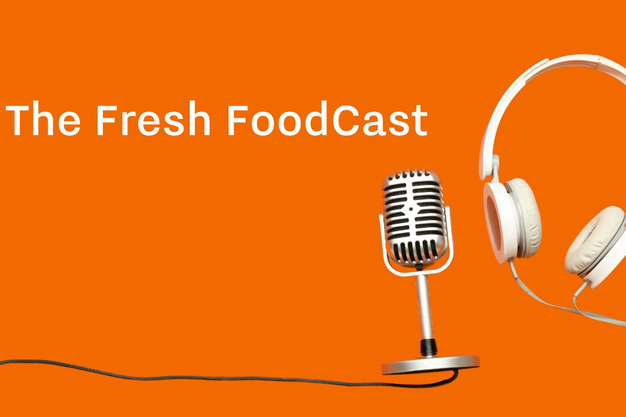 © Dutch Greenhouse Delta
Building future cooperation in CEA and vertical farming
Angiolini hopes the podcast motivates practical collaboration. "I hope that it becomes a platform that sparks real collaboration," he says. "We want it to help Dutch and Gulf companies find each other and start working together, whether in training, research and development, or technology adoption. If the podcast helps turn interest into action, then it is doing its job."
The Fresh FoodCast is available on all major podcast platforms.
For more information:
Dutch Greenhouse Delta
Giovanni Angiolini, Director, Middle East and Africa
[email protected]
www.dutchgreenhousedelta.com
Embassy and Consulate General of the Netherlands in the UAE
Nienke Gelderloos, Agricultural Advisor for the UAE
[email protected]
www.netherlandsworldwide.nl