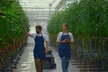

More than 47 million people nationwide live in food-insecure households, including 7 million children, according to the U.S. Department of Agriculture. An additional 27 million people live in "food deserts," areas where residents do not have convenient access to places to get affordable, healthy food like a supermarket. In Las Vegas, the historic Westside lacks a large grocery store, though smaller local options like Mario's Westside Market attempt to fill that need. In another area of the city, a store called The After Market is the only grocery within a five-mile radius.
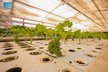
Common Good also stocks a community fridge where anyone can get food when needed. Urban farms with similar missions operate across the country, including locations in Augusta, Georgia, and Lansing, Michigan. Vertical farming offers another solution for urban areas where traditional farming is not ideal. This method takes place indoors, where greens are grown in special trays stacked from floor to ceiling.
LED lights replace the sun in vertical farming, though the process can be energy-intensive. The method often uses no soil and less water than traditional farming, but vertical farmers typically can grow only a limited number of crops, such as leafy greens, herbs and fruiting vegetables like tomatoes.
Read more at KY3