

Access to fresh food in northern Canada is a crisis. "Most groceries are flown in," says Robin Vincent, founder and CEO of Canobi AgTech. "By the time they arrive, they're in terrible condition, and people end up choosing processed foods instead."
Through partnerships with First Nations communities, including the Muskeg Lake Cree Nation in Saskatchewan, Canobi is using modular systems, local fabrication, and training to build food security from the ground up.
Food sovereignty in practice
When Canobi delivered its first system to Muskeg Lake, the installation took place in a repurposed garage. Despite heat-control challenges, the trial succeeded and led to an expanded program. The new Drop-n-Gro modules include areas for training, pre- and post-processing, and eventually shipping and employee facilities.
Vincent says these systems go far beyond vertical farming. "Many of our clients combine indoor farms with food forests or small livestock programs. Vertical farming is one input in a complete food-sovereignty strategy." Each new phase at Muskeg Lake adds capacity and skills to the community, ensuring that knowledge stays local. © Canobi AgTech
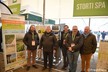
Robin Vincent visiting the Muskeg Lake Cree Nation
The Canobi Academy
Canobi's focus on training and skills development led to the creation of the Canobi Academy, originally a private learning portal for clients that expanded after global demand for accessible education. "We decided to release a few introductory courses that had nothing to do with Canobi specifically, just fundamentals of CEA," Vincent says. "Within months, we had students from all over the world."
The courses cover HVAC principles, crop management, and the business of indoor farming. "Even in Canada, we still don't have a dedicated CEA university program, so we wanted to fill that gap." Short, repeatable sessions replaced long crash courses. "Our clients don't have time for a three-day deep dive. Half-hour lessons over time work better, especially when staff turnover is high. Training needs to be continuous." © Canobi AgTech
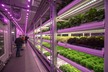
With the completed installation of vertical farming nodes in the greenhouse at Mistawasis First Nation
Building adaptable systems
Adaptability is central to Canobi's design philosophy. Almost every component, apart from the GrowPipes, is 3D-printed in-house. "We ship a 3D printer with each system. If something breaks, the grower can print a replacement. If we release an upgrade, they print it themselves."
Some growers even design their own improvements. One client requested a flexible wrench to prevent staff from over-tightening filter housings. "They printed it on site. That's the future: growers as co-designers."
He extends that thinking to every Canobi project. "If I were asked to build a system for Mars, I wouldn't design a single farm. I'd design a system that can build farms, because what you need will change once you get there. That's how we think about Canobi: systems that evolve with the farmer." © Canobi AgTech
Education as empowerment
Beyond technical training, the Academy also reshapes perceptions of agriculture among younger generations. "They come in expecting barns and tractors," Vincent says. "Instead, they find clean rooms, precision controls, and smartphones running the farm. It changes everything they thought agriculture was."
Vincent sees this as part of a larger mission. "Curricula around the world haven't caught up," he says. "Students should see that agriculture is now about data, sensors, and AI. They could become digital agronomists or farm technologists, but they need to be shown that path."
He believes that building food sovereignty and resilient systems are two sides of the same coin. "We're trying to build farms that can evolve," he says. "Everything breaks, everything changes, everything grows, so we build systems that can grow with you."
For more information:
Canobi AgTech
Robin Vincent, CEO
[email protected]
www.canobi.tech