
Operating controlled-environment agriculture in Lebanon means designing for instability. Extended daily power cuts, extreme summer heat, winter cold snaps, water scarcity, and disrupted supply chains are not exceptions but operational realities.
Wamhiba Hydroponic Farms has responded by building a greenhouse-based hydroponic production model that prioritizes energy efficiency, system simplicity, and climate resilience. The project currently operates four solar-powered hydroponic greenhouses in Lebanon.
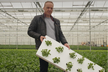
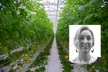
"Each greenhouse functions as a controlled-environment production unit," says Patrick Bouchebel, Founder and CEO of Wamhiba Hydroponic Farms. "The system integrates automatic shading, active ventilation, closed-loop nutrient management, and strict biosecurity protocols."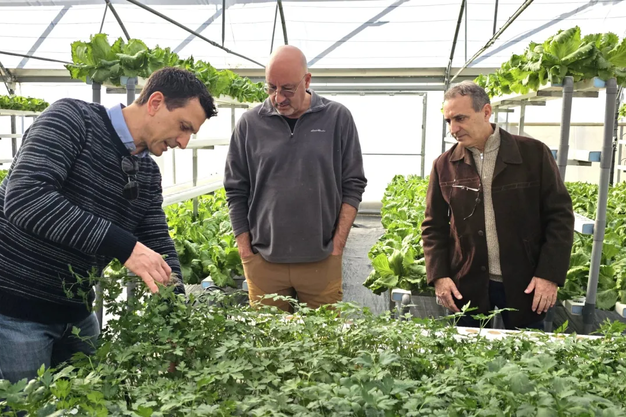 © Wamhiba Hydroponic Farms
Avoiding HVAC-heavy indoor vertical systems
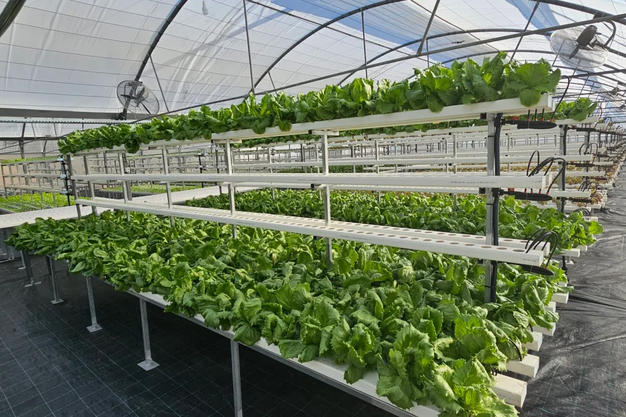
While Wamhiba's production systems use vertically arranged NFT channels, Bouchebel is careful to distinguish the operation from fully indoor vertical farming. "Compared to typical urban or vertical farms, Wamhiba mainly uses horizontal NFT greenhouse production," he says. "We maintain the efficiency of CEA while staying adapted to Lebanon's climatic and economic constraints."
Natural sunlight remains the primary light source, and the greenhouses are not fully sealed indoor environments. "Unlike vertical systems that require heavy HVAC infrastructure, our model minimizes energy consumption and operates reliably in a region with unstable electricity," Bouchebel says.
Automatic shading nets regulate incoming solar radiation and reduce heat stress, while side and top fans manage airflow and humidity. "Chilled nutrient solution is maintained between 18 and 22 degrees Celsius, ensuring stable root-zone conditions even during heat waves," Bouchebel says.
NFT systems designed for consistency
"The NFT design supports high-density planting and predictable turnover cycles through constant root oxygenation and balanced nutrient delivery," Bouchebel says. Under stable conditions, the greenhouses operate at an average of five production cycles per year. Uniformity across channels allows consistent harvest timing, while nutrient solution replacement every 15 days, system sanitation between cycles, and continuous monitoring of EC, pH, temperature, and flow help maintain stable performance.
Wamhiba estimates annual production at approximately 40,000 heads of lettuce across its four operational greenhouses. Performance is monitored using plant-level and system-level metrics. "We track weight, color, root health, leaf texture, and expected versus achieved harvest timing," Bouchebel says. "Daily nutrient monitoring allows us to fine-tune EC and pH throughout each cycle." Productivity is indexed by harvested biomass per square meter of bench area rather than plant count alone. When deviations appear, technical adjustments are applied across nutrient delivery, climate control, and nursery conditions to restore uniformity.
 © Wamhiba Hydroponic Farms
Crop selection for hydroponic efficiency
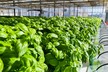
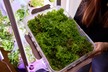
Production focuses on crops with proven hydroponic performance and predictable demand, with seeds sourced both locally and internationally to reduce supply risk and maintain consistency. Current crops include lettuce varieties and basil.
"Variety selection depends on seasonal temperature tolerance, compact root systems, fast growth cycles, and low pest susceptibility," Bouchebel says. "Market familiarity also plays a role in ensuring smooth distribution."
Energy autonomy and water efficiency
Energy reliability is one of the defining constraints for controlled-environment growers in Lebanon. "We can experience between five and nine hours of daily electricity cuts," Bouchebel says. "Our solar-hybrid system ensures uninterrupted operation of nutrient pumps, chillers, climate controls, nursery lighting, and monitoring systems."
The operation runs on more than 90 solar panels, supported by six lithium battery banks rated at 14.5 kilowatt-hours each. A three-phase 60 kVA diesel generator provides backup during prolonged outages or peak winter demand. Water efficiency is equally critical. "The system relies on continuous circulation with minimal evaporation," Bouchebel says. "We harvest roof rainwater, capturing up to 80,000 liters per season, and reuse nursery water for aromatic herbs and drought-tolerant plants."
Extreme temperatures remain one of the most difficult variables to manage. Summer greenhouse temperatures can reach 40 degrees Celsius, while winter can drop to 5 degrees, slowing growth and damaging crops. "We expanded shading, increased ventilation, stabilized nutrient temperatures, and planned temporary production pauses during extreme weeks," Bouchebel says. Economic instability has required a parallel focus on energy independence, simplified maintenance, and supply buffering to keep production running.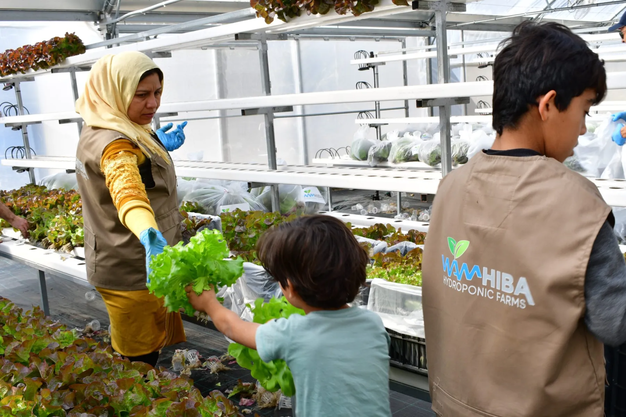 © Wamhiba Hydroponic Farms
Moving toward fully indoor production
Looking ahead to 2026, Wamhiba plans to add a fully indoor controlled-environment unit. "The goal is a fully insulated, climate-controlled production unit capable of uninterrupted year-round output," Bouchebel says. "This would double production cycles and further improve quality consistency."
Additional plans include crop diversification into specialty leafy greens, aromatic herbs, microgreens, and trial strawberry production, as well as developing a scalable template to replicate solar-powered hydroponic systems in other Lebanese regions facing water scarcity.
For more information:
Wamhiba Hydroponic Farms 
Patrick Bouchebel, Founder and CEO
[email protected]
www.wamhiba.com