
A double-decker bus is not an obvious place to learn how food is grown. That, however, is precisely the point of The Pony Farm Bus, a mobile food-education project created by chefs Josh and Holly Eggleton of The Pony Chew Valley, a produce-led restaurant, event venue, cookery school, and kitchen garden in Somerset, United Kingdom.
For years, The Pony has hosted community and charity sessions at its market garden and cookery school, inviting people to see food growing, harvest it, cook it, and eat it together. But access was a challenge. Within a five-mile radius of the restaurant lie some of Bristol's most deprived communities, and expecting schools or families to travel out to the farm proved unrealistic.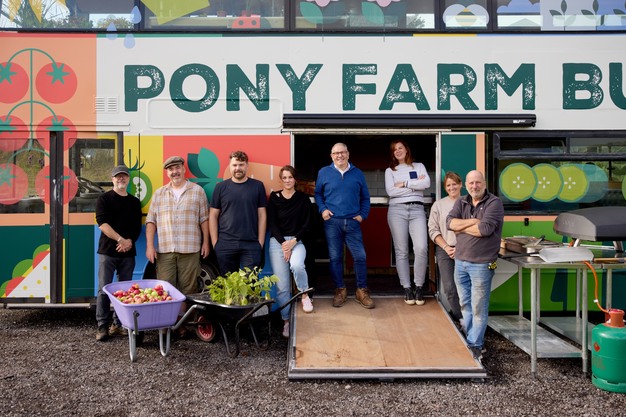 © The Pony Chew Valley
Bringing the farm to the classroom
"The basis of our sessions is letting people experience food with all their senses," says Hannah Atkinson, who takes care of community engagement for The Pony Chew Valley. "But getting people to us was a tall ask. So we decided to bring the essence of The Pony to them." The result is a converted double-decker bus refitted as a travelling classroom.
Inside the bus are growing areas including a hydroponic system, a small greenhouse, a mushroom-growing space, worktop stations, and a cooking demonstration area. The design deliberately leans toward being informal and playful. "It had to be fun," Atkinson says. "For many of the communities we want to reach, breaking down barriers around food education means making it feel accessible, not intimidating."
Designing a mobile food education space
The bus itself is more than two decades old, and transforming it into a working classroom required a collaborative effort. Josh Eggleton led the vision, supported by a project team drawn from The Pony, distributor Arthur David, collaborators, and local community volunteers.
"It needed a lot of creative thinking to fit everything we wanted into the space," Atkinson says. EP Design Studio worked on the interior layout, with storage quickly becoming a challenge. "Storage became something we had to be very clever with," she adds, crediting The Pony's property and maintenance team for finding practical solutions.
Budget constraints shaped many decisions. "This was a community-interest project with all the money coming from fundraising. Even sourcing replacement parts was complicated. "With the bus being over 24 years old, getting details and parts was difficult. We relied heavily on help from First Bus, the company that owned it when it was in service, to give us historical information." Visually, the bus was designed to feel welcoming and playful. SOS Design donated the branding and exterior wrap. "We wanted it to be bright and inviting," Atkinson says.
Hydroponics and growing on a bus
For the hydroponic component, The Pony Farm Bus worked with LettUs Grow, using a simple, recirculating system to grow herbs and salad leaves. The focus is demonstration rather than yield, reinforcing the message that growing food does not require scale or specialist infrastructure.
"We want visitors to feel that food and growing are not beyond their reach," Atkinson explains. "To understand what fresh food looks like, smells like, feels like and tastes like, and that small changes can make a real difference." Sessions are designed to be hands-on, encouraging children and community visitors to engage directly with growing and cooking rather than passively observing.
Aligning with schools and learning frameworks
Workshops are tailored to each school or group. The team works within the UK Food Education Charter and asks schools to define three learning objectives ahead of each visit. "We work directly with schools and ask what they want to get out of the visit," Atkinson says. "That way we can be relevant to our audience while still working within the wider education framework."
The Pony Farm Bus builds on The Pony Chew Valley's wider involvement in community food initiatives. The team has long supported projects aimed at improving access to fresh food, including its work with The Mazi Project, a UK-based charity that delivers free, nutritious meals to families experiencing food insecurity. Through its partnerships, the restaurant has positioned food as a tool for social connection, dignity, and education, and is now taking those values on the road.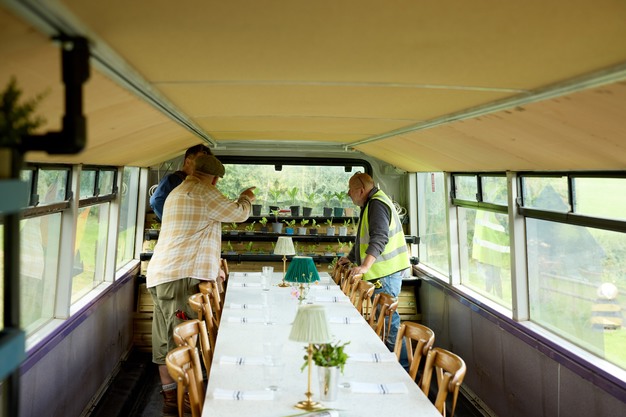 © The Pony Chew Valley
Funding a free-to-access model
All sessions are free for schools and charities, a deliberate choice at a time when budgets are under pressure. "Being accessible is key," Atkinson says. "This has allowed food education to be available to everyone, no matter where you live or your circumstances." The project is sustained through a mix of ongoing fundraising, grant funding, corporate event hire, sponsorship, and selling produce and food from the bus at festivals. Corporate events form a dedicated income stream, helping fund community visits.
Arthur David has been involved from the outset. "They were a natural choice," Atkinson says. "They have different skill sets but aligned values and have been involved from day one. They understand food and hospitality, and already do so much for charities. Their experience managing vehicle fleets has been incredibly valuable."
Additional partners have supported the project in practical ways. Ooni, for example, donated a pizza oven that has already been used at festivals. "We had kids making their own pizzas, cooking them, then eating them or taking them home," Atkinson says.
Looking ahead
Feedback so far has been strong. "Overwhelmingly positive," Atkinson says. Expansion remains a longer-term ambition. "The idea was always to be national," she says. "But we need to get this off the ground and working with a clear income and budget stream." For now, success is measured simply. "If a child leaves knowing milk comes from a cow, an egg from a chicken and carrots from the ground, we have started something positive."
By introducing hydroponics and indoor growing alongside more familiar forms of agriculture, The Pony Farm Bus offers an early glimpse into how food can be produced in different ways. "It's a small step, but a critical one. We want to encourage them to find out more, ask questions, and maybe revisit for a second session. We can't teach everyone everything with one visit, but hopefully we can spark curiosity."
Click here to donate to this initiative or here to learn more.
For more information:
The Pony Farm Bus | The Pony Chew Valley
Hannah Atkinson, Community Engagement 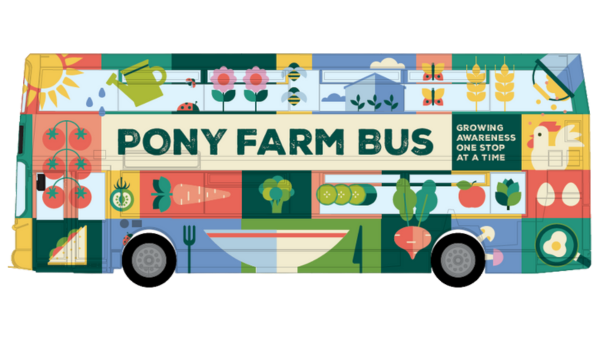
[email protected]
www.theponyfarmbus.co.uk
www.theponychewvalley.co.uk
www.instagram.com/theponyfarmbus