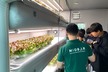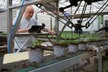

PlantLab has permanently closed its doors in Den Bosch, as was reported earlier this month by the regional Dutch newspaper Brabants Dagblad (link in Dutch). Municipal documents made it clear that the R&D-operations at the Den Bosch site have ceased. PlantLab does not stop, emphasizes general director Marcel Kers after publication of the local news on Vertical Farm Daily. Focus is on marketing IP for the indoor farming pioneer, result of a 'strategic recalibration'.
According to a proposal from the municipal executive of Den Bosch, the city plans to provide 6.2 million euros to the Bossche Investerings Maatschappij, BIM for short. BIM owns De Gruyter Fabriek, the former industrial complex where PlantLab was located. The funding is intended to buy out the perpetual leasehold agreement for the PlantLab section of the building. This will allow BIM to take full ownership of that part of the site and further develop the complex. De Gruyter Fabriek currently houses over 200 businesses, ranging from innovative startups to well-established companies.
Earlier this autumn, an auction was held to sell off PlantLab's assets, including among others machinery. That had to do with the planned stop of the R&D-location in Den Bosch, explains Kers.
"The distress signals from sustainable entrepreneurs are becoming louder and louder," says Marc Jansen of the Brabant Development Agency, BOM, in the same local newspaper in response to the news about PlantLab and the recent bankruptcy of PeelPioneers (link in Dutch). His remarks underline the broader pressure faced by innovative companies operating in the green and circular economy.
PlantLab is founded in 2010 and quickly built a reputation as a pioneer in indoor farming and controlled environment agriculture. Of the total 20,000 square metres available at the Den Bosch location, about 11,000 square metres were actively used for business operations such as research, crop production, and technology development. The remaining 9,000 square metres were never developed or brought into use, according to the municipal proposal on which the newspaper based its reporting.
In recent years, PlantLab also made headlines due to intense legal battles over patents related to its innovations in indoor growing systems. In the run-up to the auction in June and July, the company even advertised its hard-fought patent portfolio, highlighting the technological value it had built up over the years. Focus is still on marketing IP for the indoor farming pioneer, result of a 'strategic recalibration'.