
AeroFarms' decision to wind down operations at its Virginia facility and terminate its entire workforce has prompted widespread reaction across the CEA sector. As reported by Vertical Farm Daily, a WARN notice submitted to Virginia Works confirms that the company will close their Ringgold facility following the withdrawal of financial support from its largest investor.
In the days following publication, industry operators, leaders, investors, and AeroFarms' staff have shared detailed reflections on LinkedIn. AeroFarms has yet to respond with a public statement.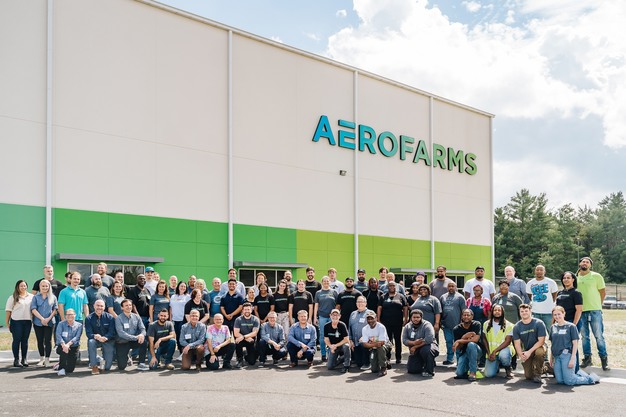 © AeroFarms
Misaligned capital, not technology, dominates industry response
Nona Yehia, Co-Founder and CEO of Vertical Harvest Farms, shared one of the most widely circulated responses, calling for a more nuanced reading of AeroFarms' closure.
"I want to talk honestly about what the AeroFarms news means for this industry," Yehia wrote. "Like many in this industry, I admired what they built, what they attempted, and what they represented. Their closure is painful…not just because of the people impacted, but because of what it signals about how we fund (and fail to fund) the kind of innovation our food system actually needs."
"Yes, mistakes were made. They always are. This is a capital-intensive, operationally unforgiving sector. Vertical farming doesn't allow for sloppy execution, unclear unit economics, or growth detached from systems. Labor models matter. Partners matter. Timing matters. Scale without discipline is fatal."
"But here's what worries me more than any single company's failure. We are at risk of confusing early structural missteps with a verdict on the entire category. That's dangerous. Because what gets lost in these post-mortems is the mission: resilient food infrastructure, climate-adaptive production, regional supply chains, and dignified jobs. Those things don't emerge fully formed. They are built, painfully, through iteration, patience, and yes, capital that understands infrastructure timelines, not venture theatrics."
"There's a narrative forming that 'maybe the second or third owner will finally make it work.' That may be true financially. But let's be honest about the tradeoff. When mission-driven pioneers fall, we don't just lose companies, we lose momentum, institutional knowledge, and the courage to try again. As a founder still in this fight, I don't see AeroFarms as a cautionary tale against vertical farming. I see it as a warning about misaligned capital, missing partners, and an industry that tried to sprint before the systems were ready to carry the weight."
"This sector doesn't need less ambition. It needs better sequencing, real operating rigor, and investors willing to fund infrastructure like infrastructure, not like a software demo. We should grieve this loss. We should learn from it. But we should not walk away from the work. Because the cost of giving up is higher than the cost of getting it right."
Scale and corporate cash flow remain unresolved challenges
Adam Bergman, an agtech and sustainability investor with an investment banking background, placed AeroFarms within a broader pattern of highly capitalized vertical farming ventures struggling at the corporate level.
"Today's announcement that AeroFarms will close its last working vertical farm is another blow to the vertical farming sector," Bergman wrote. He noted that following its 2023 restructuring, AeroFarms consolidated operations in Virginia and focused on microgreens, a strategy that "initially seemed to work." Bergman said he had been told the company achieved positive EBITDA at the farm level, but that "from reading media sources, it seems that AeroFarms couldn't achieve positive cash flow at the parent company, is running out of money, and was unable to raise new capital."
He placed AeroFarms alongside Bowery Farming and Plenty, writing: "At this point, AeroFarms will join industry pioneers Bowery Farming and Plenty as companies that have raised over $500 million, but still ended up in bankruptcy or needing to restructure. At this point, it is fair to ask whether a company focused purely on vertical farming in the U.S. can be profitable or if vertical farming companies will need to pursue a strategy similar to 80 Acres Farms, which recently purchased Soli Organic, a company with both indoor and outdoor growing capabilities, to expand operations, grow in different environments (indoor and outdoor), and offer a broader crop mix."
Rethinking indoor farming's value proposition
Vincent Wei, Co-Founder of Archisen, used AeroFarms' closure as a prompt to revisit the underlying rationale for indoor farming.
"The main premise behind indoor farming is the ability to control and optimise the growing environment so that you can produce virtually any crop, not need to use pesticides, grow year-round, implement automation more easily, reduce spoilage and delivery costs by growing close to the buyer, and produce high-quality products. However, indoor farms have closed due to pressures from increased utility costs, overoptimism on yields, unrealistic expectations on ROI, deterioration of the funding environment, and produce-market misfit."
"Naturally, I have been asked if indoor farming can still work. I firmly believe that an indoor farm will work if the above issues are addressed. Operational costs such as utility, labour and land costs should be lowered and managed as much as possible. Implement automation to lower labour costs. Project yields based on past data. Be realistic on return-on-investment (recognise that this is not an investment that can pay back in a short period of time). Have sufficient funding. And lastly, ensure that your produce can fit the market in terms of product type and pricing. There will continue to be a place for indoor farms for specific types of produce, alongside larger greenhouses and outdoor farms."
Infrastructure cannot be scaled like software
Ben Crowther, CTO and co-founder of LettUs Grow, drew parallels between AeroFarms and failures in adjacent capital-intensive sectors, including Ynsect. "Scaling the size of your capitally intensive systems BEFORE you have solid unit economics and technology and market readiness," Crowther wrote, "seems to be the classic pitfall."
He argued that venture capital expectations often misapply software logic to farming infrastructure. "Unlike in software, you can't ship an unfinished farm to validate market opportunity and then fix it later," he wrote. "Instead, you have to get as close to the definition of an MVP as possible, but stay on the correct side of the line that defines 'Viable'."
"It's definitely not easy, and you often need to go big to prove you can achieve the economies of scale. Quite the chicken and egg situation. Despite all of the naysayers in the industry, I do believe ambitious, aggressive venture capital has a place in farming. [...] I don't think we should overly criticise those that were willing to try."
Staff reflections focus on execution, learning, and transition
Several Aerofarms staff members emphasized the depth of technical expertise inside the company and the experience gained building and operating complex systems.
Justin Zabilansky, Senior Director of Field Engineering, was among those to publicly reflect on the shutdown, emphasizing execution and learning rather than failure. "I had the opportunity to build something that had never been done before and operate a profitable vertical farm," he wrote. Zabilansky credited the Danville team directly, adding: "I appreciate you all for making this impossible dream a reality and putting in all the hard work to make it happen." Reflecting on the end of the chapter, he wrote that he was "so appreciative of all the failures, learnings and successes this time has brought me."
Others echoed similar themes as they began seeking new roles. Controls engineer Mike Jones wrote: "I am sad about the sudden shutdown, and will miss a lot of the good people here. This was a great opportunity, and I learned from some of the best." Another former employee, posting under the name The-White-Glove MacGyver, emphasized the accumulation of institutional knowledge inside the company: "Most of us can build these farms with our eyes closed. We know what works and what doesn't. The trial and errors are the lessons learned."
John Koniski, Mechanical Engineering Director at AeroFarms, reflected at length on the scope of work undertaken during his time at the company. "My career grew up here. I grew up here. During this chapter, I [...] helped build technology that pushed the boundaries of what controlled-environment agriculture could be," he wrote. "I'm proud that I had the chance to take systems that started as sketches and turn them into real, operational machinery," he continued, citing work across automation, ASRS workflows, water systems, and HVAC. He closed his post with a message to colleagues: "To my AeroFarms family: thank you. We built something remarkable together, and I won't forget it."
Industry support gathers around displaced staff
Alongside staff reflections, members of the wider CEA ecosystem have begun offering direct support to those affected. Albert Lin, founder of Vegbed, posted publicly: "Anyone in my network who's affected by this, please reach out to me. Always happy to help and see what I can do." Similar messages of encouragement and outreach have appeared across LinkedIn, as former AeroFarms employees signal availability for new roles.
Vertical Farm Daily has reached out to AeroFarms for comment following the publication of the WARN notice. At the time of publication, no response has been received.
For more information:
AeroFarms
Carlos Nuñez, Vice President, Human Resources
[email protected]
www.aerofarms.com