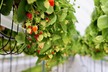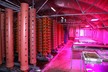


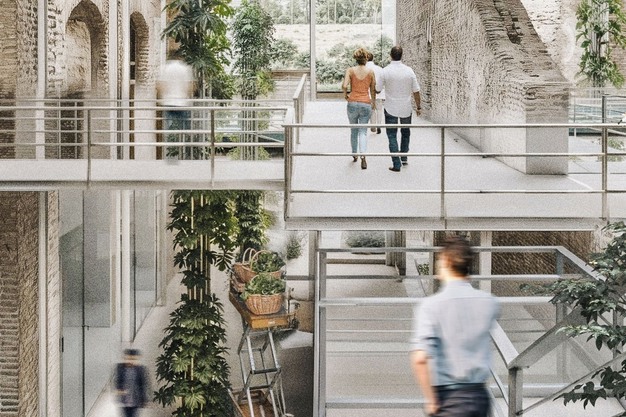
Future Farm is a modular vertical farming system designed by Qing Duan for integration within urban architecture, proposing a model where buildings function as hydro-ecological systems. Rainwater is collected, filtered, and redistributed to support plant growth and domestic needs, establishing a closed-loop water cycle that combines sustainable agriculture with everyday city life. The project incorporates public greenhouse spaces, shared kitchens, rooftop farms, and educational zones to enable collective care, learning, and interaction with urban farming processes.
The speculative proposal addresses urban challenges such as food insecurity and water scarcity by merging living, farming, and community engagement within a single architectural framework. Its modular vertical farming modules, inspired by tree-like forms, guide water flow, sunlight access, and seasonal planting cycles. Each module manages rainwater collection and greywater filtration while redistributing resources efficiently throughout the system.
 © Qing Duan
Prototyping and physical testing informed the design's feasibility, water integration, and human-scale adaptability. Models constructed from recycled acrylic sheets and resin were used to study light transmission and modular connection logic, ensuring both ecological performance and urban compatibility.
Future Farm, conceived by designer Qing Duan, has been exhibited at the Royal College of Art, selected as a Finalist in the Seoul Design Award, and received the RTF Sustainability Award for its integration of architecture and ecological infrastructure. The project demonstrates a vision of urban development in which buildings operate as active participants in ecological processes, embedding agriculture and environmental systems into the fabric of the city.
Source: Design Boom