At the beginning of 2025, Gearbox Innovations reached a turning point. Its long-standing Euphorbia supplier, Fulgens, retired, bringing a reliable partnership to an end. While the change was significant, it also created an opportunity. The company decided to take full control of propagation by building its own in-house propagation cell and vertical farm.
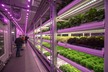
The project began on a small scale. Gearbox Innovations installed a refrigerated container on site to function as a test environment. Within this controlled space, the team evaluated all key cultivation variables, including temperature, humidity, light, and air movement. Danish carts fitted with LED grow lights on each layer were used to test multiple configurations, allowing the team to identify the setup that delivered the most uniform results.
Once the optimal configuration was established, construction moved into its next phase.
A concrete floor was installed, followed by the placement of an 85 square meter cold store. The space was designed to accommodate three rows of Danish carts, each capable of operating independently. After extensive research, Gearbox Innovations commissioned custom LED lamps and accessories from China. These were manufactured to precise specifications, including exact lengths, correct plugs, and compatibility with one or two lamps per layer. Each cart holds seven layers and connects via a single plug at the top. Once plugged in, the cart is fully operational.
Within the climate cell, three rows of sockets are controlled by timers. Operation is straightforward. A cart is positioned, plugged in, and immediately integrated into the system.
Air circulation was another critical consideration. A custom air distribution system was installed along the walls and ceiling. Air is drawn between the carts, cooled through a heat pump, enriched with additional humidity, and then evenly distributed across all layers via wall-mounted outlets. This design helps maintain a stable and consistent climate throughout the cell.
A network of sensors continuously monitors conditions, including incoming and outgoing temperature, humidity levels, air velocity, and cooling system flows. Using this data, the system makes automatic, targeted adjustments to maintain the climate settings specified by the team.
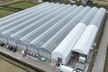
To complete the process, one section of the greenhouse roof was cleared to house the mother plants. Cuttings are taken from these plants, placed into plugs, and then transferred directly into the propagation cell.
Last year marked the first full year in which Gearbox Innovations operated entirely with its own cuttings, mother plants, and an internally managed cultivation process. The results have been clearly positive. At the same time, the company continues to refine the system. Ongoing optimization efforts focus on fine-tuning performance to achieve an even more uniform final product.
For more information:
Gearbox Innovations
Email: [email protected]
https://gearboxinnovations.com