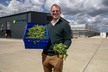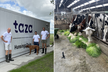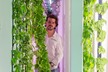


Earlier this month, Summer Street Farm officially opened in New Glasgow as a participant-led, year-round indoor farm developed by Summer Street Industries, which supports and employs people with diverse abilities, while combining food production, inclusive employment, and community food access within a single operational model.
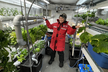
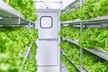
Growcer CEO and co-founder Corey Ellis highlighted the physical configuration of the site. "It was a prime demonstration of three fully-accessible Osiris Access units, together with a fully wheelchair accessible hub and cold storage module," says Ellis. "The Summer Street team even added an office and a farm market building to bring the community together on site."
The facility is the largest wheelchair-accessible closed-environment farm currently operating in Canada, powered in part by an on-site solar array, supporting year-round production while reducing reliance on grid electricity.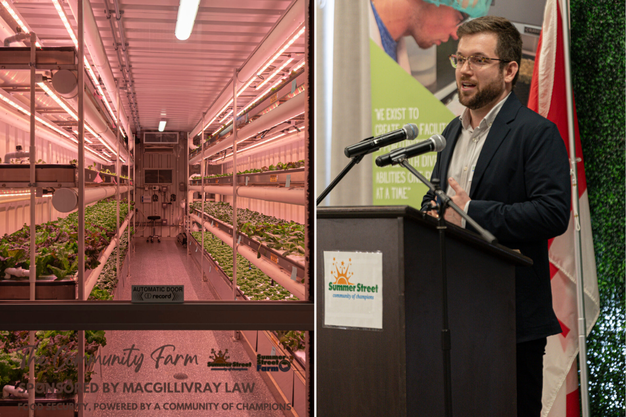 © Summer Street Farms
A participant-led production model
Rather than being developed as a commercial yield-driven facility, Summer Street Farm emerged directly from participant priorities within Summer Street Industries. Those priorities focused on growing food they could eat, growing food through paid work, and sharing food with people in the community experiencing food insecurity.
Fresh greens produced at the farm are already supporting local food-security efforts, including partnerships with the Pictou County Food Bank and local school lunch programs. Public access includes on-site purchasing, participation in the New Glasgow Farmers Market, and a farm store set to open in the coming months. A pay-what-you-can model and food-gifting options are built into the farm's operating structure.
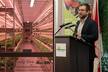
"Summer Street Farm shows what's possible when inclusion, sustainability and community come together. This participant-led farm is strengthening local food security while creating meaningful opportunities for people of all abilities. It's an investment in people, and in the long-term health and resilience of this community," says Dave Ritcey, Minister of Communities, Culture, Tourism and Heritage.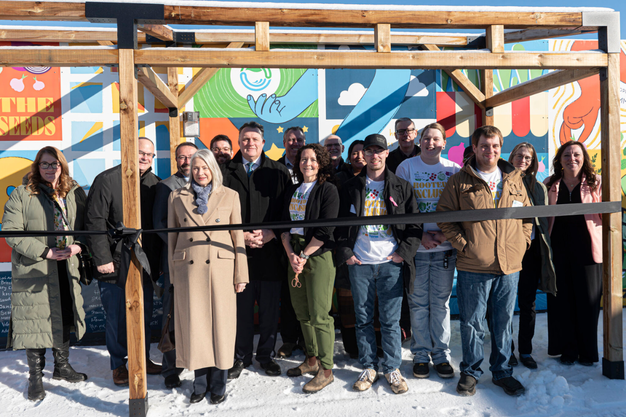 © Summer Street Farms
Local food production as resilience infrastructure
From an industry perspective, the significance of Summer Street Farm lies less in scale and more in deployment logic. The project demonstrates how modular, containerized growing systems can be adapted for non-traditional objectives, particularly in smaller communities where centralized large-scale vertical farms may not be viable.
"It is a symbol of inclusive agriculture, supporting and employing participants with diverse abilities," Ellis says. He also noted that the farm "in the long term will offset thousands of pounds of produce we normally import."
Government funding from the Atlantic Canada Opportunities Agency and the Government of Nova Scotia supported the development of the project, but its long-term viability is structured around a social enterprise model.
"Summer Street is demonstrating what's possible across the country, to become more self-sufficient and grow more local food. We're honoured to work with bold partners like all the partners on this project, who share our vision that local food infrastructure is a key ingredient for healthy communities."
For more information:
Growcer
Stephanie Gordon, Content and Communications Manager 
[email protected]
www.thegrowcer.ca
Summer Street Industries 
Liz LaPier
Fund Development Officer
[email protected]