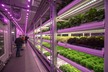


Carbon Less Future (CLF) is entering a new phase of development, shifting its focus from demonstrating container-based reforestation to building systems that can support traceability, international deployment, and long-term carbon accountability.
"At this stage, we are preparing to install cameras inside the container together with a moving shelf system and a robotic arm," says Aigars Jacuks, COO and Co-Founder. "The main purpose of this setup is traceability rather than full automation."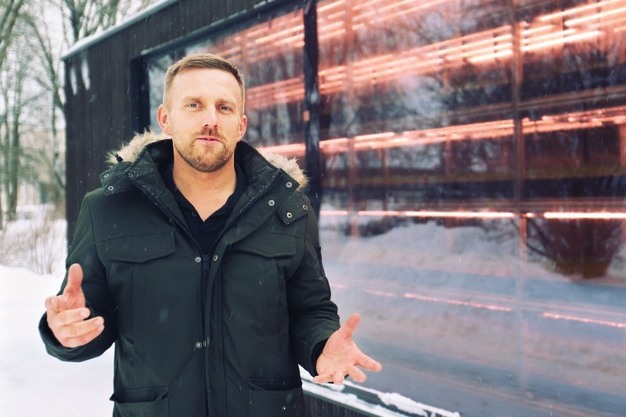 © Carbon Less Future
Building a digital growth record
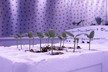
Rather than treating technology as an efficiency tool, the next development phase is centered on documenting how each sapling develops under controlled conditions. "The camera system is designed to track each sapling from seed through its early growth stages, identifying where to add more nutrients and where problems arise," Jacuks says. "This allows us to document development, survival, and uniformity, creating a digital growth record that can later support carbon credit implementation by providing transparent, verifiable evidence of origin and cultivation conditions."
Because that data may eventually be used for long-term monitoring, the company is deliberately limiting the pace at which new systems are introduced. "We have already identified the required technologies and are working with scientists and technical partners. Development is progressing step by step, as accuracy and reliability are critical when the data is intended for long-term monitoring and carbon credit frameworks."
Validation beyond Europe
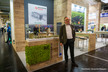
International interest has accelerated following CLF's participation in a Dubai exhibition, supported by the Investment and Development Agency of Latvia (LIAA). "We were given very good feedback," Jacuks says. "There was clear interest from dry and hot regions, where growing trees in open nurseries is difficult. Our container-based system fits well in these conditions because climate and water use are fully controlled."
Discussions with partners in the Gulf region are still at an early stage, but the technical rationale is already clear. "The system can be adapted for hot climates with insulation, water recirculation, and solar integration, which makes it suitable for the Middle East." © Carbon Less Future
Institutional support as an accelerator
Participation in the Gulbene representative office of LIAA has expanded the company's access to international markets. "It helped us access international events, exhibitions, and networking opportunities," Jacuks says.
At an early stage, this backing has had tangible effects on execution speed. "As a startup, this support allows us to go further and faster than we could on our own. The agency's financial support helps cover participation costs and essential purchases, which is especially important at an early stage when resources are limited."
Learning by building the system
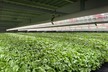
CLF's technical architecture emerged through hands-on experimentation rather than established forestry or vertical farming playbooks. Early development revealed how tightly connected environmental variables are in a vertical setup. "In the early stages, the biggest lessons came from ventilation, airflow direction, shelving layout, and irrigation timing," Jacuks says. "Small changes in airflow or humidity had a big impact on plant health."
Rather than optimizing individual components in isolation, the team learned to treat the container as a single integrated system. "We learned that all these elements are connected and must be designed as one system."
The absence of prior industry experience became an advantage rather than a limitation. "We did not have a background in forestry or vertical farming, and that actually helped," Jacuks explains. "We approached the problem from an engineering and experimentation perspective, without following existing rules." That approach encouraged rapid testing and early failure. "This allowed us to test faster, make mistakes early, and build a system based on real results rather than assumptions."
Public engagement as part of the model
The first container deployment has drawn attention not only from industry stakeholders, but also from municipalities and educational institutions. "We have seen interest from other municipalities, mainly at an early discussion level," Jacuks says. The response from schools and visitors has influenced how CLF positions the system going forward.
"Public engagement has been very positive. The educational aspect has become more important than we initially expected and is now a natural part of how we present and explain the project."
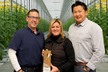
Looking ahead, CLF sees urban deployment as a way to combine local impact with broader climate awareness. "In the longer term, our goal is to place containers in major European cities. These containers could support local needs for saplings while also serving as educational tools that show how technology can support reforestation and climate goals." © Carbon Less Future
A modular path forward
Rather than locking clients into a single configuration, CLF plans to offer multiple system levels as technologies mature. "We plan to offer different container setups, allowing clients to choose the level of automation they want."
Some elements are already deployable, while others remain in development. "Options such as AI-supported monitoring, moving shelves, and robotic assistance are planned features, but they are still in development. At the moment, solar integration can already be included, while the other systems will be introduced step by step as they become fully tested and reliable."
Opening the door to investment
As interest grows across regions, CLF is preparing for a broader scaling phase. "There is strong potential for scaling the concept across different markets and regions, and we are open to discussions with investors who are interested in joining the company at this stage and helping us to scale."
For more information:
Carbon Less Future © Carbon Less Future
Aigars Jacuks, COO and Co-founder
[email protected]
www.clf.earth