

Saudi Arabia's Qassim Region has witnessed growing adoption of hydroponic farming technologies in recent years, positioning them as a strategic option to enhance agricultural production and improve water-use efficiency. This trend aligns with the Kingdom's focus on sustainability, food security, and water conservation under Saudi Vision 2030.
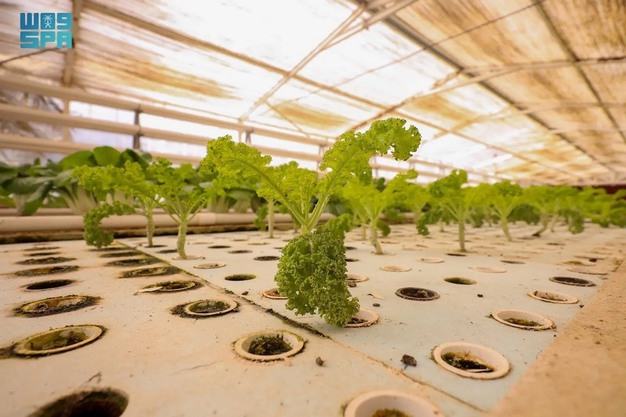
Several hydroponic systems are used in the region to meet different crop requirements and farming needs. The nutrient film technique provides a continuous flow of nutrient solution over plant roots, promoting rapid growth. Floating systems enable roots to grow directly in nutrient-rich water, increasing productivity while reducing water loss. Inert growing media, such as peat moss and perlite, are also used to stabilize roots and regulate moisture and aeration, particularly for fruiting vegetables. Aeroponics represents a more advanced system, in which roots are periodically misted with nutrient solutions, making it among the most water-efficient and productive approaches.
 © SPA
© SPA
These technologies are deployed in greenhouses and specialized farms, enabling year-round production and precise environmental control. This contributes to reduced reliance on chemical pesticides, improved product quality and safety, and mitigation of soil-related challenges.
The expansion of hydroponic farming reflects the Kingdom's commitment to agricultural innovation and sector development, contributing to food security and environmental sustainability while reinforcing Qassim Region's position as a national leader in modern farming practices.
Source: SPA