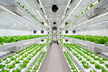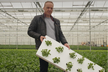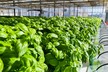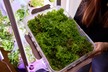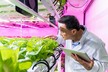


A hydroponic farming project in the Wilayat of Al Rustaq, Al Batinah South Governorate, is emerging as a pioneering model for household-level food production, helping families achieve self-sufficiency in fresh vegetables while promoting sustainable agricultural practices.
The initiative focuses on making productive use of limited home garden spaces through hydroponic technology, a soil-free cultivation method that significantly reduces water consumption compared to conventional farming. The approach also enhances crop quality and improves overall productivity.
As part of the project, insect-proof white mesh shade structures were installed in participating homes, each covering approximately 18 square metres (6m x 3m x 3m). A fully integrated hydroponic system was set up, including a pyramid-shaped growing structure and two polystyrene pipes. Crops grown under the system include lettuce, cucumbers, tomatoes, bell peppers and zucchini.
Beyond production, the project served as a hands-on learning platform for beneficiaries, enabling them to understand hydroponic principles, operate the systems and care for seedlings. Participants were also able to compare hydroponic yields with soil-based agriculture. The results showed that households were able to meet their vegetable needs, underscoring the project's success in strengthening food self-reliance.
Read more at Oman Observer