

In Alert, in the Qikiqtaaluk Region of Nunavut, Canada, winter brings 24-hour darkness, temperatures below -30°C, and a level of isolation that few agricultural systems are ever asked to withstand. Located just 817 km from the North Pole, Alert is the northernmost continuously inhabited place in the world. The site functions primarily as a Canadian Armed Forces and research station, with personnel rotating through year-round.
"Like many remote communities in the North, Alert's food supply is reliant on planes, which, of course, are notorious for not showing up," says Molly Farquhar, the driving force behind The C.A.N, short for Continuous Alert Nourishment. "We often go weeks without a flight, which also means weeks without fresh produce." To reduce that dependency, she built what may be the world's northernmost vertical farm: a hydroponic production system housed inside a renovated sea container.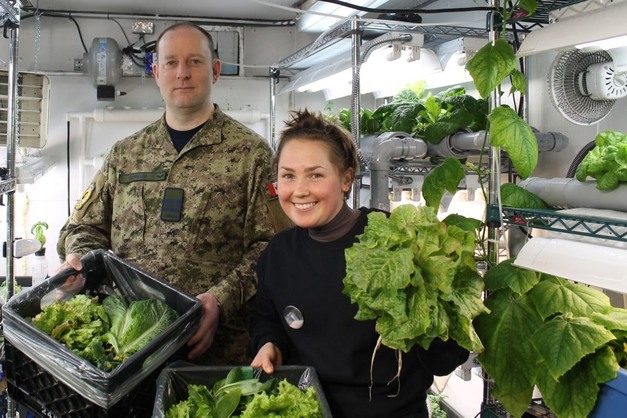 © Molly Farquhar
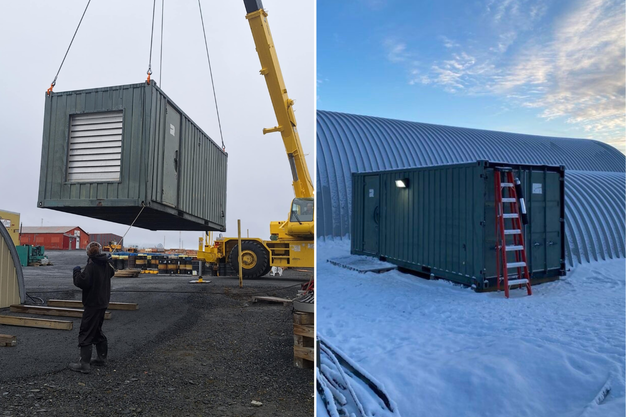
From rusted container to Arctic grow room
The project began as a proof of concept inside an Environment and Climate Change Canada warehouse, where Farquhar demonstrated that leafy greens could be grown successfully on site. That early success helped secure support for a larger build.
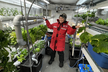
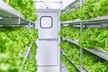
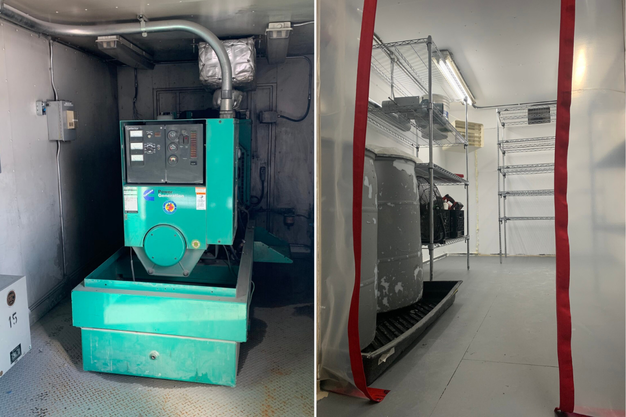
Over the summer, she renovated an old sea container that had previously been rusting away in a dump. The structure was rebuilt with a new insulated floor, enclosed walls, and a dedicated power supply. Two heaters were installed, along with a two-room configuration designed to prevent cold shock when accessing the growing area. The system now includes shelves fitted with PVC pipes and dimmable LEDs, an air exchange system, and a simple water setup.
"The air exchange system is made up of an intake damper and an exhaust fan, both of which open for a total of two hours every day," she explains. "They are also hooked up to a thermostat, which helps keep things consistent throughout the day." Water is stored in a large barrel. Tap water, treated locally with chlorine, is left to sit before being added to the hydroponic systems. "It's just a big rain barrel that I hand bomb 11 buckets of tap water into every few weeks," she says.
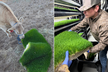
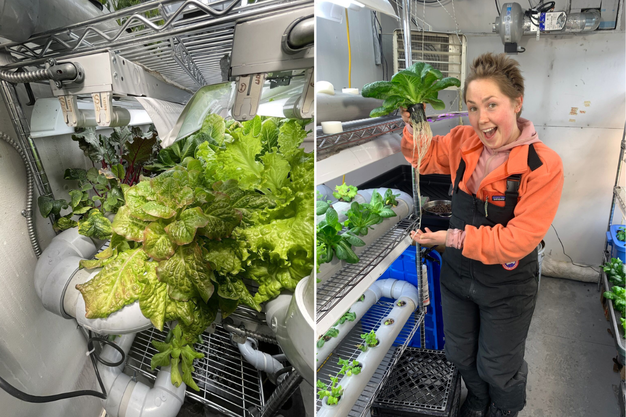
Despite outside temperatures approaching -30°C, crops including arugula, kale, romaine, mustard, basil, cilantro, and spinach have been growing steadily inside. "We've had one harvest so far, where we got a whole milk crate of lettuce. The joy felt delivering the crate to the kitchen reiterated that I have indeed found my 'calling.'"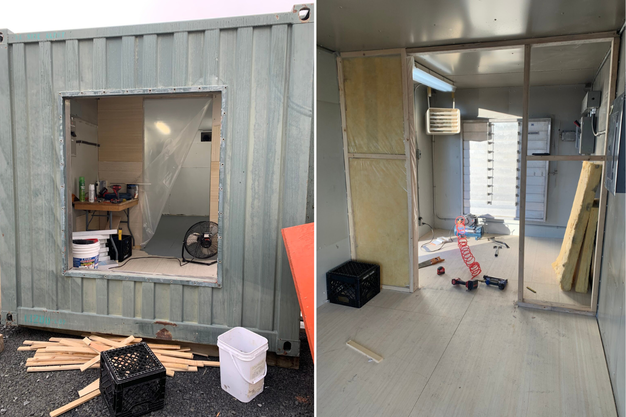 © Molly Farquhar
 © Molly Farquhar
 © Molly Farquhar
Troubleshooting in the High Arctic
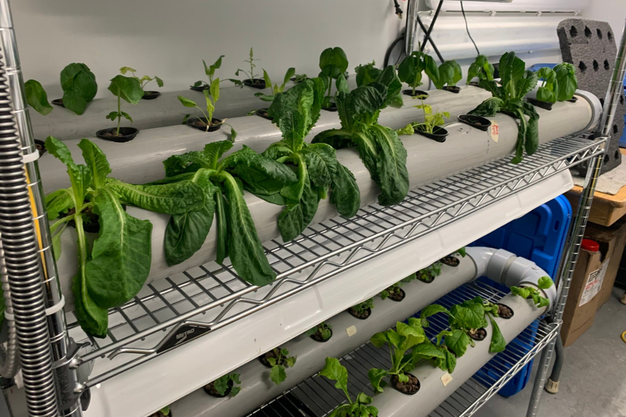
The early months of production were not straightforward. Plants grew slowly, showed nutrient deficiencies, and began wilting. Root systems developed a persistent slime. "It wasn't hard to identify the problem, as all the plant roots were drowning in slime. However, figuring out the cause of the slime was a bit more of a head-scratcher." Over three months, Farquhar systematically adjusted variables. She switched to deionized water, installed DIY filters, increased air exchange events, attempted water cooling, changed from citric acid to hydrochloric acid for pH control, began hydrogen peroxide treatments, and installed a UV sterilization lamp.
Improvements were limited. The breakthrough came after enrolling in a hydroponics course. "In the first lecture, I realized that there was not enough oxygen in the systems. I had previously been relying solely on the waterfall effect. Clearly, that was far from enough." She responded by placing water pumps on timers and adding air stones connected to an air pump to increase dissolved oxygen levels in the root zone. Within a month, plant health improved.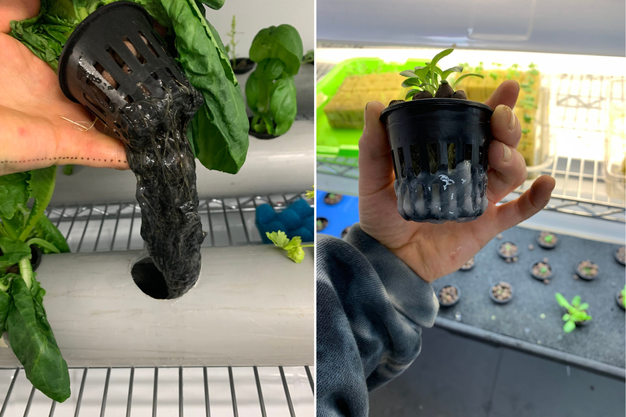 © Molly Farquhar
  © Molly Farquhar
 © Molly Farquhar
From leafy greens to broader resilience
Leafy greens were selected initially for their fast growth cycles, allowing rapid system testing and iteration. With most issues now resolved and consistent lettuce heads forming, Farquhar plans to expand into cucumbers, beets, peppers, peas, beans, and tomatoes.
The project remains modest in scale, but its implications are broader. Alert's dependence on air freight is not unique among remote northern communities, with weather disruptions often isolating settlements for extended periods.
For Farquhar, the motivation is practical. "I see a need for something like this here, so I have made it my new mission to grow fresh produce on site all year round in hopes of contributing to a more self-sufficient, sustainable base."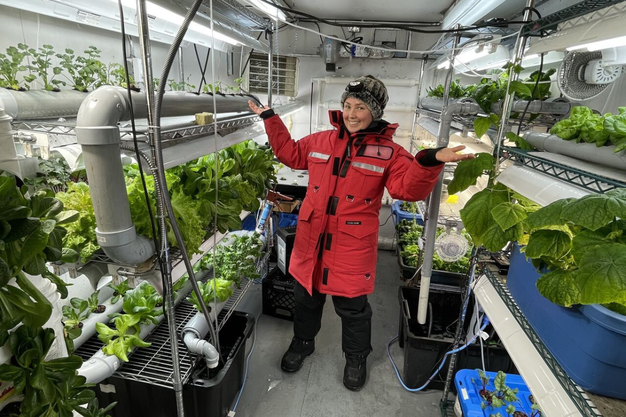 © Molly Farquhar
For more information: 
Environment and Climate Change Canada
Molly Farquhar
[email protected]
www.canada.ca/en/environment-climate-change