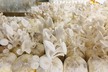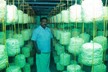


A locally developed automatic fogging system is boosting oyster mushroom production in Abra. At least 10 farmers are already benefiting from the technology that improves yields, cuts labor costs, and optimizes resource use.
Dr. Nero M. Paderes, Project Leader and Director of the Abra State Institute of Science and Technology-Agriculture and Food Technology Innovation Incubation and Commercialization Center (AFTIICC), said that the school launched its oyster mushroom program in Abra during the COVID-19 pandemic. The project provided displaced workers with income and communities with a nutritious food source.
Building on this foundation, the ASIST developed the automatic fogging system funded by the Department of Science and Technology(DOST) Cordillera to address key challenges in local mushroom cultivation. Oyster mushrooms are well-suited to Abra's conditions, with heat-tolerant varieties developed specifically for the province's warmer climate. They are grown using local agricultural waste like straw and sugarcane bagasse, making production sustainable and cost-effective.
Paderes shared that mushroom farmers previously faced the burden of monitoring temperature, humidity, and light levels almost hourly. He described it as "like tending to a child," to prevent drying or poor growth. Rainy season is favorable for cultivation, but it also increases contamination risks.
The automatic fogging system, designed and tested in Abra, uses integrated sensors to track environmental conditions. When temperatures rise or humidity drops, it releases a fine mist to maintain ideal growing conditions in the growth rooms, eliminating the need for constant manual oversight. Local trials in Abra show significant improvements: higher mushroom yields, better produce quality, and increased income for farmers using the system. The technology also uses water more efficiently than manual spraying, a critical advantage for the province.
"With the automatic fogging system, our farmers in Abra can now focus on other farm work instead of watching over their mushroom houses all day," Dr. Paderes said. "We've seen firsthand how this technology helps them earn more while spending less on inputs." ASIST provides Abra farmers with training on cultivation, financial management, and value-added product development, including mushroom chicharon and patties. The institution also distributes start-up kits.
In the first dispersal, each beneficiary received 2,000 growing bags. Most of the produce of mushroom farmers is sold fresh locally, with demand often outstripping supply as residents use it as a regular food staple. "Our goal is to elevate Abra's agricultural sector through science-based innovations," Paderes emphasized. "Oyster mushroom farming, supported by this automatic fogging system, is a powerful way to improve livelihoods here in our province."
Interested farmers may contact DOST-CAR for more information on the technology and support programs. (JDP/MAWC-PIA-CAR)
Source: Philippine Information Agency