


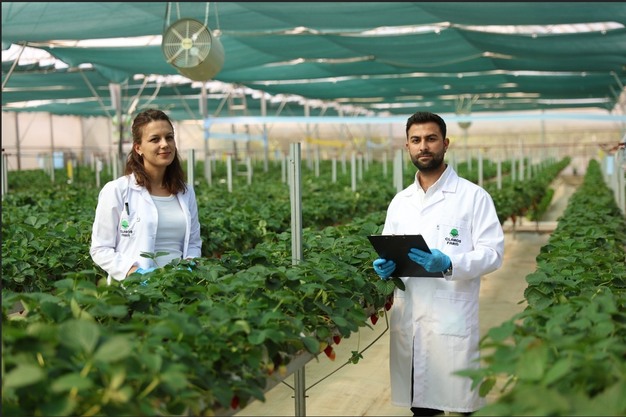
The integration of medicinal and aromatic plants into greenhouse production systems is emerging as a scientifically grounded and field-validated component of integrated pest management (IPM). At Claros Farm, Agricultural Engineers Birgül Albayrak and Samet Albayrak have developed and tested an "aromatic barrier" model that combines border plantings with environmental essential oil applications to reduce pest establishment while enhancing economic sustainability.
 © Claros Farm
Disrupting pest orientation mechanisms
Insect pests and mites rely heavily on volatile organic compounds (VOCs) to locate host plants. The aromatic barrier approach targets this orientation mechanism. Rather than relying on direct toxicity, the system modifies the greenhouse's olfactory environment.
"The objective is not to kill the pest," explains Birgül. "We aim to disrupt its ability to interpret host plant signals. When the chemical communication network is confused, the production area becomes unattractive and functionally uninhabitable."
 © Claros Farm
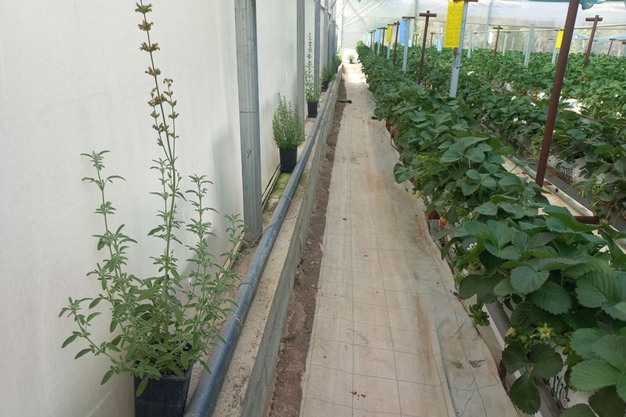
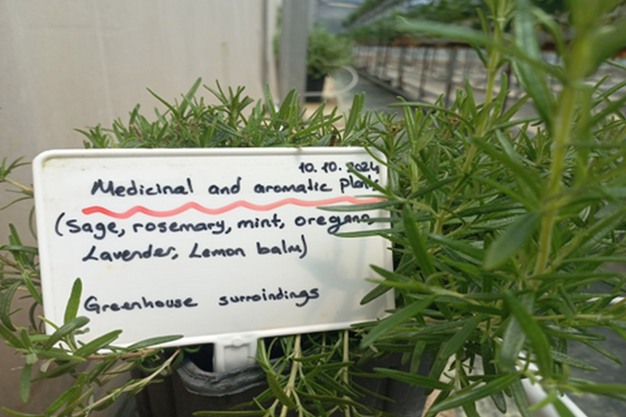
Species selected for border use include Melissa officinalis, Salvia officinalis, Ocimum basilicum, Mentha spp., and Rosmarinus officinalis. "Lemon balm, rich in citral and citronellal, demonstrates strong repellent effects against whiteflies and aphids. Sage produces an odor-masking effect that interferes with pest host recognition," she says. "Basil, containing eugenol and linalool, is particularly effective in areas with high thrips pressure. Menthol-dominant mint species significantly limit spider mite establishment, while rosemary provides long-lasting volatile emission and stable repellent activity, particularly in high air-circulation zones," Samet adds.
"We deliberately selected species with continuous volatile release," he notes. "Sustained emission is critical for maintaining a consistent aromatic density within the greenhouse environment."
 © Claros Farm
Gutter-under applications: Evidence from comparative trials
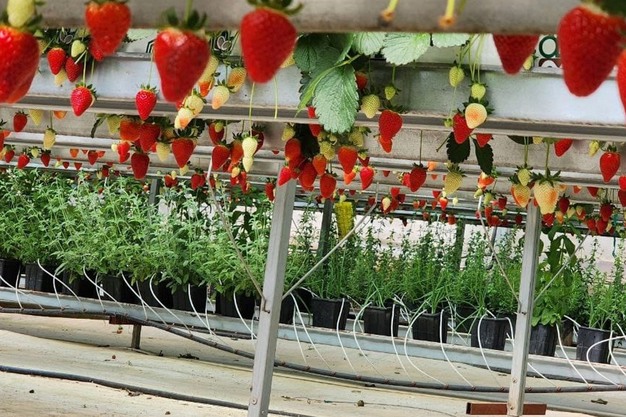
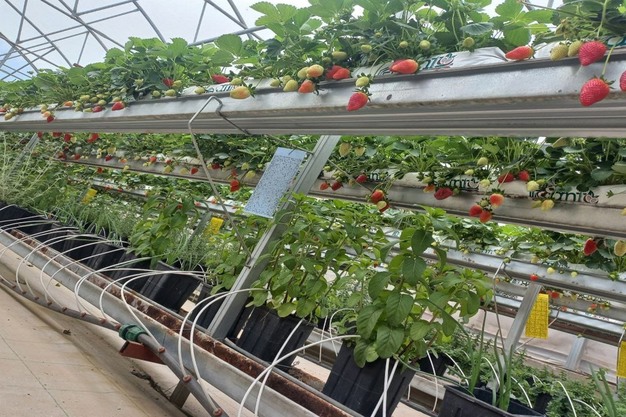
According to the team of agricultural engineers, one of the most significant outcomes of the Claros Farm trials was the strategic placement of aromatic plants beneath greenhouse gutters and along perimeter borders.
"In gutter-under zones where aromatic plants were installed, we detected no spider mite populations," Birgül shares. "In control areas without aromatic plants, dense populations developed. The contrast was unmistakable."
This comparative observation shows that pest suppression was not incidental. The dense volatile environment encountered before pests reached the crop canopy prevented colonization. Cocopeat substrates and gutter-under microclimates also functioned as reservoirs, retaining and gradually releasing aromatic compounds.
"The gutter-under zone became a biological filter," Samet adds. "It intercepted pests before establishment could occur."
 © Claros Farm
Essential oils as environmental inputs
While border plants provide passive protection, essential oils have been integrated as active environmental components. Applications are directed to structural and non-crop zones rather than onto the crop itself, preserving produce quality, particularly in sensitive crops such as strawberries.
"The principle is environmental management, not foliar saturation," Birgül emphasizes. "This prevents undesirable flavor transfer while maintaining repellent efficacy."
"Important inputs include oil derived from Azadirachta indica, which showed stable and long-term regulatory effects in field applications. Oil from Origanum spp., rich in carvacrol and thymol, provided rapid suppression under high thrips and spider mite pressure. Rosemary oil was observed to act on pest nervous systems, restricting movement and feeding behavior, while mint oil influenced respiration and behavioral patterns, limiting pest establishment. Garlic and onion extracts were also evaluated as supportive environmental treatments."
"Neem oil was the most stable component in seasonal applications," Samet states. "It provided continuity, while oregano oil delivered rapid pressure when needed."
 © Claros Farm
Transforming non-productive areas
Beyond pest management, the aromatic barrier model introduces a strong economic dimension. "Greenhouse perimeters, idle zones, and gutter-under areas (traditionally non-revenue-generating spaces) are converted into productive cultivation zones for medicinal and aromatic plants," Samet says.
"At the end of the season, these plants can be marketed fresh, dried, or processed for essential oils," Birgül explains. "Pest control investment becomes a secondary income source."
Reduced chemical input lowers pesticide, labor, and application costs, while residue-free production strengthens market positioning and consumer confidence. Diversification through essential oil or dried herb sales distributes economic risk and enhances operational resilience.
"This system reduces dependency on a single crop," Samet notes. "It strengthens both biological and financial sustainability."
For more information:
Claros Farm
Birgül Albayrak
[email protected]
Samet Albayrak
[email protected]
www.clarosfarm.com
https://klarostarim.com