

In the future, farmers on the Moon and Mars will have a big challenge: how to grow healthy food in two extremely unhealthy environments. That's because the soil on both worlds isn't at all hospitable to plants and animals. Neither are other conditions. Both are irradiated worlds, Mars has a thin atmosphere and the Moon has none at all. So, how will future colonists on either world grow their food?
We could look toward the example shown by Matt Damon in "The Martian". There, a stranded Marsnaut figures out how to grow potatoes using his own sewage, which turns out to be do-able according to experiments run by the International Potato Center and NASA few years ago. More recently, researchers led by Harrison Coker of Texas A&M worked with a team at NASA, tested a solution of recycled sewage products and how they interacted with simulated lunar and Mars regolith (soil).
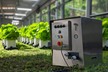
The NASA team, headquartered at Kennedy Space Center, is taking a deep look at what are called bioregenerative life support systems (BLiSS). These bioreactors and filters turn an artificial form of sewage into a solution rich in the kinds of nutrients that plants need to thrive. This work has immediate implications for people who will be living and working on the Moon and Mars in the future. That's because people can easily furnish the waste products needed. With the upcoming Artemis missions to the Moon, the question of food production is assuming a high priority for long-term inhabitants.
Read more at Universe Today