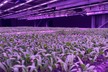


As energy costs and tight margins continue to challenge the financial viability of vertical farming, the UK Agri-Tech Centre has been working closely with industry partners to develop data-driven solutions that improve efficiency and strengthen commercial viability in total controlled environment agriculture. One of these solutions is the Advanced Crop Dynamic Control (ACDC) system, developed through an Innovate UK-funded, multi-technology collaboration. The system uses real-time plant feedback to automatically regulate lighting inputs, aligning energy use more closely with crop needs.
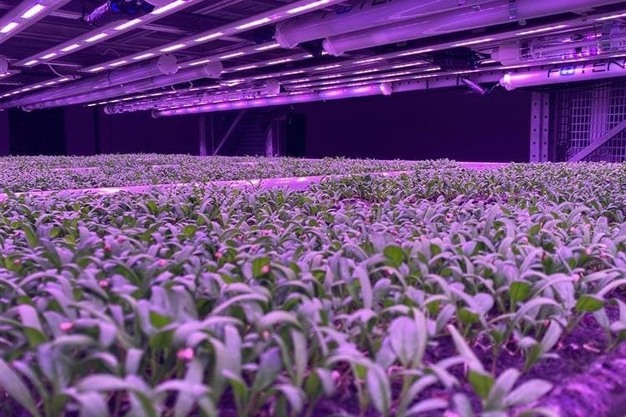
The ACDC system was installed at the UK Agri-Tech Centre's Vertical Farming Development Centre (VFDC) as part of the project trial. Fotenix India supplied plant spectral data, Vertically Urban provided the Horti-Blade™ growing platform, and Ostara delivered the dynamic lighting technology. These elements were integrated into an autonomous control platform capable of switching lighting between "maximum production" and "energy saving" recipes, based on real-time spectral signatures linked to plant health.
 © UK Agritech Centre
Growers need flexibility when balancing energy use, crop quality and overall system performance in vertical farms. In this trial, the spectral signals and thresholds within the ACDC system were selected to demonstrate that lighting modes could be adjusted automatically in response to plant-derived signals. By refining these settings, growers will be able to tailor the system to specific crops and prioritise different production goals, whether that is yield, quality or energy efficiency.
During testing, the ACDC system successfully automated switching between the two lighting recipes. The core functionality operated as intended, although performance was not flawless. The system achieved the targeted daily light duration 81 percent of the time, which may have contributed to reduced growth performance in ACDC-grown plants compared to the control.
In terms of crop output, spinach yields under the ACDC system were slightly lower than the control treatment. However, crop appearance and overall quality remained consistent across both systems. Analysis of spectral data from Fotenix India suggests that plants grown under ACDC conditions may have diverted more energy toward protective responses rather than biomass accumulation. This points to further opportunities to refine control thresholds and optimise crop-specific responses.
Despite the modest yield reduction, the ACDC system delivered significant gains in energy performance. When accounting for appropriate operational parameters, it operated 21 to 25 percent more energy efficiently than the control system. The Fotenix India sensing platform provided continuous, high-quality crop data to support strategic decision-making and lighting recipe selection through Ostara's technology. In addition, the system has the potential to automate manual crop assessments, tasks that would typically require more than 20 hours of labour per trial.
Overall, the integrated ACDC system demonstrated that vertical farms can use real-time plant data to dynamically adjust lighting strategies and achieve energy savings of up to 25 percent. While the trial recorded a slight reduction in yield, this was linked to early-stage integration challenges and the need to refine the spectral signatures used to trigger lighting changes. The findings highlight clear opportunities: lighting can respond directly to plant conditions, energy use can be reduced without compromising crop quality, and spectral feedback can provide early insight into growth versus stress trade-offs. This collaboration underlines the value of integrated technologies in moving vertical farming towards greater commercial viability.
For more information:
UK Agritech Centre
https://ukagritechcentre.com/