
The Villages Charter School in Florida has deployed a controlled-climate hydroponic fodder farm as part of its agriscience and animal science programs, connecting classroom learning to feed production for on-site livestock and, increasingly, for the wider community.
The system, manufactured by Colorado-based FarmBox Foods, is part of a broader initiative across four Sumter County Schools facilities backed by approximately $1.7 million in grant funding secured through a partnership led by Casey Ferguson, director of career and technical education and adult education at Sumter County Schools.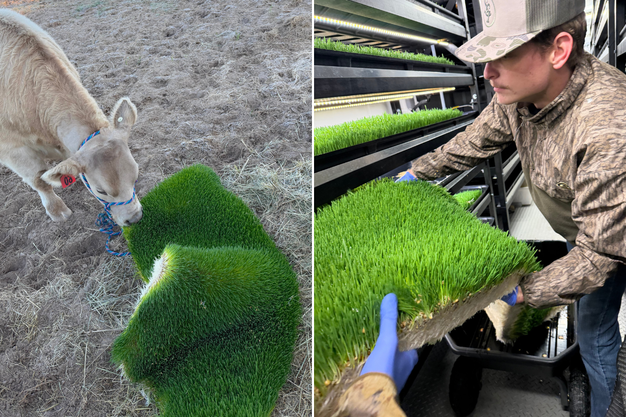 © Farmbox Foods
An unexpected fit
The school did not set out to build a fodder program. Its initial evaluation of container farms centred on hydroponic vegetable production, with FarmBox Foods chosen on the recommendation of a nearby educational facility. The fodder application only entered the picture when the school weighed its livestock program needs against years of recurring grazing disruptions caused by flooding following hurricanes.
"We were actually not aware that a fodder version was available until after selecting FarmBox as a partner in this project," says Dr. Kelly Colley, Vice Principal at The Villages Charter School. "It was icing on the cake when we learned about FarmBox's Hydroponic Fodder Farm when we were evaluating our program needs in light of our grazing issues in the prior few school years."
Built for disruption
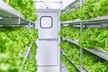
Hydroponic fodder systems allow farms and institutions to produce fresh animal feed indoors in short growth cycles, reducing reliance on pasture availability during extreme weather.
The ability to produce feed indoors regardless of field conditions was a decisive factor. With pasture access periodically cut off for extended periods after storms, the school needed a system that could keep livestock supported through disruptions.
"FarmBoxes have gone through hurricanes in Jamaica, Grand Cayman, and Nova Scotia and did not sustain any damage," says Chris Michlewicz, Vice President of Communications at FarmBox Foods. The company still advises customers in storm-prone regions to prepare for possible power interruptions. "We encourage customers in susceptible areas to have a backup generator on hand in the event of an extended power outage."
Students, livestock, and a horse rescue farm
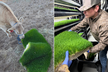
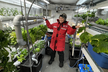
Two students handle daily and weekly maintenance of the system, with others engaging during harvest and feeding cycles. The emphasis on automation, data, and problem-solving has attracted students who may not otherwise have gravitated toward traditional animal agriculture. Students are growing fresh barley fodder on site, tracking the livestock response to feed with higher vitamin and mineral content, and evaluating its potential to reduce feed costs and replace hay when pasture grass goes dormant in winter.
Production has exceeded the school's own needs, and the surplus has opened a community partnership that Colley says the school intends to build on. "We have provided fodder to a local horse rescue farm, and they were excited to come on as a current and future partner," she says.
A growing market
The Villages Charter School is one of seven U.S. school campuses currently operating FarmBox Foods systems, reflecting growing interest from educational institutions as grant funding expands for hydroponics and agriscience curricula. "We do have a focus on getting these interactive farms in the hands of more educators and students," says Michlewicz.
For more information:
FarmBox Foods 
Chris Michlewicz, Vice President of Communications
[email protected]
www.farmboxfoods.com
The Villages High School
Dr. Kelly Colley, Vice Principal
[email protected]