


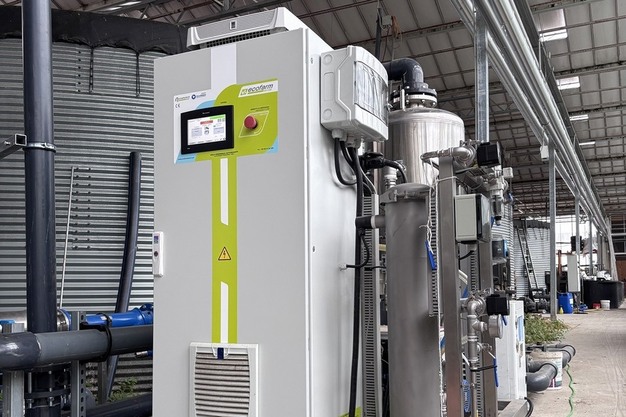
The use of ozone to disinfect irrigation water is becoming increasingly important to horticultural companies that prioritize quality and consistent production. While this technology has traditionally been valued for its ability to reduce microbial loads and prevent biofilm buildup in irrigation lines, another benefit is now being recognized, namely, improving the physiological conditions of the root system.
 © Ecofarm Storti Srl
These issues were discussed on January 20 in Guidizzolo, Mantua, Italy, as part of the 'Orticoltura in Campo' event during the workshop organized by Ecofarm Storti. The video below provides more information.
"Thanks to its high oxidizing power and rapid decomposition into oxygen, ozonated water helps reduce hypoxic phenomena in the rhizosphere," says Giorgio Zaffani, a biotechnologist at Ecofarm. "A lack of oxygen in the soil is one of the main causes of stress for intensive horticultural crops, especially with frequent irrigation or in poorly draining soil. Under hypoxic conditions, roots absorb water and nutrients more slowly. They also become weaker and more susceptible to attack by soil pathogens such as Phytophthora, Pythium, and Fusarium. These pathogens cause root rot and sudden vegetative collapse."
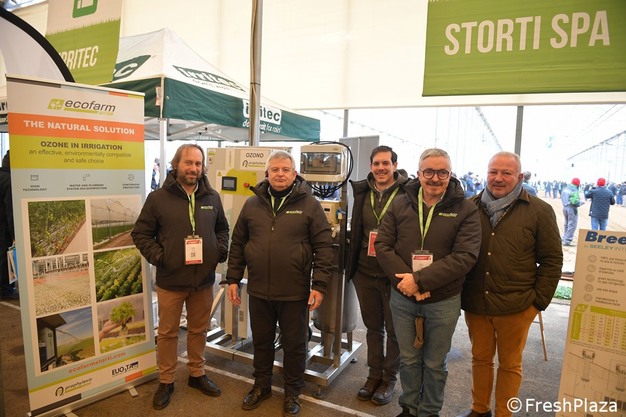 © Cristiano Riciputi | VerticalFarmDaily.comGiorgio Zaffani, Massimo Bizzarri, Matteo Benvegnù, Enrico Storti, Gianfranco Festa
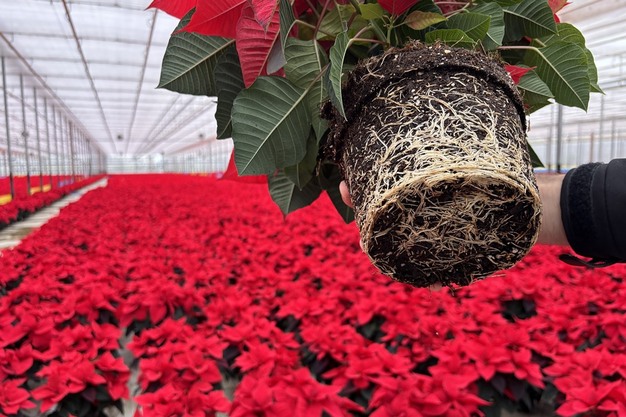
Ozone acts on several levels. First, it inactivates bacteria, fungi, and spores from irrigation water. On the other hand, ozone helps create a more balanced, oxygenated root environment. The result is vigorous root development with active, white, functional roots that sustain homogeneous, constant, prolonged vegetative growth. Plants with efficient root systems are less stressed and respond better to nutritional stimuli and environmental stresses. This results in higher yields and better quality.
 © Ecofarm Storti Srl
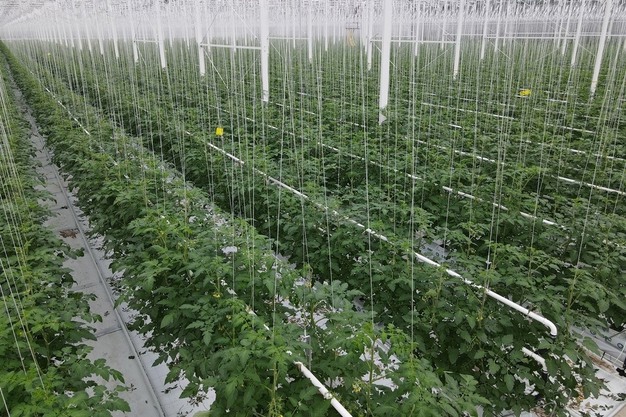
"The impact on the economy is significant," Zaffani continues. "Increased uniformity in production mitigates waste and quality inconsistencies, allowing for more efficient scheduling of harvests and deliveries. Production stability is thus a key factor in ensuring a consistent supply to customers, which is an increasingly important element in business relations. A company that maintains consistent standards strengthens its reputation as a reliable and efficient supplier, which positively affects its overall profitability."
 © Ecofarm Storti Srl
"Ozone can be transformed from a simple disinfection tool into a strategic lever for company competitiveness," concludes the expert, identifying it as the invisible nutrient for horticultural production.
For more information:
Ecofarm Storti srl
Via Castelletto, 10
37050 Belfiore (VR) - Italy
+39 045 6134390
[email protected]
www.ecofarmstorti.com