



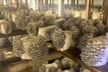
Robin Silverman spent 30 years teaching Latin before becoming a farmer. Today, her Tripping Gnome Farm in Freeport, Maine, produces blue oyster and lion's mane mushrooms using a substrate made from hardwood fuel pellets and spent coffee grounds sourced from a Brunswick roaster. "When we grow our mushrooms, we get our used coffee grounds from a coffee roaster in Brunswick," said Silverman. "So, we are using their waste to create our mushrooms."
Each bag of substrate is inoculated with grain spawn and left to colonize over several weeks before moving into a controlled fruiting tent, where lights run for 18 hours a day alongside fans to manage CO2 levels. Each bag yields around a pound of mushrooms. Beyond mushrooms, the farm also grows microgreens and other produce, sold through an on-site farmstand and at local retailers including Bow Street Market in Freeport.
Nothing at the farm goes to waste. Unsold produce is freeze-dried — a process Silverman describes as taking water from ice directly to gas, bypassing the liquid phase entirely — extending shelf life by up to 25 years.
"I was a Latin teacher for 30 years before I became a farmer and this job is a lot less stressful than teaching," said Silverman. "It's very good to be with the land, it's very nourishing for my body and the soul."
Read more at WGME
Related Articles → See More
-

How robotics and AI are transforming US mushroom farming
-

India: Three former volleyball teammates build commercial mushroom farm after graduation
-
Caputo & Guest builds fully domestic mushroom supply chain as import reliance grows across the industry
-

US: Growing blue oysters and lion's mane on Maine farm using coffee waste substrate
-

Scottish community mushroom farm launches in converted building at Dornoch Hub
-
US (VA): Transforming perceptions of edible fungi
-

US (GA): Mushroom farmers and delivery drivers say they're feeling the pain of surging diesel gas prices
-
'There's a poetic beauty to growing mushrooms'
-
India: Mushroom cultivation project launched for 120 women in Tamulpur district
-
UK: Sisters teaching the community how to grow mushrooms in the Sussex countryside