
The U.S. Biochar Initiative today announced its rebrand as the American Biochar Institute (ABI) alongside a new logo and website, signaling the organization's next phase as a central resource for the expanding biochar industry in North America. With an estimated market value in North America expected to grow to nearly $1 billion by 2030, biochar — a carbon-rich material produced from biomass waste through pyrolysis — is creating new opportunities for circular practices across agriculture, industry, and the built environment.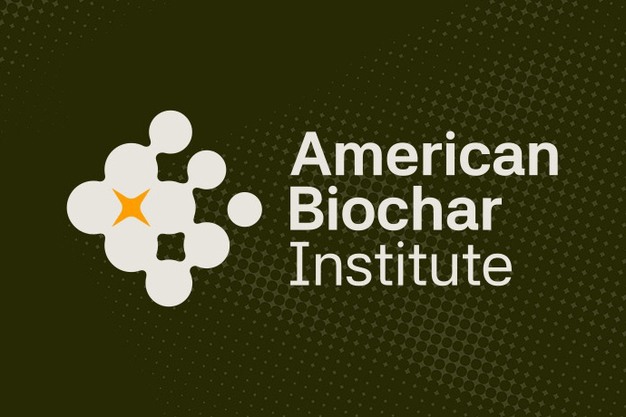 © American Biochar Institute
ABI's new mission focuses on strengthening the technical guidance, standards, and market coordination needed to support responsible biochar deployment at scale. The organization's new website will serve as a central resource for biochar users and the biochar industry, providing technical information and tools to support effective use of biochar. "As biochar becomes ingrained in agriculture and other key sectors as a circular, waste-to-value solution, durable end-use markets and trusted standards become essential to its long-term success," said Myles Gray, ABI Executive Director. "The American Biochar Institute exists to build the foundation for that growth through delivering high-quality guidance, advancing rigorous standards, and convening the industry to ensure biochar delivers real-world value at scale."
"This rebrand reflects both the maturation of the sector and our own evolution — from an initiative that helped catalyze early growth to an institution focused on strengthening standards, fostering industry cooperation, expanding markets, and building durable demand for biochar nationwide," added Matt Krumenauer, ABI Board Member and Vice President of the U.S. Endowment for Forestry and Communities.
Over the past year, ABI expanded its work through several key initiatives, such as the release of the ANSI/ASABE/USBI S668 "Methods for Measurement and Testing of Biochar" standard, collaborative market research with the International Biochar Initiative on the upcoming 2025 Global and US Biochar Report, and the development of the Stormwater Guidance Manual in partnership with Center for Watershed Protection. ABI also hosts the annual North American Biochar Conference. These efforts are highlighted in the organization's newly released 2025 Annual Report, which reflects a year of steady progress.
ABI works closely with large- and small-scale organizations, retailers, and corporate partners in agriculture, industry, and the built environment sectors, as well as federal and state agencies, researchers, and municipal leaders advancing biochar adoption. Such partnerships support projects like the Biochar Atlas, an expert-approved biochar knowledge hub on ABI's website launching later this year, and Growing with Biochar, an ongoing training program for agricultural professionals.
For more information:
American Biochar Institute 
Elza Vucane, Marketing
[email protected]
www.biochar.org