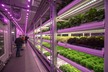


Vertical farming businesses blossomed a decade ago, promising an abundant, cleaner source of fruits and vegetables. Today, most of those startups have withered.
Constructed in opaque buildings like warehouses, vertical farms resemble sterile manufacturing facilities more than farms. Crops are grown in trays stacked to the ceiling, fed with hydroponic or aeroponic systems. Plants are bathed in white and purple LED lights to maximize photosynthesis.
Owners of vertical farms once talked about their industry in almost messianic terms as a climate-friendly solution to the ills they said plagued modern farming: pesticide use, water overconsumption, long-distance trucking and labor exploitation. By the late 2010s, Silicon Valley was on board, investing billions of dollars in companies promising to remake agriculture.
Now, that venture capital funding has gone up in flames, most prominently the $938 million raised by Bowery Farming and $792 million by AppHarvest, which are out of business. Just three years ago, 23 companies signed on to a Vertical Farming Manifesto and committed to goals including transforming "food systems for the benefit of people and the planet." Today, fewer than 10 are in business.
Read more at The Seattle Times