

The Gulf Cooperation Council (GCC) region, comprising Saudi Arabia, the United Arab Emirates (UAE), Qatar, Kuwait, Bahrain, and Oman, has long-standing reputation as a net exporter of energy and importer of foods. The outbreak of the Middle East war in late February 2026, culminating in the effective closure of the Strait of Hormuz, has triggered an unprecedented crisis for the region's food systems. This article we will shed some light on the war's impact on food security, agrologistics, supply chain resilience, and market dynamics across the GCC.
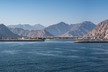
When the Middle East war erupted on 28 February 2026, following joint US-Israeli strikes on Iranian targets, the situation rapidly escalated into a regional conflict with far-reaching implications for global energy and food systems. The Strait of Hormuz, a 33-kilometre-wide maritime chokepoint, was effectively closed to commercial shipping by Iran's Islamic Revolutionary Guard Corps (IRGC) on 1 March 2026, following a series of missile and drone attacks on vessels and port infrastructure.
Within days, maritime transit through the strait collapsed by more than 80%. By mid-March, the closure was enforced both physically (with risks of mines and attacks) and financially, as insurers around the world withdrew war-risk insurance coverage for the region.
The closure's impact is reflected in three main sectors; energy, food and fertilizers. About 20% of global oil and significant volumes of LNG transit the strait; these flows were severely disrupted. Moreover, roughly one-third of global fertilizer trade, especially urea and ammonia, and to a lesser extentphosphor and sulphur, is routed through the Gulf. Disruptions are already translating into higher costs for farmers worldwide. Fertilizer prices have risen sharply and given that natural gas is the primary feedstock for nitrogen fertilizers, elevated energy prices are expected to sustain even more upward pressure on fertilizer costs, with the closure causing plant shutdowns and price spikes of 40-60% worldwide. This will cause a ripple effect on food prices in the months to come.
Over 70% of GCC food imports, including grains, perishables, and agricultural inputs, typically arrive via the strait. The closure's timeline and severity have forced the GCC to activate emergency protocols, reroute logistics, and reassess the resilience of their food systems.
Food security plans in action
Saudi Arabia, with the largest population in the GCC of about 36 million, imports 80-85% of its food requirements. Its food security strategy is anchored in substantial strategic reserves, diversified import sources, and ambitious domestic production targets under Vision 2030. Initiatives under this strategy include domestic expansion of vertical? Or just CEA farming, aquaculture and food processing clusters, as well as investments in food production in six continents through the company SALIC.
For the short term, as a major importer, Saudi has strategic reserves of 2-4 months for staples like wheat ,rice, barley, sugar, and cooking oil. Self-sufficiency rates for a range of vegetables, dairy, poultry and eggs near to or even over 100%. However, fresh produce lasts no longer than two weeks. This is a concern, as for instance 82% of fresh fruits are still imported.
With sea access at both the Red Sea and Gulf sides, some food shipments rerouted from eastern ports (Dammam, Jubail) to Jeddah Islamic Port on the Red Sea, adding 10 to 14 days to transit times and straining cold chain capacity.
The UAE imports approximately 85% of its food and has its National Food Security Strategy 2051 in place, focusing on diversifying import sources, investing in agritech, and building local production capacity. For all 18 critical products in the plan's food basket, multiple supply sources from different geographical areas are contracted. A stockpile lasting four to six months of staple foods is available in the country. To alleviate the disruptions in the logistics, truck movement restrictions have been relaxed to facilitate food distribution, and airfreight has been expanded for perishables. A hotline was opened to report unjustified price increases.
Qatar's food security strategy was overhauled after the 2017-2020 blockade, resulting in significant investments in strategic reserves, local production, and logistics infrastructure. The Hamad Port Food Security Terminal has 51 climate-controlled silos for rice, oil, and sugar, with capacity to cover two years of national demand. Local production of dairy provides 100% self-sufficiency. At current, overland corridors via Saudi Arabia use the TIR system is activated, which allows goods to move across multiple borders under a single customs guarantee. Airfreight is increased for perishables, leading to a price increase of 10-20%.
Oman's food security plan leverages its unique geographic position and diversified port infrastructure. Oman's ports of Salalah, Duqm, and Sohar provide direct access to the Indian Ocean, bypassing Hormuz. They serve as alternative gateways for the GCC, with multimodal solutions (sea, road, air) supporting regional supply chains.
Bahrain and Kuwait are in a similar situation. Food security is challenged by high import dependency and limited storage capacity. The strategic reserves contain three to four months for staples, but do not apply to perishables. The operations of Shuaiba port (Kuwait) and Khalifa bin Salman port (Bahrain) are suspended. In Kuwait, prices for basic foods have been frozen and meat imports are subsidized. Export of food products is banned temporarily to protect domestic supply. Bahrain faces the highest vulnerability among GCC states due to its small size, high import dependency, and limited reserves. In both countries, the costs for fresh meat and fish have increased 30-100%.
Ramadan and winter
As the war broke out during the holy month of Ramadan, major retailers had increased inventory. Ramadan typically is the time of the year with the highest F&B sales. Many retailers had also expedited other supplier in anticipation of possible disruptions.
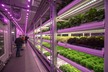
As the end of winter approaches, open field agriculture will soon cease in the largest part of the GCC, due to high temperatures. The local supply of fresh vegetables, fruits and leafy greens will rapidly decrease. Only high tech controlled environment agriculture facilities will be able to produce year-round in the arid desert climate.
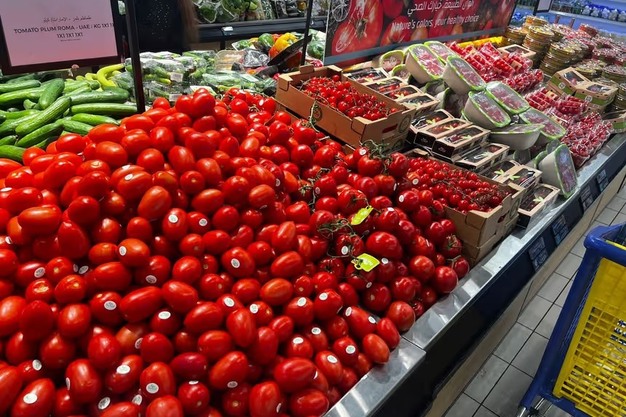
Iran has historically been a major supplier of fruit, vegetables, and nuts to the GCC, exporting over €2.6 billion in fruit and €1.3 billion in vegetables annually. Key products include pistachios, dates, sultanas, apples, and greenhouse vegetables, with the UAE and Iraq as top destinations. As of 3 March 2026, Iran has imposed a blanket ban on fruit and vegetable exports, redirecting supply to the domestic market as a wartime survival measure.
 © Giovanni Angiolini
Sky-high perishables
Airfreight has emerged as a critical contingency for high-value, time-sensitive food imports, particularly perishables such as fruit, vegetables, meat, and dairy.
Saudia Cargo has increased flights from India and East Africa, transporting fresh produce and meat at premium rates. Major retailers have chartered special flights to maintain inventory. Similarly, Emirates SkyCargo and Etihad Cargo have expanded freighter operations, with dedicated charters from India, Africa, and Europe. LuLu Group, a leading retailer, has organized over 37 charter flights, importing more than 6,000 tons of fresh produce since the crisis began. Airfreight capacity is limited relative to maritime volumes, and rates have surged by 20-30% since late February 2026.
The tactical use of airfreight has prevented acute shortages of fresh food in major GCC markets, but at a significant cost premium. Retailers and logistics providers are absorbing some of these costs to stabilize prices, but prolonged reliance on airfreight is unsustainable. While prices remain elevated but under control for now, the risk of a price spiral increases with the duration of the crisis. Prolonged disruption could exhaust reserves, especially for perishables, and force further price hikes.
Long-term resilience and policy recommendations
The GCC nations have laid a robust foundation for food security through strategic investments and policy frameworks that prioritize resilience. Their commitment to expanding controlled-environment agriculture has reduced dependency on volatile import channels, especially critical now with disruptions in maritime access. Storage infrastructure for both staples and perishables has been scaled up across the region, ensuring buffer capacity during supply shocks.
Coordination at the GCC level—through harmonized strategic reserves, shared logistics corridors, and unified policy responses—has proven essential in navigating the current crisis. These efforts reflect a long-term vision that balances national autonomy with regional solidarity.
Going forward, enhancing the infrastructure and technology transfer behind cold chain and controlled-environment systems are opportune. Investment in cold chain logistics and smart warehousing remains a key area where international expertise can accelerate regional capabilities. Collaborative research on crop varieties suited to arid climates, as well as joint ventures in food processing and packaging, offer high-impact opportunities. Moreover, global logistics firms can help optimize rerouted supply chains and airfreight strategies now that traditional maritime routes are constrained.
The GCC's proactive stance invites meaningful partnerships that reinforce its food security architecture while offering mutual economic benefits.
The Middle East war and the closure of the Strait of Hormuz have exposed the GCC's acute vulnerability to external shocks in food and agrologistics. While national food security plans, strategic reserves, and logistics adaptations have so far prevented outright shortages, the crisis has driven up prices, strained cold chains, and forced a costly shift to alternative ports, overland corridors, and airfreight. The indefinite halt of Iranian fruit and vegetable exports has compounded supply pressures, especially for perishables.
The GCC's response demonstrates both resilience and the limits of current systems. Long-term solutions will require sustained investment in domestic production, agritech, port infrastructure, and regional integration, as well as engagement with global partners to restore insurance coverage and stabilize supply chains.
As the crisis continues, ongoing monitoring, agile policy responses, and strategic partnerships will be essential to safeguarding food security and economic stability across the Gulf.
Source: Agroberichten Buitenland