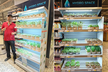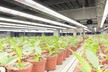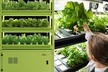


Abhijith "Abhi" Nag Balasubramanya spent four years working in hydroponic operations across Sweden and France before founding Hydro Space Sweden AB in Skellefteå in May 2025. Within six months, the company was supplying locally grown produce to ICA Kvantum Skellefteå, had secured a government-backed equipment loan, completed construction of four NFT channels and two gutter systems for year-round strawberry cultivation, and was in active discussions with investors valuing the business at 5 million Swedish kronor.
In December 2025, the Swedish Migration Agency denied his residence permit application. "Everything happened within the span of 20 days. I received the rejection letter and had to pack everything up and move out within 28 days. At the same time, I had to either sell my company or file for bankruptcy."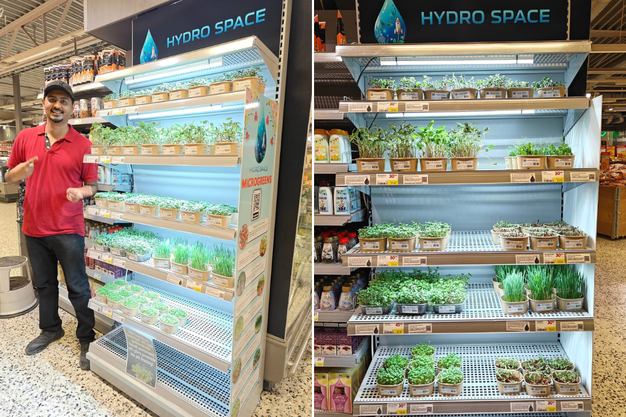 © Abhijith Nag Balasubramanya
Building the business case
Abhi had identified a specific supply problem in northern Sweden. "Any food that travels 1,400 kilometres has already lost most of its nutrition. During winter, there was no nutrition left in any of the food in the supermarket. With temperatures at -30 degrees outside, we could still grow greens inside, and people could have access to fresh food." He began testing the local market from a basement unit in Ursviken, growing lettuce and herbs and posting availability on the community Facebook page. "People started paying money. I never expected any money back," he says. "I just wanted to know what they felt about the product."
ICA Kvantum Skellefteå agreed to stock the produce. Certification from Kiwa, Sweden's primary certifier for produce suppliers, came through in four days rather than the usual four months, facilitated by a direct supermarket recommendation. Two restaurants and additional smaller supermarkets placed orders. A food company approached Hydro Space about custom cultivation of Thai basil and jalapeños.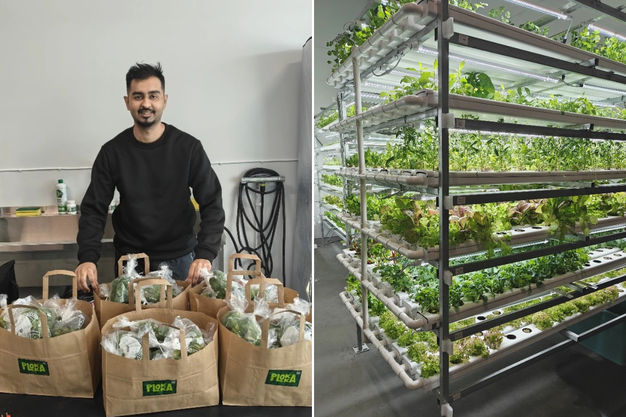 © Abhijith Nag Balasubramanya
Equipment delays and projected revenue
"Equipment ordered from a supplier in China only arrived in October after being rerouted around the Cape of Good Hope to avoid piracy risks in the Red Sea, which added months to the timeline, but we managed to complete construction by the end of November. The first commercial harvest came in the second week of January," Abhi says.
Projected monthly revenue at full capacity was approximately 255,000 kronor, with 150,000 to 180,000 kronor expected from the strawberry gutter systems alone, which used a year-round-producing variety that yields harvests every four days. "By December, six investors had proposed offers of 1.25 million kronor for a 25% stake in the company, with plans to expand our model across the region. Municipalities were in touch with me about replicating the operation in their areas."
The rejection
The Swedish Migration Agency cited three grounds in its decision: insufficient entrepreneurial experience, inadequate language proficiency, and insufficient personal financial resources. Abhi disputes all three. "I had 250,000 kronor in ny personal bank account, which was above the stated threshold. I provided Swedish language certifications at D-level from a government institution and conducted all customer correspondence in Swedish." He had documented four years of operational experience at hydroponic facilities in Sweden, including a closed-loop aeroponic project at an eco-village on Gotland, as well as prior involvement in a family agricultural business in India.
According to Abhi, the case officer did not respond to repeated emails and declined to specify what additional documentation was required, citing the individual-based assessment process. When Norran, a local newspaper, followed up with the agency, a new justification emerged: that Abhi had taken a loan to finance the business. The loan was 250,000 kronor from Almi, a Swedish government-backed fund for sustainability-oriented businesses, approved after a one-month assessment of the business plan and restricted to equipment purchases.
"When Almi provided the loan, they didn't blindly give it," Abhi says. "They took one month to assess my business plan, my budgeting, and how I planned to expand. No startup company can make a profit in six months. No production company can have 100% personal financing." The head of Skellefteå municipality, the local entrepreneurship office Naringslivskontoret, and ICA Kvantum's procurement manager all publicly criticised the decision. The Swedish Migration Agency, when contacted, stated that secrecy legislation prevented it from commenting on individual cases.
"I built a fully operational company within six months that provided local jobs and fresh produce that aids in making the North of Sweden food secure. In return, I was met with a lack of transparency and a total absence of human decency from Migrationsverket."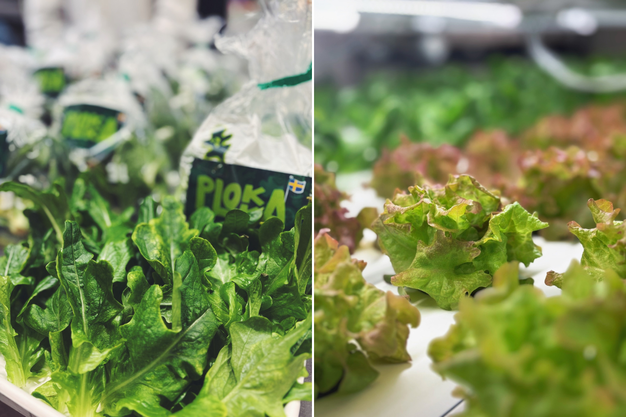 © Abhijith Nag Balasubramanya
Sale and continuity
"I spoke to several international founders who had spent years and significant legal fees fighting the agency without success, so I decided not to pursue a legal process," Abhi says. He sold Hydro Space to a group of four local investors within the departure window. Entrepreneur Walter Rönnblom is among the new owners; operations are expected to continue, with the facility relocating to Burträsk. The consumer brand Plokka will be retained.
Abhi recovered his invested capital but says the time he spent building the business and connecting to the community is his biggest heartache. "I provided three days of handover training to the new owners and offered one month of remote availability, but after that, I have to cut contact to move on from the experience. I also trained an intern to assist the new owners in continuing more complex parts of the daily operations, but there are things you only learn after years of doing it," he says.
What comes next
Abhi is now based in Bangalore, helping his family scale a coffee business to national distribution while fielding enquiries from investors and companies looking to establish hydroponic operations in India.
He is considering consulting for businesses on a commission basis, but has no plans to return to Europe. "I enjoyed living there and contributing to society as a business owner, but I've seen Europe change so much over the years", he says. "Democracy is being replaced by bureaucracy."
Despite this criticism, he draws a clear distinction between the central migration apparatus and Swedish society. "I love Swedish people. They are among the kindest that I've met anywhere," he says. "It is the central bureaucracy that is giving Sweden a bad image. Not the people."
For more information:
Abhijith "Abhi" Nag Balasubramanya
www.linkedin.com/in/abhijith-nag-balasubramanya
www.hydrospace.se