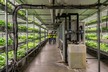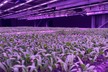


While smart vertical farms enable stable year-round crop production by efficiently utilizing urban spaces, they face economic limitations due to high energy consumption and operational costs. The purpose of this study is to propose a machine learning-based operational optimization strategy to improve energy efficiency and reduce production costs in vertical farms through an integrated analysis of environmental and operational data.
To this end, an integrated time-series dataset was constructed using environmental data (temperature, humidity, soil moisture, wind direction, wind speed, etc.) and operational data (power consumption, labor hours, water usage, production costs, etc.) collected from a real-world vertical farm in Korea over a nine-month period from March to December 2024. Following preprocessing steps—including missing value and outlier treatment, categorical encoding, scaling, and time-series splitting—predictive models such as Random Forest, XGBoost, and LSTM were developed and compared for performance. Experimental results indicated that the XGBoost model achieved the lowest average prediction error, demonstrating an improvement of approximately 17–18% over traditional rule-based predictions and 12–13% over moving average-based predictions. Given that the daily cumulative power consumption of the subject farm averages between 3,400 and 4,000 kWh/day, the observed RMSE of 3.37 represents a relative error of less than 0.1%, signifying a level of accuracy highly applicable to real-world operational decision-making..Such improvements in predictive accuracy have the potential to reduce energy and production costs by minimizing the excessive operation of lighting and HVAC systems and mitigating uncertainty in energy demand.
This study suggests a data-driven optimization model from an integrated operational perspective—considering power, labor, and resource inputs alongside environmental variables—thereby providing a strategic framework for smart vertical farm operations that enhances both productivity and economic viability beyond simple control rules.
(2026). A Study on Improving Energy Efficiency and Reducing Operating Costs in Smart Vertical Farms. Korean Institute of Smart Media. 15. 17-24. 10.30693/SMJ.2026.15.3.17.
Source: Research Gate