

Growcer has received the 2026 Governor General's Innovation Award, joining four other Canadian innovators recognised for work that meaningfully improves quality of life in Canada. For the Ottawa-based modular farming company, the recognition arrives at a moment when the questions Canada asks about indoor farming have fundamentally changed.
"We used to have to do a lot of upfront customer education about how vertical farming works and its benefits," says Alida Burke, CFO and co-founder of Growcer. "Now the conversations have shifted from 'what is it?' to 'will this work for us and how do we get there?'"
That shift is what the award reflects. A decade ago, when Growcer was founded, modular vertical farms were a concept requiring explanation. Today, with 120+ installations across Canada and more than 1,000 globally across 30 countries, the question has moved from viability to implementation.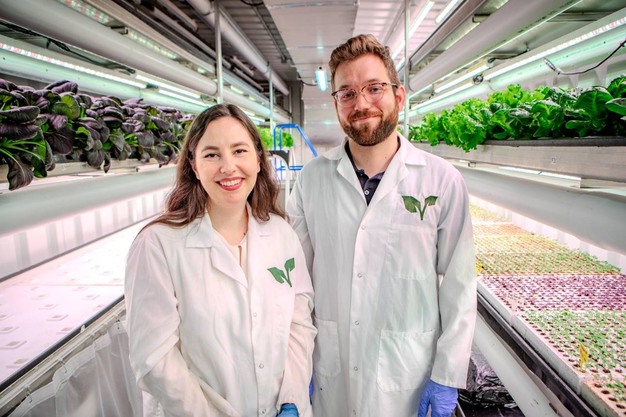 © Growcer
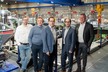
Alida Burke and Corey Ellis, co-founders of Growcer
The four pillars of deployment
Successful implementation follows a consistent pattern, according to Growcer. "There are four pillars behind every successful project," Burke says, identifying them as securing a location, knowing who will operate the farm, planning distribution, and covering costs.
Many communities arrive with only one of those pillars in place. The gap between awareness and execution remains the central challenge, which is why the award's framing matters as much as the recognition itself. It validates not just the technology, but the organisational infrastructure required to deploy it.
Canada has reinforced that case at the policy level. The extension of the Local Food Infrastructure Fund signals a structural commitment to domestic production capacity, and the Fresh Solutions campaign has created conditions for accelerating stalled community projects. Still, Burke notes, assembling all four pillars requires a network of partners, growers, and community support that many projects have yet to build.
"The real work is done by the leaders who choose to build something different, and keep going when the barriers make it easier to stop," says Corey Ellis, CEO and co-founder of Growcer. "That is where the real innovation lives. Not in the technology, but in the bold, deliberate choices being made by organisations and leaders to build opportunity through food for generations to come."
Technology as a tool
Growcer's award statement emphasised Indigenous and community leadership rather than positioning the recognition as a technology story. The distinction was deliberate. "Technology is a tool, and the impact comes from how you use it," Burke says. The award criteria focus on meaningful difference in quality of life, and Growcer argues that the measure of that difference is community outcomes: fresh greens for food programmes, indoor agriculture in classrooms, and skills training with direct economic value. "The number of pounds of greens you can grow only tells half the story."
That framing reflects a mature understanding of what innovation means in the context of food security. A school feeding its students, a food bank reducing dependence on donations, a young person trained for a job with lasting community impact: these are the metrics Growcer points to, not production volume alone.
The geopolitical inflection point
Prime Minister Mark Carney, speaking in Davos, framed the stakes simply: "A country that cannot feed itself...has few options." That context is not lost on Growcer. Global trade disruption has sharpened the food security conversation in Canada, and Growcer sits directly in that discussion. "We're seeing more conversations happening around local food," Burke says, "and the federal government is putting dollars behind new initiatives."
The policy response, she argues, needs to extend beyond production. Storing, processing, and distributing food are equally part of the equation, and decentralised modular infrastructure at the community scale is suited to a country as geographically dispersed as Canada. "Vertical farms aren't a silver bullet," Burke says, "but there are cases where they make a lot of sense."
For more information:
Growcer
Stephanie Gordon, Senior Content Manager
[email protected]
www.thegrowcer.ca